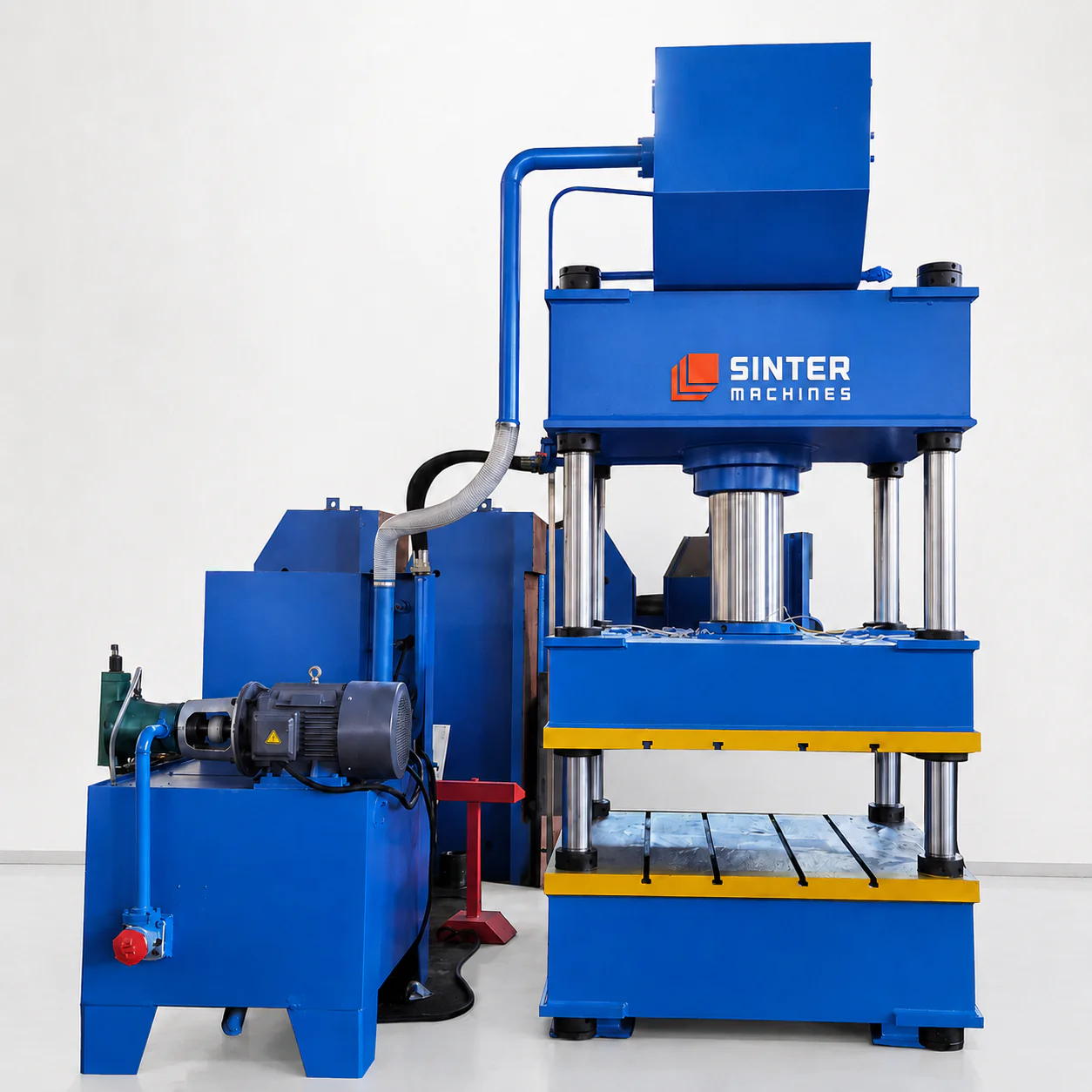
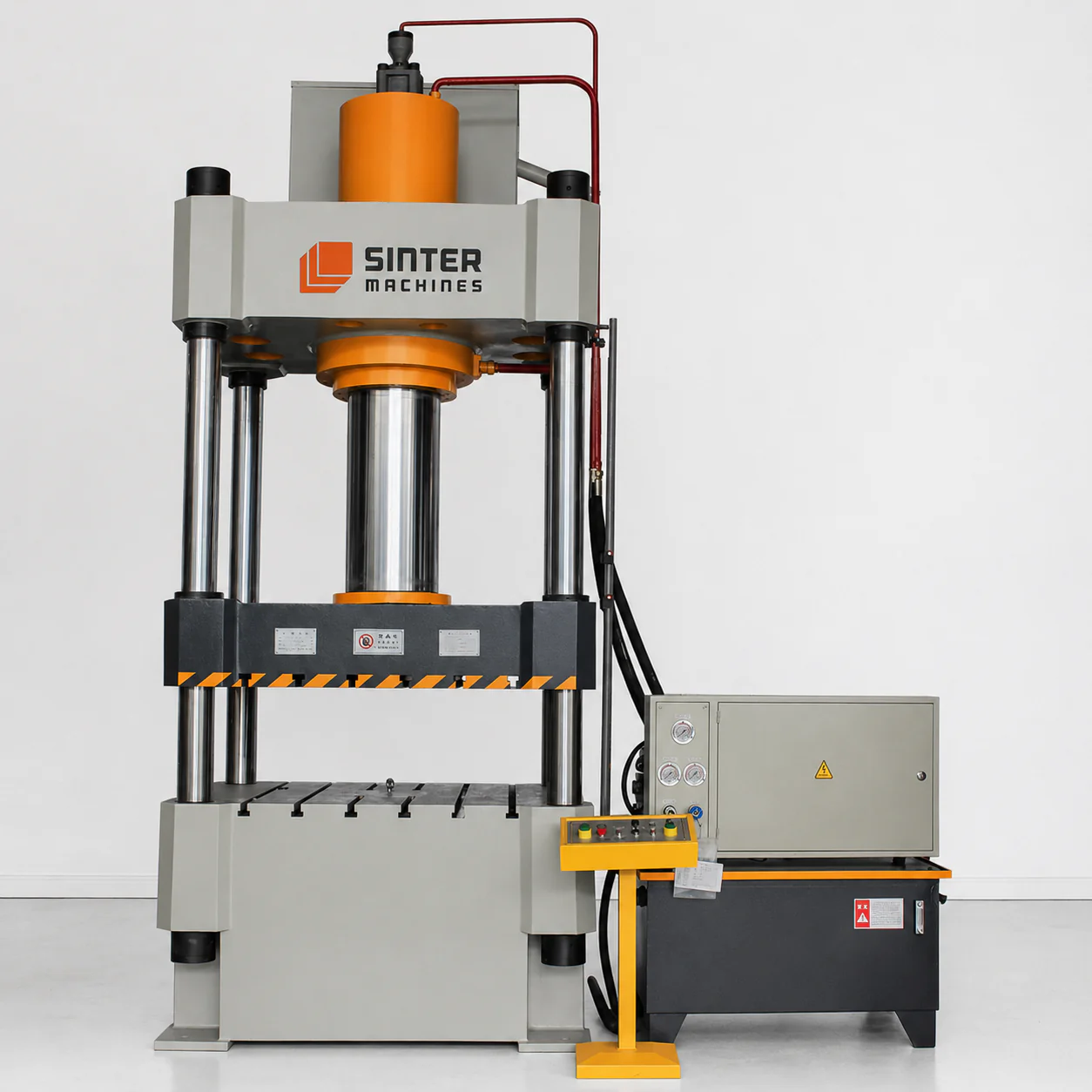
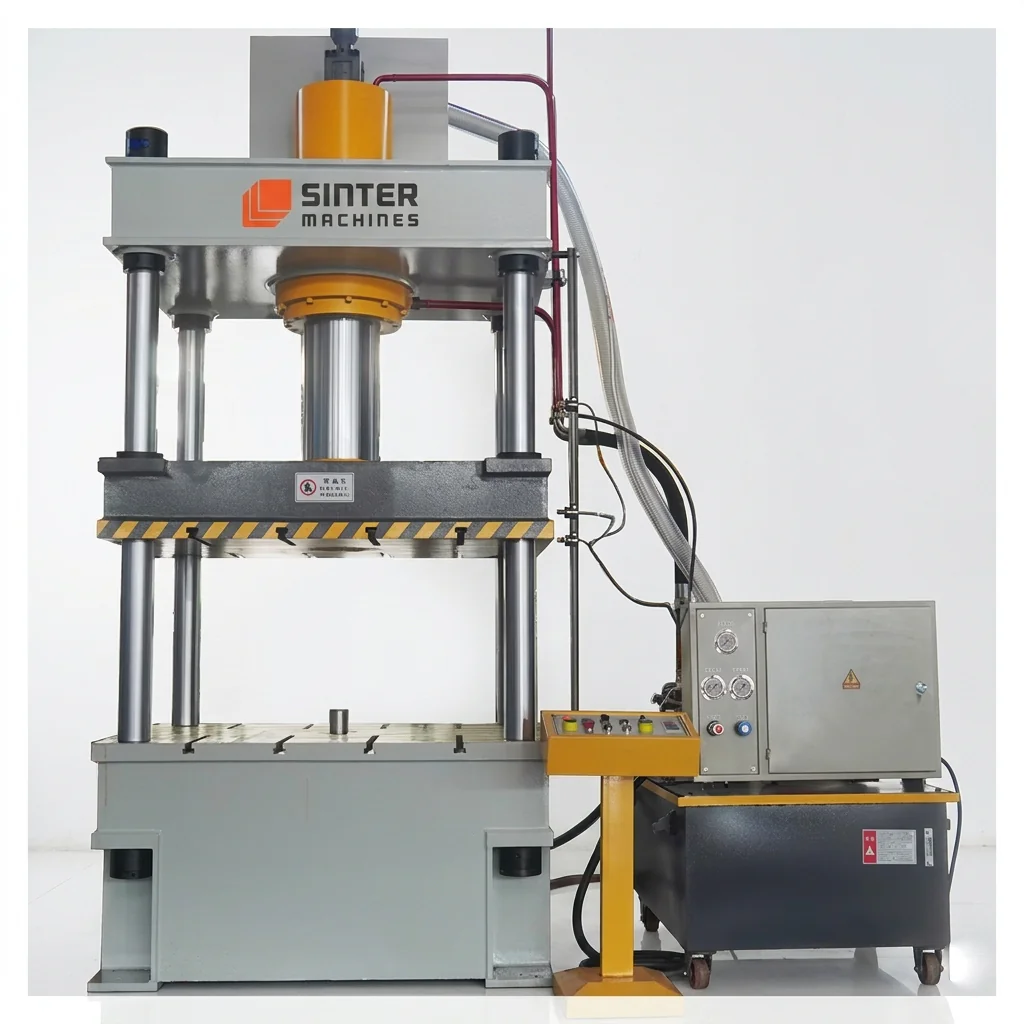
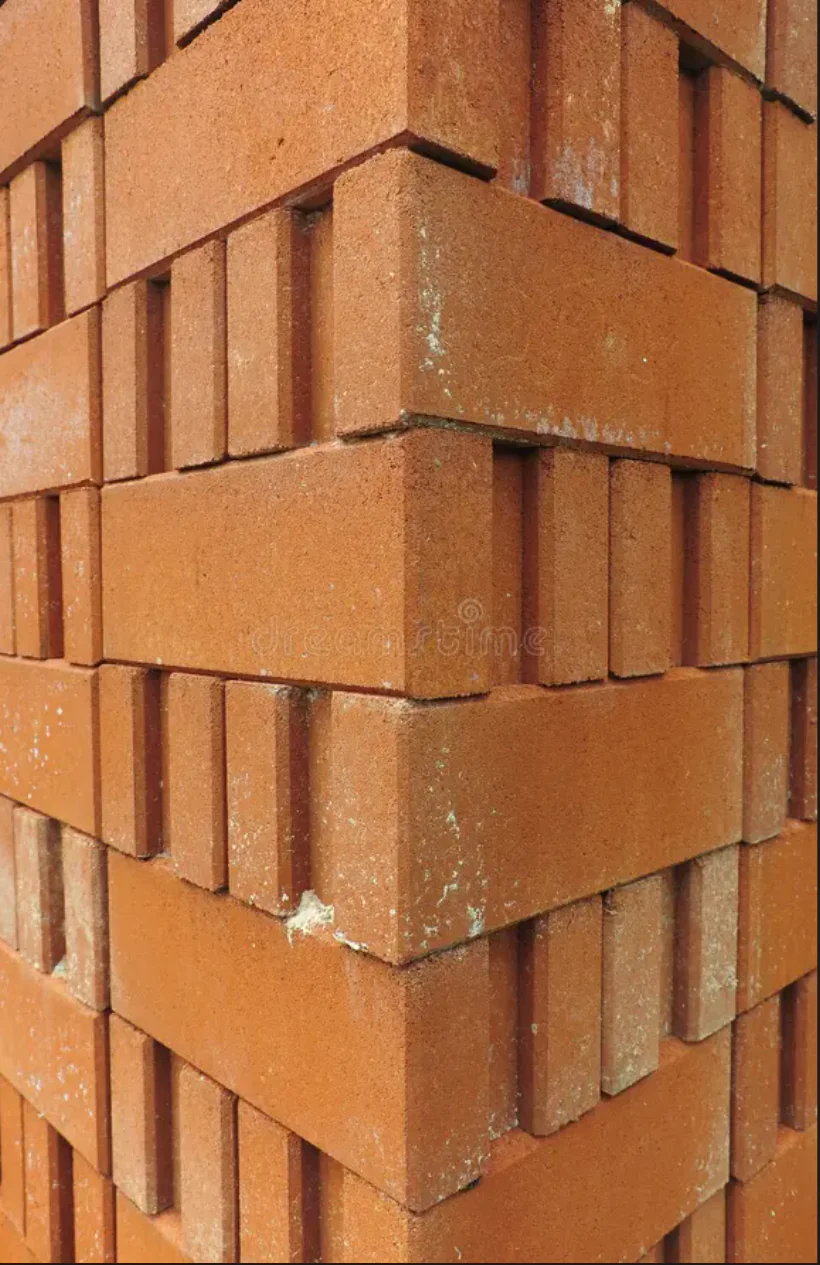
100T CSEB Clay Bricks Press press view 1
Standard Density CSEB Clay Bricks · Hydraulic Press Machine

100T Four Column Hydraulic Press for Standard Density CSEB Clay Bricks

100T Rated Capacity
100 mm/s Slider Down Speed
7–15 mm/s Slider Pressing Speed
90 mm/s Slider Return Speed

01 — Press System

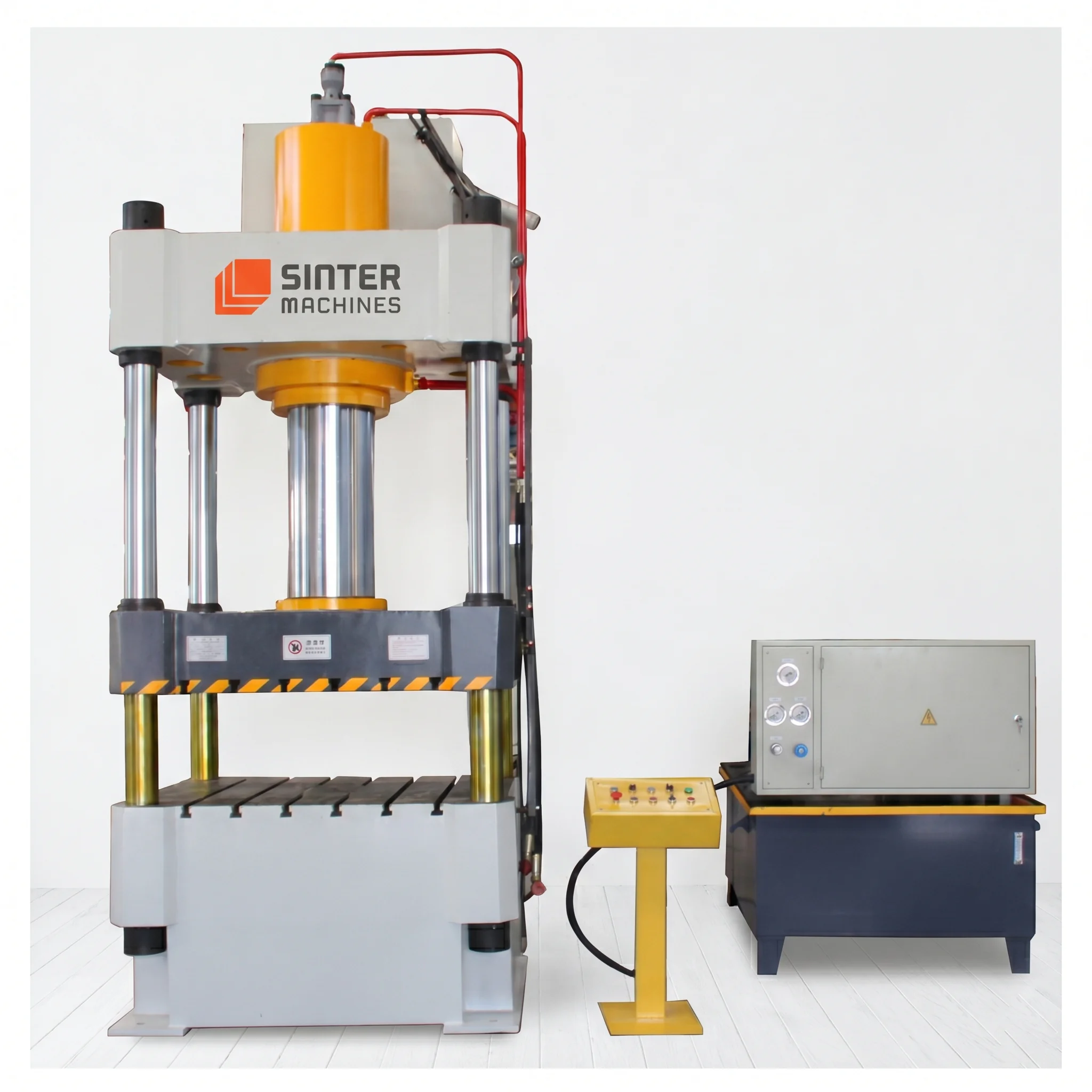
100T Four Column Hydraulic Press Machine

The 100-ton four-column hydraulic press machine produces standard-density Compressed Stabilized Earth Bricks (CSEB) without energy-intensive kiln firing. By using precise mechanical compaction instead of heat, it creates durable structural clay bricks with significantly lower carbon emissions.

Use Case

Designed for continuous production, this automated system manufactures 12,000 eco-friendly CSEB bricks per 8-hour shift. The non-fired process relies on hydraulic pressure followed by 14 to 28 days of water curing to achieve comparable compressive strength to traditional clay bricks.

Core Applications: Structural and non-load-bearing wall construction work requiring eco-friendly, energy-efficient building blocks.

Material: Formulated with 60–70% clay/soil, 15–25% fly ash, 8–12% cement or lime, water, and optional gypsum/admixture binders.

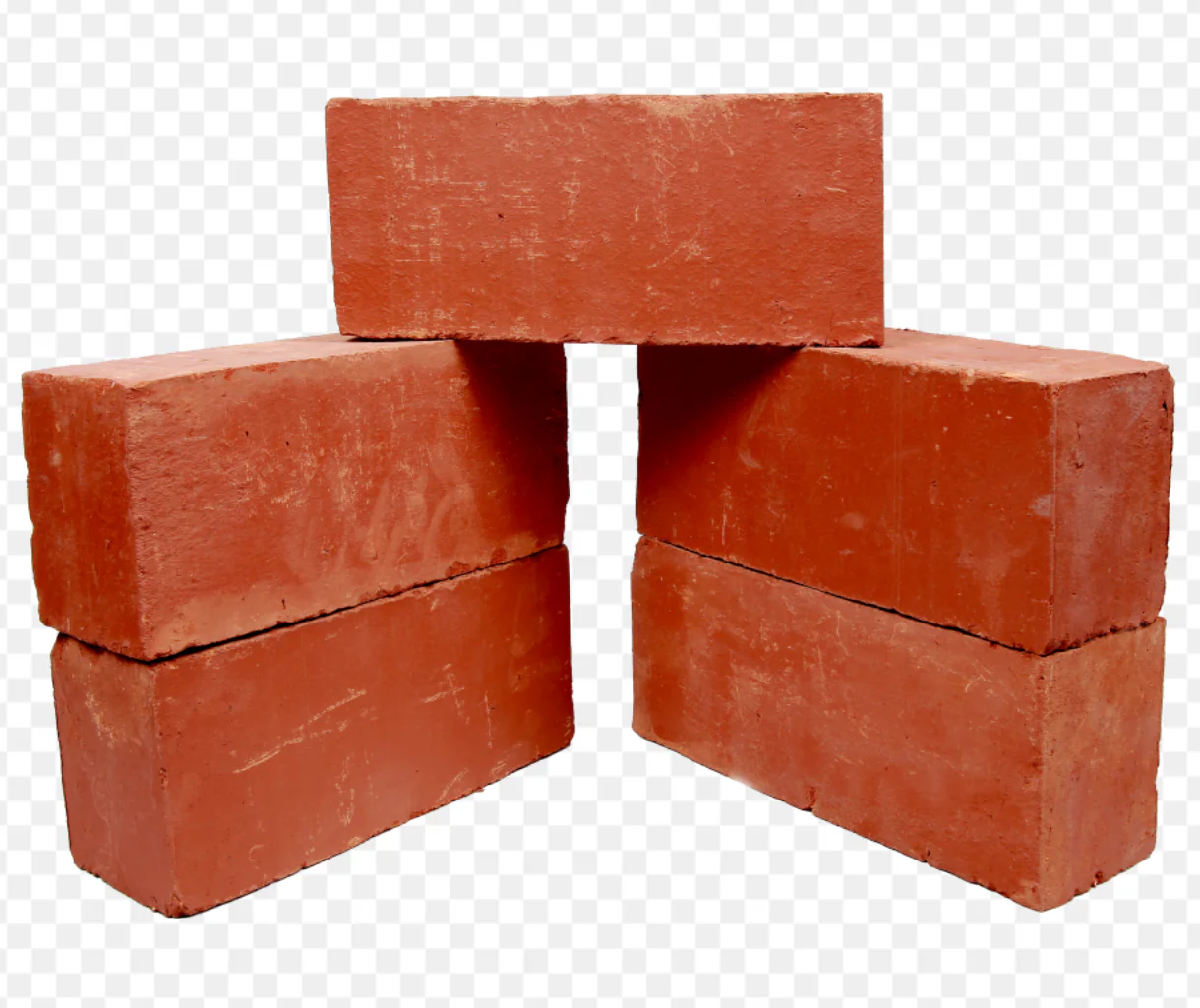
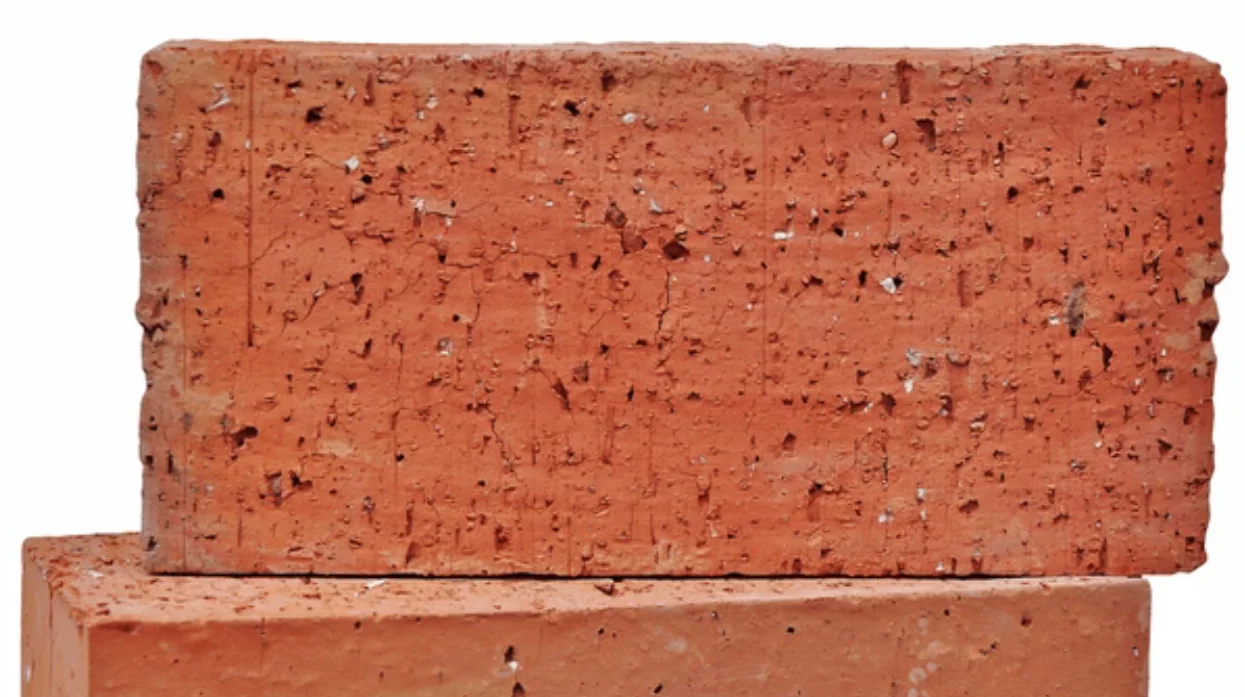
Typical Products Processed: Standard brick dimensions of 228 x 104 x 75 mm for uniform masonry application.

Brick Density: Delivers reliable compressive strength ranging from 3 to 5 MPa (achieving up to 10 MPa depending on curing).

Why 100 Ton Hydraulic Press? A 100-ton hydraulic press provides the optimal compaction force needed to compress stabilized earth mixtures tightly, eliminating air pockets to ensure structural integrity and precise dimensions without requiring expensive kiln firing.

02 — Technical Specifications

SM 100 HP – HYDRAULIC PRESS MACHINE COMPLETE TECHNICAL DATA

The SM 100 HP hydraulic press delivers precise compaction force for eco-friendly Compressed Stabilized Earth Bricks without kiln firing. Its durable four-column design provides reliable performance and uniform density across all molded earth bricks.

Capacity: 100 Ton heavy duty force

Structural Design: Heavy duty steel welded construct

Frame Type: 4 Column 3 Beam rigid structure

Hydraulic System: Cartridge valve integrated manifold system

Main Ram Stroke: 500 mm

Working Hydraulic Pressure: 20 MPa

Daylight Gap: 800 mm

Approach Speed: 150 mm/Sec

Pressing / Drawing Speed: 15 mm/Sec

Return Speed: 120 mm/Sec

Bed / Platen Size Platen: 800 mm LR x 700 mm FB

Columns: 4 Hard chrome plated steel pillars

Working Envelope: 800 mm x 700 mm x 800 mm

Control System: PLC programmable controller with touch screen HMI

Main Motor Power: 15 kW electric motor

Valves & Hydraulics: High pressure cartridge valves with oil cooling system

Automation: Fully automatic cycle operation

Safety Features: Dual hand start buttons and photo-electric light curtain curtains

SM 100 HP — Model Specifications

  • Nominal Force: 1000 KN
  • Maximum Hydraulic Pressure: 25 MPa
  • Max Opening Height of the Slider: 800 mm
  • Max Stroke of the Slider: 500 mm
  • Effective Bed Size: 630 × 550 mm
  • Slider Down Speed: 100 mm/s
  • Slider Pressing Speed: 7–15 mm/s
  • Slider Return Speed: 90 mm/s
  • Ejector Cylinder Nominal Force: 100 KN
  • Stroke of the Ejection Cylinder: 200 mm
Production Case Study

100 Ton Standard Density CSEB Clay Bricks Production Line

228 x 104 x 75 mmBrick Size
1500 BricksOutput/Hour
3-5 MPaCompressive Strength
20 SecCycle Time
High automated output
Consistent brick dimensions
Optimal compaction density
Eco-friendly earth stabilized
Fast cycle performance
Low operating cost
Reliable structural strength

03 — Die / Mold System

Precision 8 Cavity Building CSEB Clay Bricks Die Mold Engineering

Engineered for high-volume automated manufacturing of Compressed Stabilized Earth Bricks (CSEB). The 8-cavity mold ensures consistent dimensional accuracy, uniform density, and efficient mass production across extended operating cycles.

Technical Specifications (Tooling)

Die Type

  • Configuration: 8 Cavity Mold

Die Materials

  • Steel Grade: High Strength Alloy Steel
  • Wear Resistance: Hardened Chromium Steel Insert Plate

Tool Configuration & Construction

  • Modular Design: Replaceable Cavity Liners and Wear Plates
  • Structure: Heavy Duty Bolstered Frame Assembly

Key Tooling Features

  • Ejection Mechanism: Synchronized Hydraulic Demolding System
  • Air Venting: Micro Precision Vent Channels

Alignment Accuracy

  • Precision Tolerance: Plus or Minus 0.05 mm
  • Guidance: Hardened Linear Guide Pillar System

Surface Finish

  • Cavity Polish: Mirror Polished Chrome Plated Finish
  • Roughness Standard: Ra 0.4 Microns

Tool Life

  • Durability Rating: 500000 Production Cycles
Case Study (Die Performance)

Precision 8 Cavity Building CSEB Clay Bricks Die Mold

D 2 & HARDOX 450Die Material
58-62 HRCHardness
Vacuum HardeningHeat Treatment
Superior wear resistance
High dimensional accuracy
Minimal operational downtime
Extended mold life
Flawless surface finish
Uniform brick compaction
Low maintenance cost

04 — Product Application

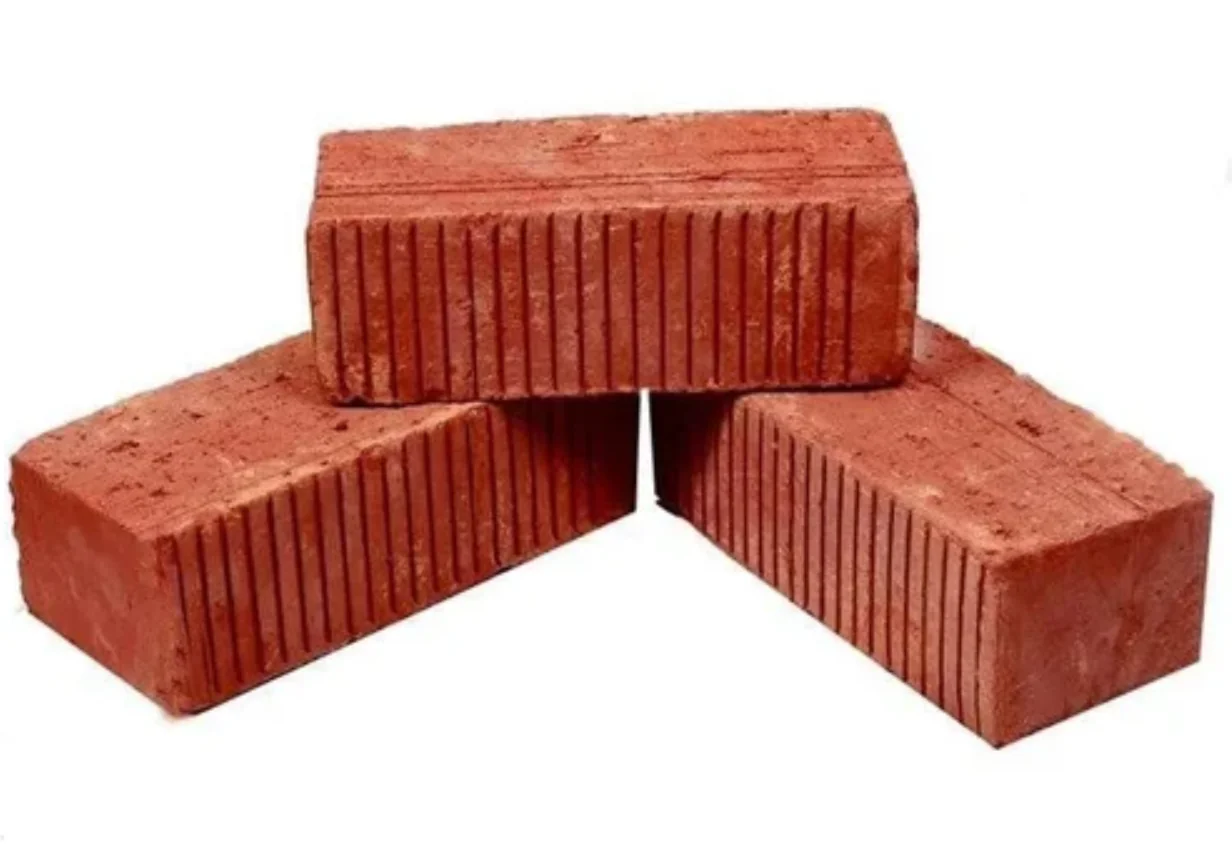
Where Standard Density CSEB Clay Bricks Are Used

Standard Density Compressed Stabilized Earth Bricks (CSEB) are widely used in modern eco-friendly and cost-effective structural construction projects. These sustainable earth bricks offer excellent thermal performance, durability, and a clean natural aesthetic for various building developments.

Industry Applications

Sustainable Residential Construction

Provides low-carbon, thermally efficient building blocks ideal for affordable housing projects and modern eco-friendly homes. These bricks naturally regulate indoor temperatures while reducing reliance on energy-intensive conventional firing processes.

Commercial & Institutional Buildings

Used in constructing schools, community centers, and commercial complexes that emphasize green architectural standards. Their precise dimensions and high structural integrity allow for aesthetically pleasing exposed brick masonry work.

Boundary & Partition Walls

Serves as a sturdy and economic solution for internal non-load-bearing partitions as well as perimeter boundary walls. The uniform compaction ensures long-lasting weather resistance and consistent mechanical strength across large enclosure structures.

Rural Infrastructure & Eco-Resorts

Ideal for decentralized construction in rural development initiatives and rustic eco-tourism resort facilities. Utilizing local soil materials blended with stabilizers creates strong structures that blend seamlessly into natural environments.

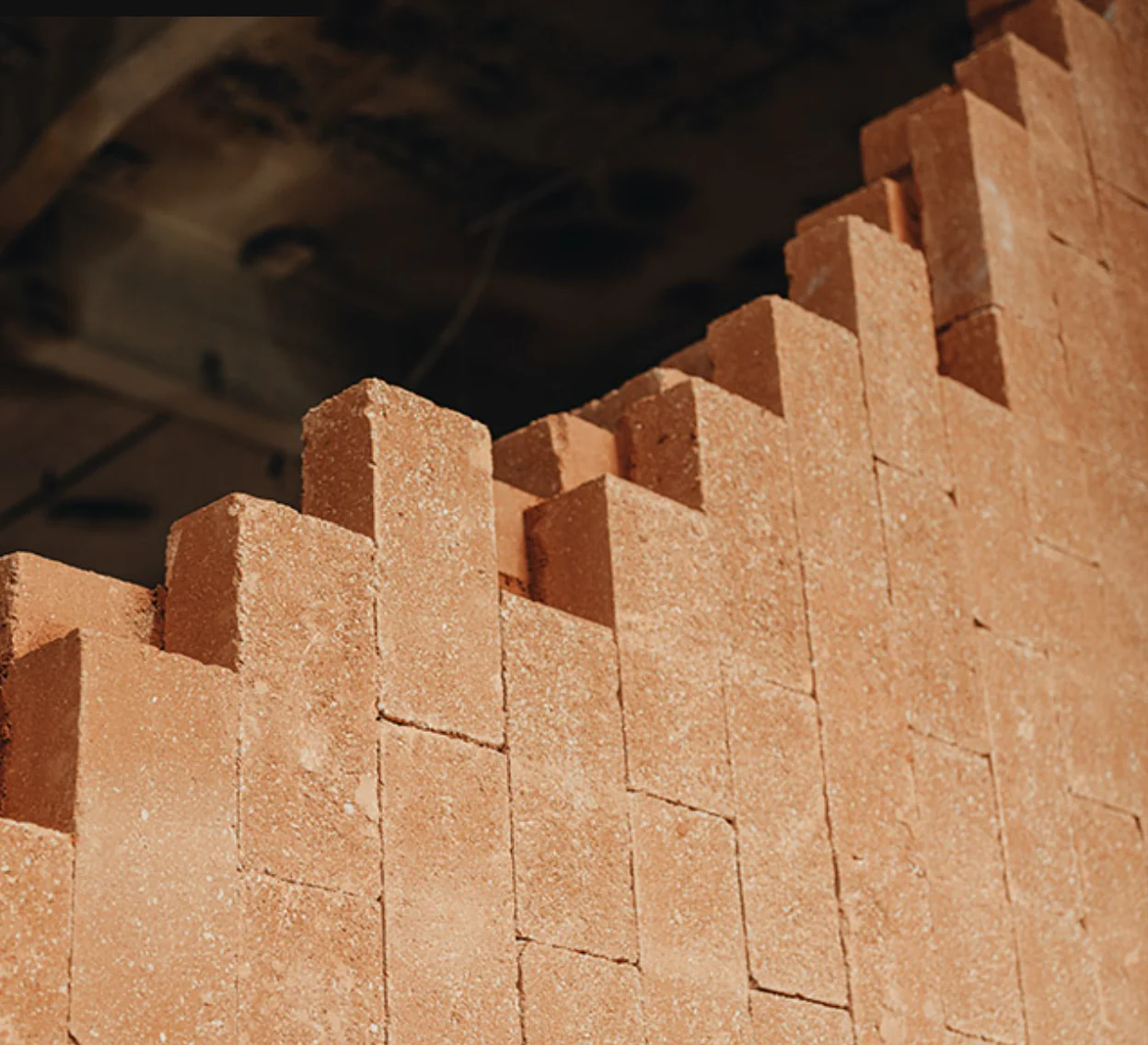
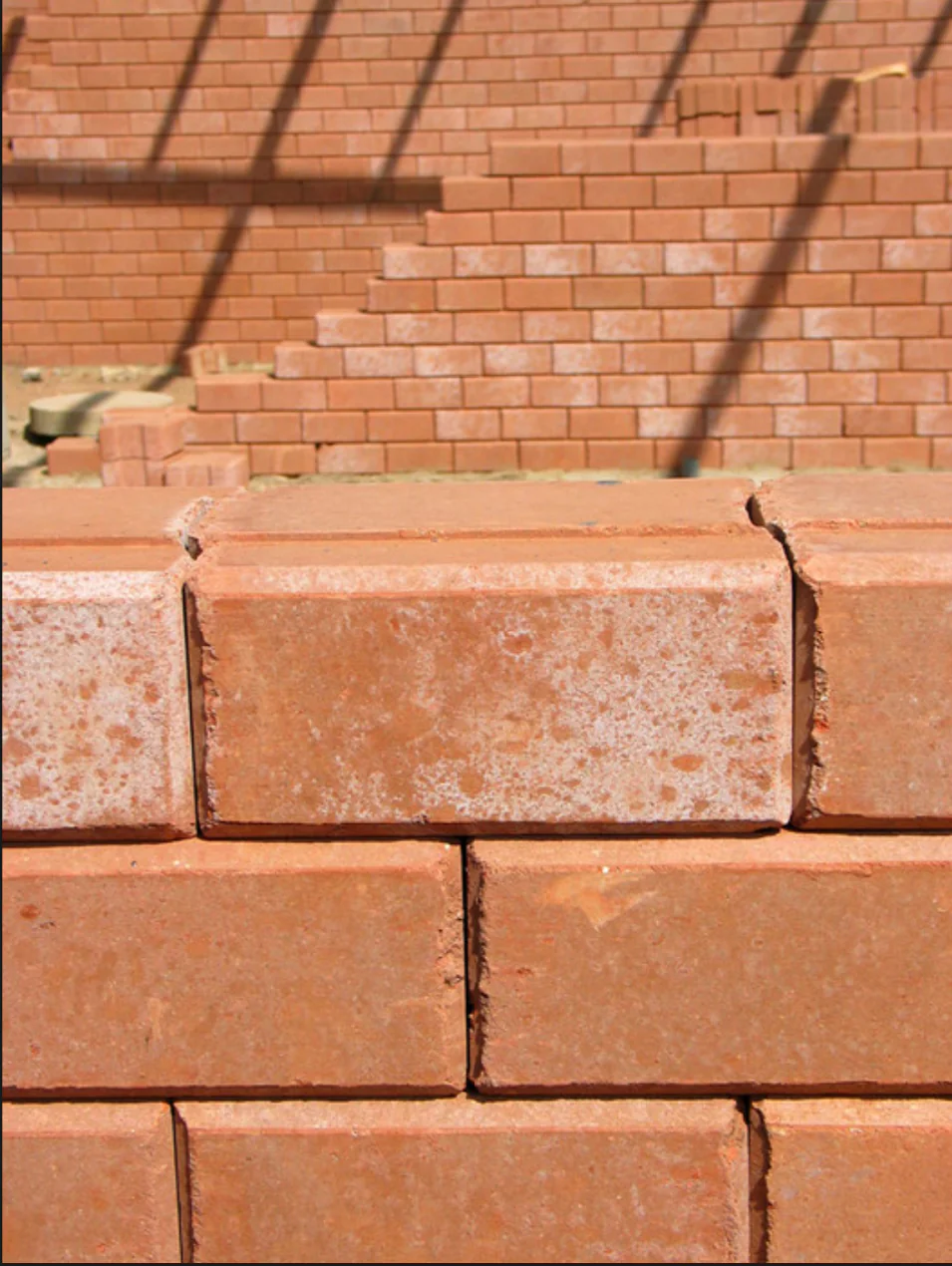
Finished Product Gallery

05 — Key Advantages

Why Choose the 100-Ton Sinter Hydraulic Press

The 100 Ton Hydraulic Press delivers superior compaction efficiency and automated operational consistency for Standard Density CSEB manufacturing. It bridges high-volume industrial productivity with cost-effective, eco-conscious building material production.

Technical & Commercial Benefits

01

High Compaction Density

Delivers precise 100-ton hydraulic pressure to eliminate internal void spaces and maximize structural integrity. This ensures reliable load-bearing capacity across every manufactured unit.

02

Automated Production Speed

Achieves a fast 20-second cycle time to support continuous, continuous high-volume output of 1,500 bricks per hour. Automated operations lower manual labor costs while increasing daily yield.

03

Dimensional Precision

Engineered with high-tolerance die guidance systems to guarantee exact brick measurements and clean edges. Standardized dimensions speed up on-site masonry work and minimize mortar consumption.

04

Eco-Friendly & Low Carbon

Utilizes raw soil stabilized with minimal additives without requiring high-temperature kiln firing. This process significantly cuts carbon emissions and lowers energy costs during production.

05

Cost-Effective Raw Materials

Optimizes local clay and earth sources to reduce material sourcing and long-distance transport expenses. The efficient binder ratio keeps overall production costs per unit exceptionally low.

06

Robust Tooling Life

Built with wear-resistant hardened alloy steel molds designed to withstand continuous abrasive press cycles. The durable construction reduces maintenance downtime and extends tool operational lifespan.