01 — Press System
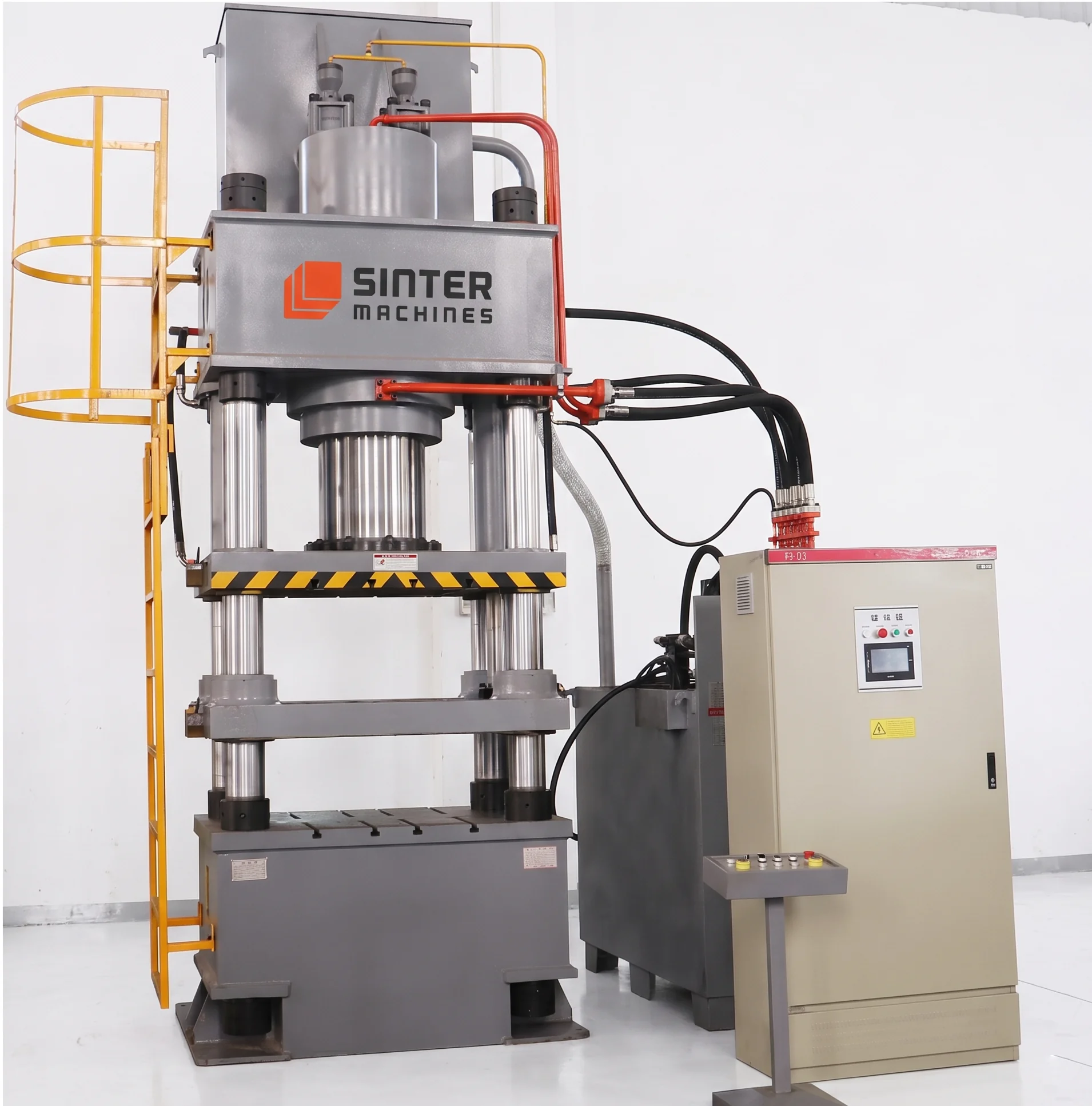
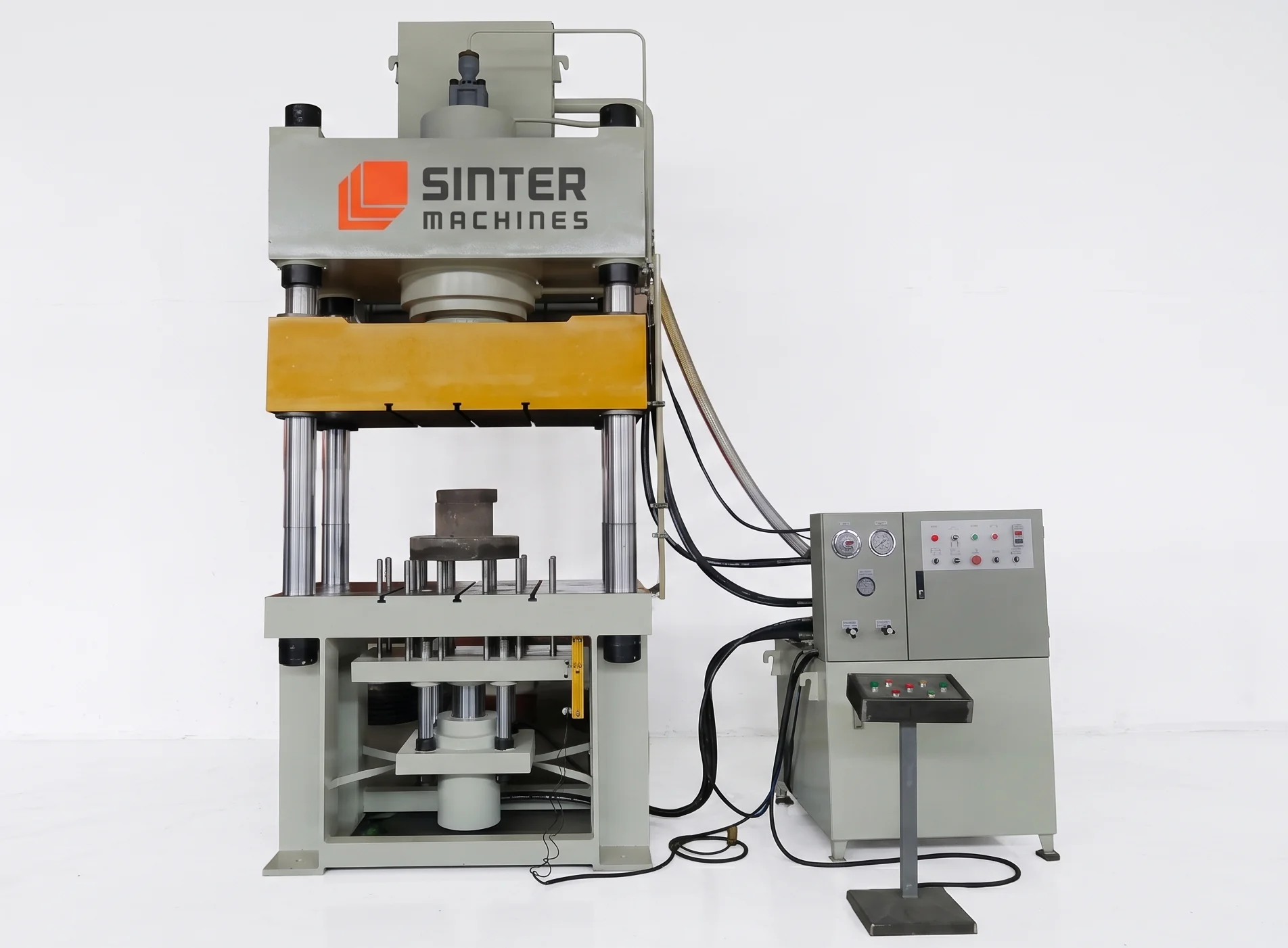
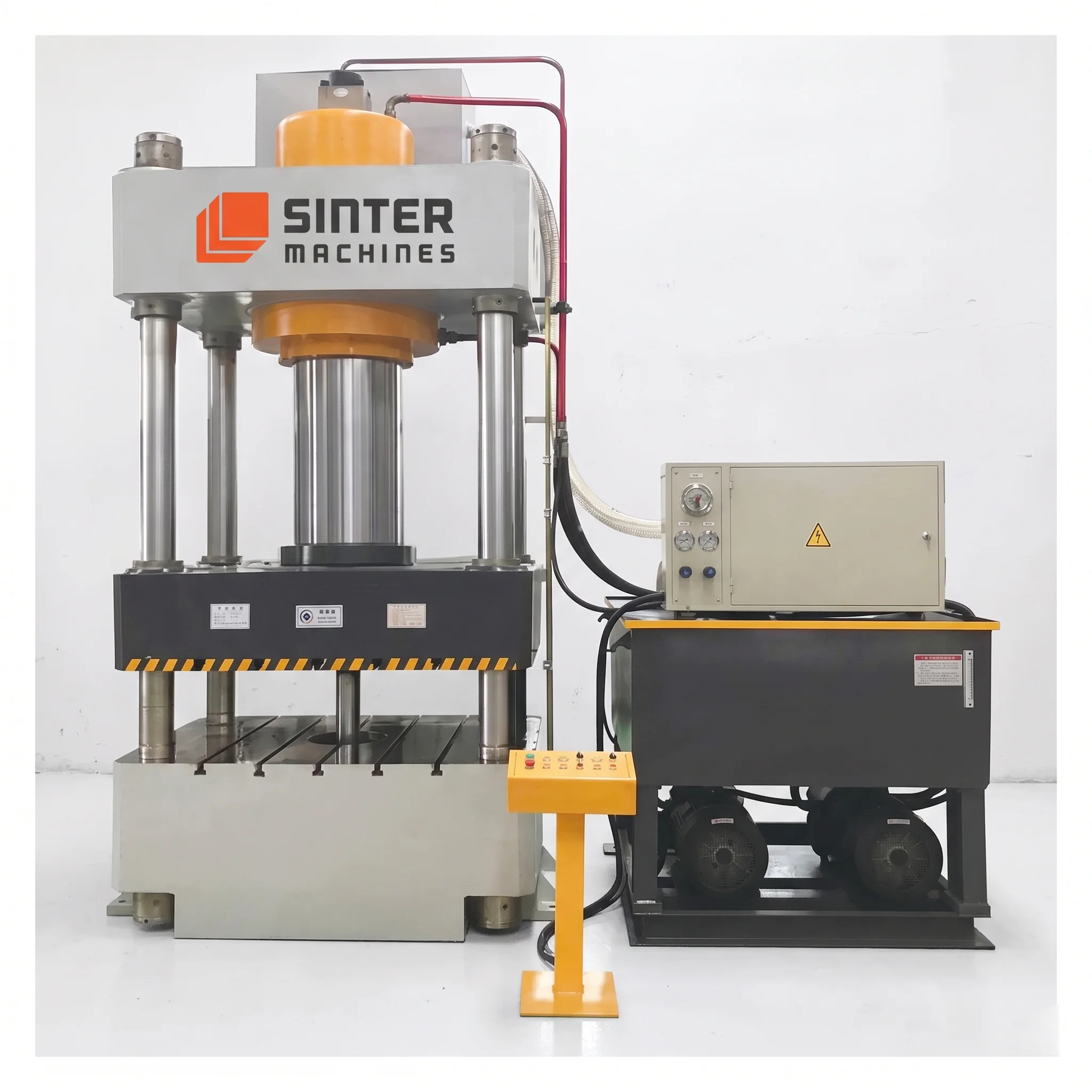
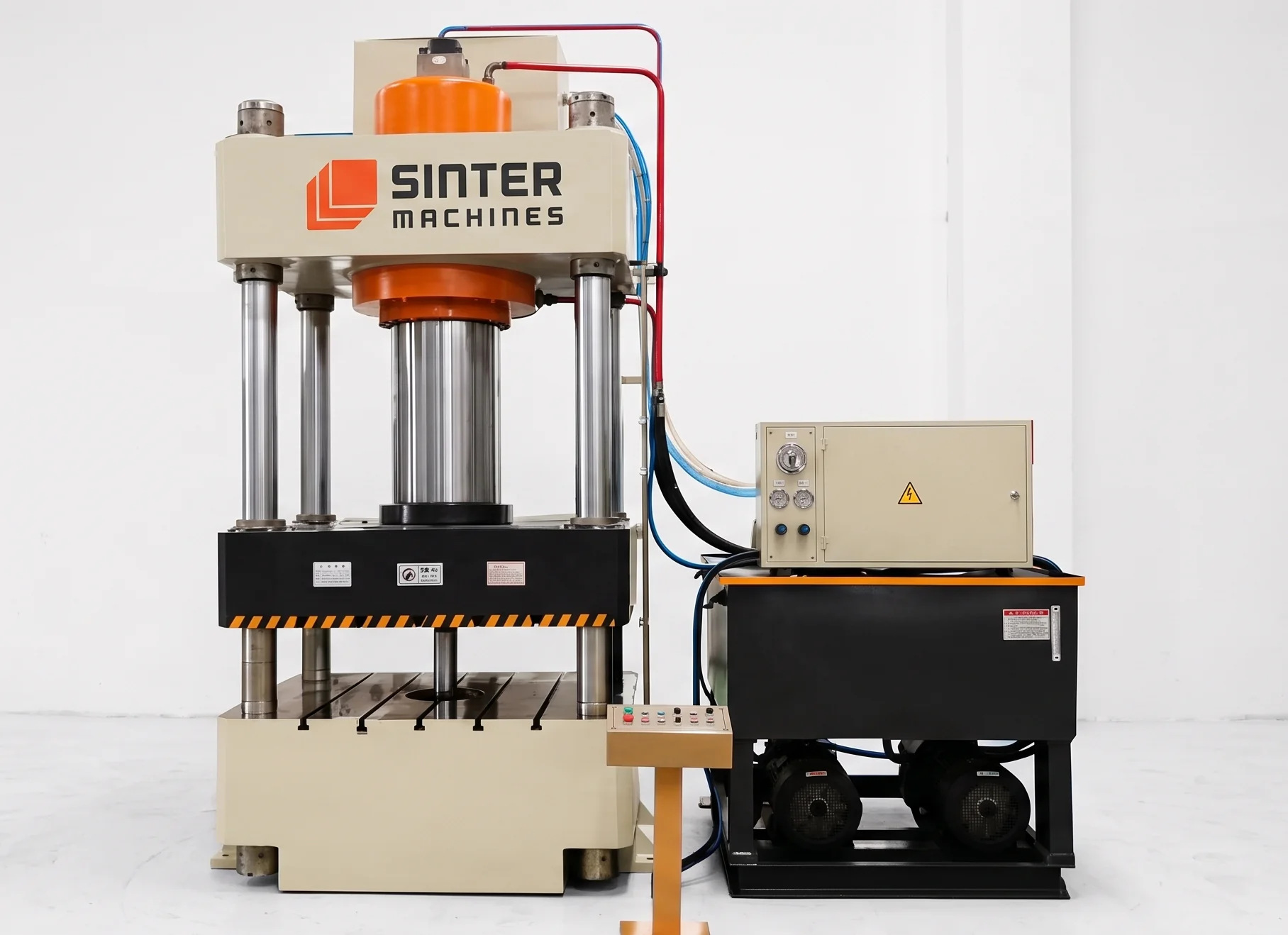
800 Ton Four Column Hydraulic Press Machine
The 800-ton four-pillar hydraulic press from Sinter Hydraulics India is a core manufacturing system for EV composite underbody shields, enabling lightweight high-strength structural components, precise molding of large composite panels, stable repeatable production for automotive standards, and a scalable solution for EV mass production. Built with a pre-stressed four-column frame and heated platen integration, it compresses complex thermoset and thermoplastic composite formulations to meet strict automotive crash and durability criteria.
Use Case
The 800-ton four-pillar hydraulic press is designed for compression molding of composite underbody shields used in Electric Vehicles (EVs). Processing sheet molding compounds (SMC), glass fiber composites (GFRP), carbon fiber mats (CFRP), and thermoplastic sheets, it forms structural panels that protect battery packs and undercarriage components against road debris, high impacts, and harsh weather.
Core Applications
High-tonnage compression molding and curing of composite structural underbody skid plates and battery impact shields
Precision compression forming of aerodynamic under-car floor covers, wheel arch liners, and acoustic belly pans
Hot press molding of high-strength fiber-reinforced structural members for electric vehicle chassis protection
Material
Sheet Molding Compound (SMC) featuring thermoset polyester, vinyl ester, or epoxy resins with chopped glass fiber reinforcement
Glass Fiber Reinforced Plastic (GFRP) and continuous glass fiber-reinforced thermoplastic mats (GMT / DFT)
Carbon Fiber Reinforced Plastic (CFRP) composite prepregs and engineered flame-retardant polymer formulations
Typical Products Processed
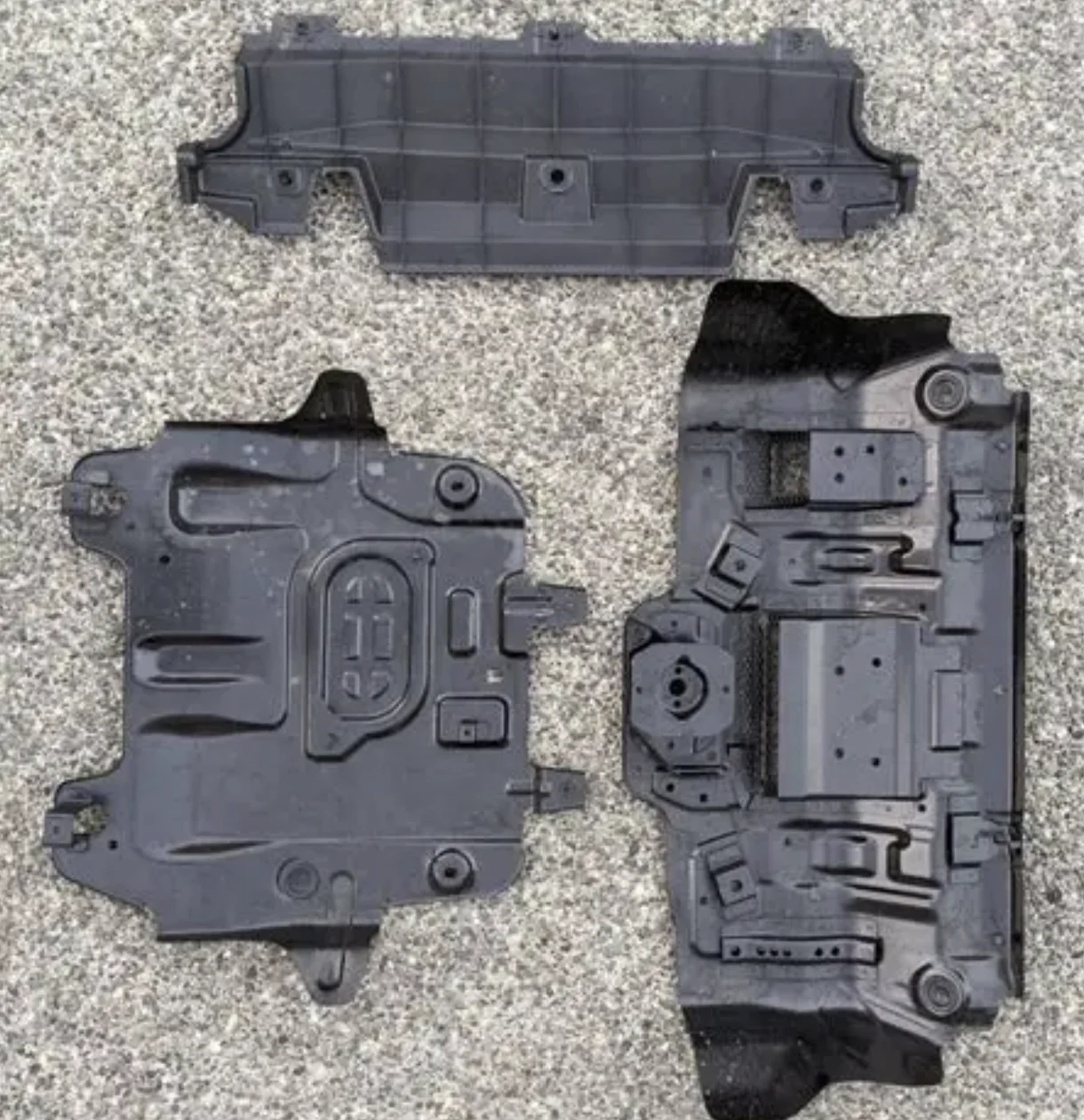
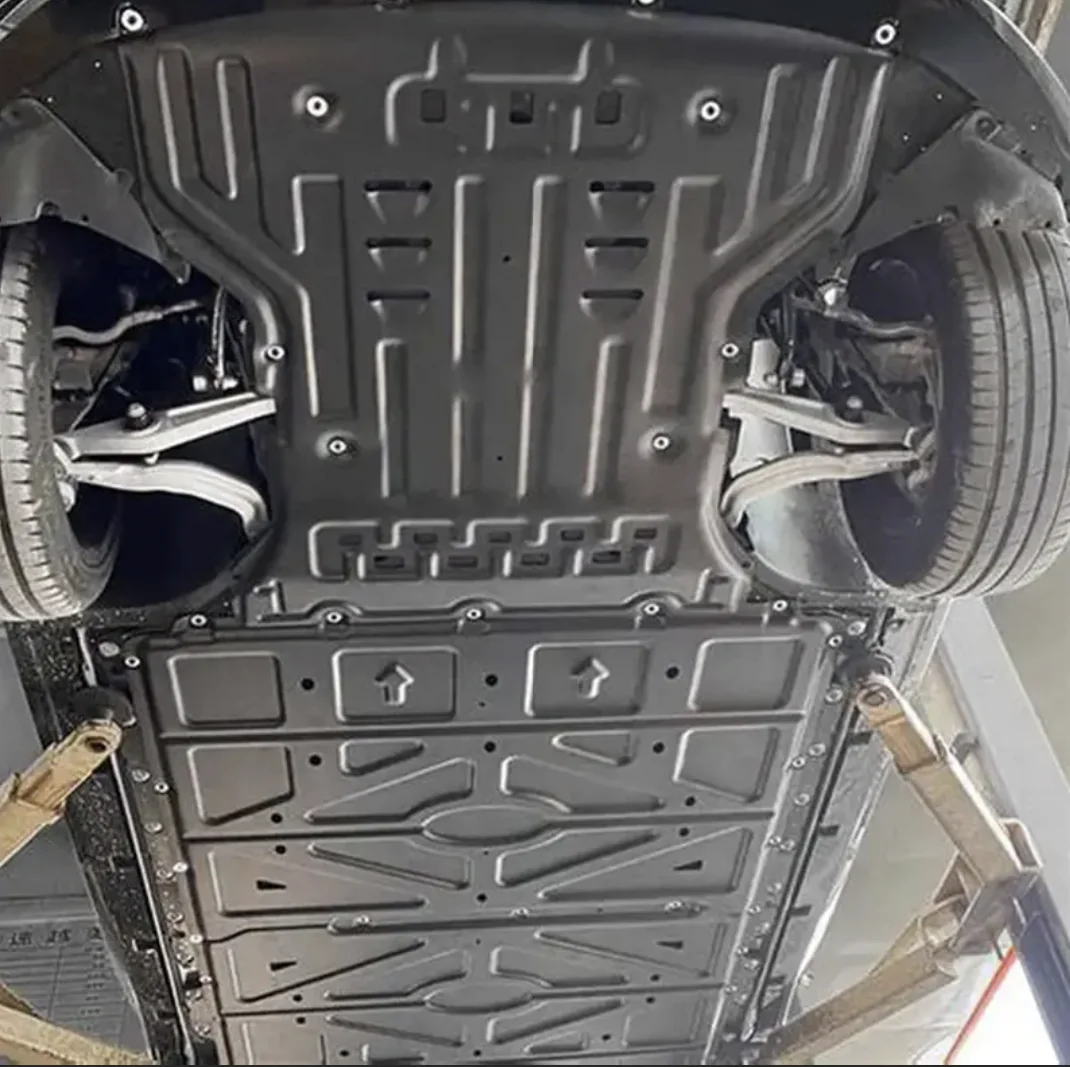
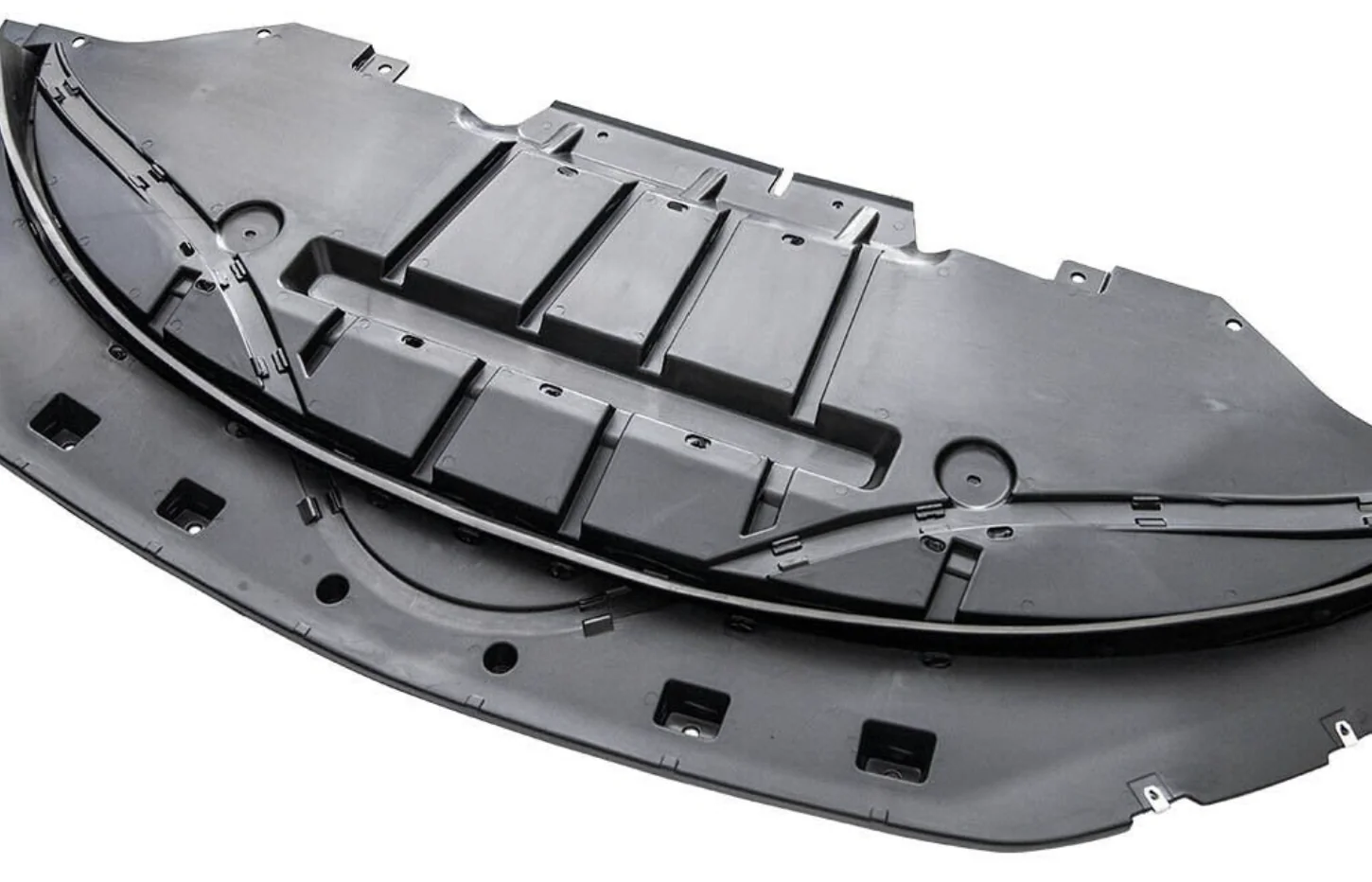
Full-length electric vehicle battery pack composite bottom protection shields and impact deflectors
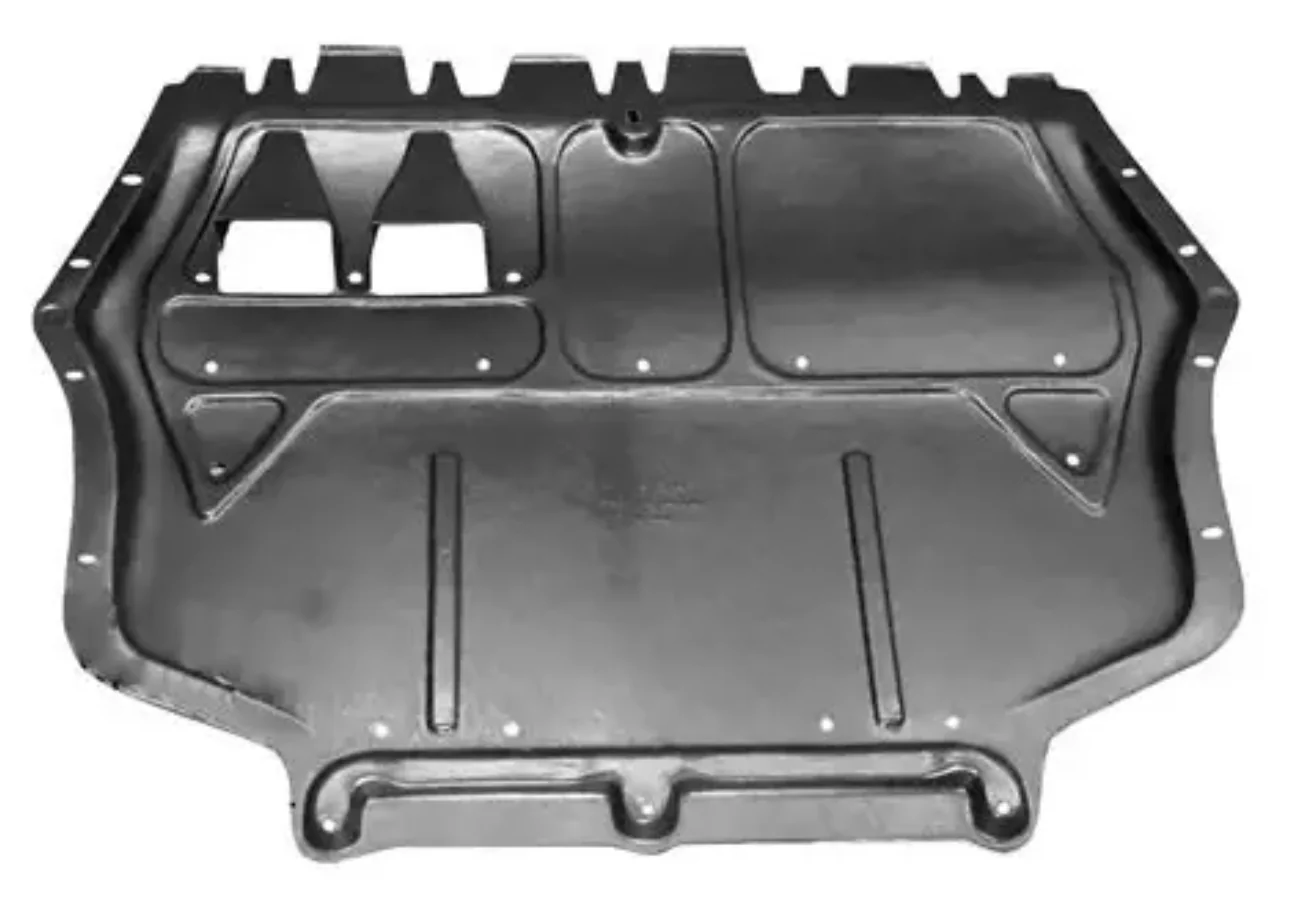
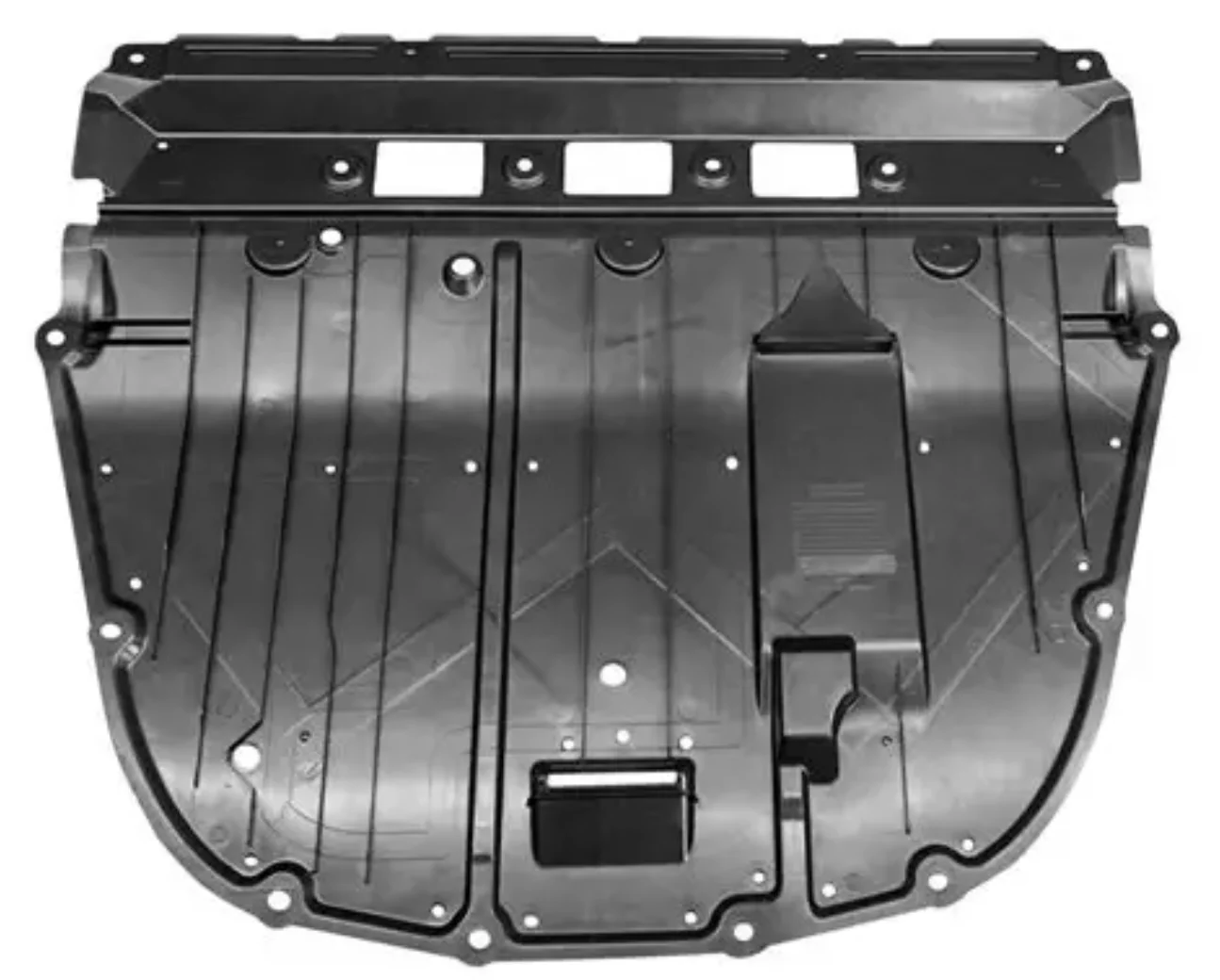
Aerodynamic structural underbody floor panels, motor belly pans, and front axle stone guards
High-strength composite crash members, battery tray lower enclosures, and side rocker panel guards
Key Functions
Application of precise 800-ton hydraulic compression force to evenly distribute composite resin charge inside heated mold cavities
Multi-stage pressure ramping and programmable dwell control to allow thorough resin flow, fiber consolidation, and void-free matrix curing
Precision active parallel leveling control across large platen areas to maintain uniform panel thickness and prevent warp defects
Controlled hydraulic ejector pin actuation ensuring gentle, non-destructive extraction of cured lightweight composite parts
Why 800 Ton Hydraulic Press?
Delivers the ideal 800-ton compression force required to fully flow and compact high-viscosity SMC and glass fiber compounds across large panel areas
Heavy four-pillar guide architecture maintains absolute platen parallelism under uneven mold charge loading, preventing off-center flashing and structural flaws
02 — Technical Specifications
SM 800 HP – HYDRAULIC PRESS MACHINE COMPLETE TECHNICAL DATA
The SM 800 HP heavy-duty hydraulic press delivers high-precision compression molding force and rigid parallel slide guidance engineered specifically for EV composite structural underbody shields. Its pre-stressed four-column structure, integrated heating platen controls, and multi-stage pressure ramping eliminate air voids, consolidate fiber matrices, and guarantee warp-free panel geometry.
Capacity
- Maximum continuous compression molding force capacity of 8000 kN
- Dedicated hydraulic bottom ejector force capacity of 1000 kN
Structural Design
- Heavy stress relieved four column guide structure engineered for precise composite compression molding
- FEA stress relieved heavy steel plate welded bolster and upper moving slide assembly
Frame Type
- Precision aligned solid induction hardened pillar frame guide structure
- Stress relieved heavy welded steel plate bolster and upper moving slide assembly
Hydraulic System
- High output variable displacement axial piston pump fluid power assembly
- Multi stage high capacity offline oil filtration loop with integrated oil coolers
Main Ram Stroke
- Maximum vertical slide compression travel distance capability of 900 mm
- Electronic stroke length limitation positioning resolution accurate within 0.005 mm
Working Hydraulic Pressure
- Maximum continuous operating main hydraulic system fluid pressure of 250 bar
- Peak shock safety valve pressure relief calibration threshold limit of 280 bar
Daylight Gap
- Maximum open vertical daylight window working clearance of 1400 mm
- Minimum closed shut die height tool workspace space of 350 mm
Approach Speed
- Accelerated downward advance slide rapid travel speed of 250 mm/Sec
- Controlled composite charge engagement deceleration velocity of 12 mm/Sec
Pressing / Drawing Speed
- Precision composite compression molding speed of 2 to 8 mm/Sec
- Maximum resistance continuous forming velocity of 15 mm/Sec
Return Speed
- Smooth upward ram extraction retraction travel speed of 200 mm/Sec
- Fast automated hydraulic decompression pre return system cycle timing
Bed / Platen Size Platen
- Total clear bolster bed width left to right of 2500 mm
- Total clear bolster bed depth front to back of 1800 mm
Columns
- High tensile forged alloy steel pillar diameter of 250 mm
- Heavy duty wear resistant bronze guide bushings with automatic grease lubrication
Working Envelope
- Total horizontal internal clear workspace area of 2500 by 1800 mm
- Maximum permissible upper compression mold assembly mass weight of 8000 kg
Control System
- Industrial programmable logic controller linked with a graphical touchscreen station
- Dual redundant non contact linear transducer position tracking systems accurate within 0.002 mm
Main Motor Power
- High efficiency primary hydraulic pump electric drive motor power of 75 kW
- Dedicated auxiliary cooling and continuous oil filtration motor power of 7 kW
Valves & Hydraulics
- High dynamic response proportional pressure and flow control cartridge valve manifold block
- Fast acting overhead gravity pre fill oil valve unit assembly
Automation
- Digital interface connection ports for synchronized robotic SMC charge loading and part unloading systems
- Integrated multi point hydraulic pin ejectors and pneumatic part release air blowers
Safety Features
- Dual channel infrared light curtain barriers guarding operator workspace zones
- Automated heavy duty dual fail safe mechanical anti drop ram safety locking blocks
SM 800 HP — Model Specifications
- Nominal Force: 8000 KN
- Maximum Hydraulic Pressure: 25 MPa
- Max Opening Height of the Slider: 1500 mm
- Max Stroke of the Slider: 900 mm
- Effective Bed Size: 1600 × 1600 mm
- Slider Down Speed: 180 mm/s
- Slider Pressing Speed: 9–18 mm/s
- Slider Return Speed: 180 mm/s
- Ejector Cylinder Nominal Force: 600 KN
- Stroke of the Ejection Cylinder: 300 mm
03 — Die / Mold System
Precision EV Composite Structural Underbody Shields Die Mold Engineering
This precision EV composite structural underbody shield mold features CNC-machined forged tool steel cavity inserts, integrated thermal heating channels, and precision hydraulic ejector pin networks. Engineered for 800-ton hydraulic compression molding, it ensures uniform resin flow, exact panel wall thickness, and high impact-resistant composite shield production.
Technical Specifications (Tooling)
Die Type
- Precision compression molding and curing tool assembly for EV composite underbody shields
- Matched upper core punch plate and lower cavity die block with hydraulic ejector pin networks
Die Materials
- High grade P20 tool steel mold plates offering superior thermal conductivity and impact resistance
- Hardened H13 tool steel cavity inserts installed along high wear perimeter shear edge borders
Tool Configuration & Construction
- Precision CNC machined multi piece modular mold construction designed for large format underbody shield geometry
- Rigid stress relieved cast steel base bolster plates engineered to eliminate tool deflection under full 800 ton compaction loads
Key Tooling Features
- Integrated oil or electric heating cartridges ensuring uniform thermal distribution across entire cavity surfaces
- Precision engineered telescope shear edge design maintaining controlled resin flow and eliminating excess flash
Alignment Accuracy
- Upper punch plate to lower die cavity guide pillar alignment deviation kept strictly under a limit of 0.010 mm
- Platen parallelism variance across active tool workspace restricted within a tolerance of 0.010 mm
Process Materials
- Sheet Molding Compound SMC featuring thermoset vinyl ester or polyester resin with glass fibers
- Glass Fiber Reinforced Plastic GFRP continuous fiber thermoplastic mats and Carbon Fiber Reinforced Plastic CFRP prepregs
Surface Finish
- Interior mold cavity surfaces ground mirror polished and hard chrome plated down to a surface roughness of Ra 0.10 microns
- Non stick cavity surface treatment preventing resin adhesion and reducing mold cleaning cycle times
Tool Life
- Expected operational span of 100000 compression molding cycles before requiring mandatory surface re polishing and inspection
- Total structural steel mold frame and base assembly lifespan capacity reaching 500000 production cycles before major rebuilds
Precision EV Composite Structural Underbody Shields Die Mold
04 — Product Application
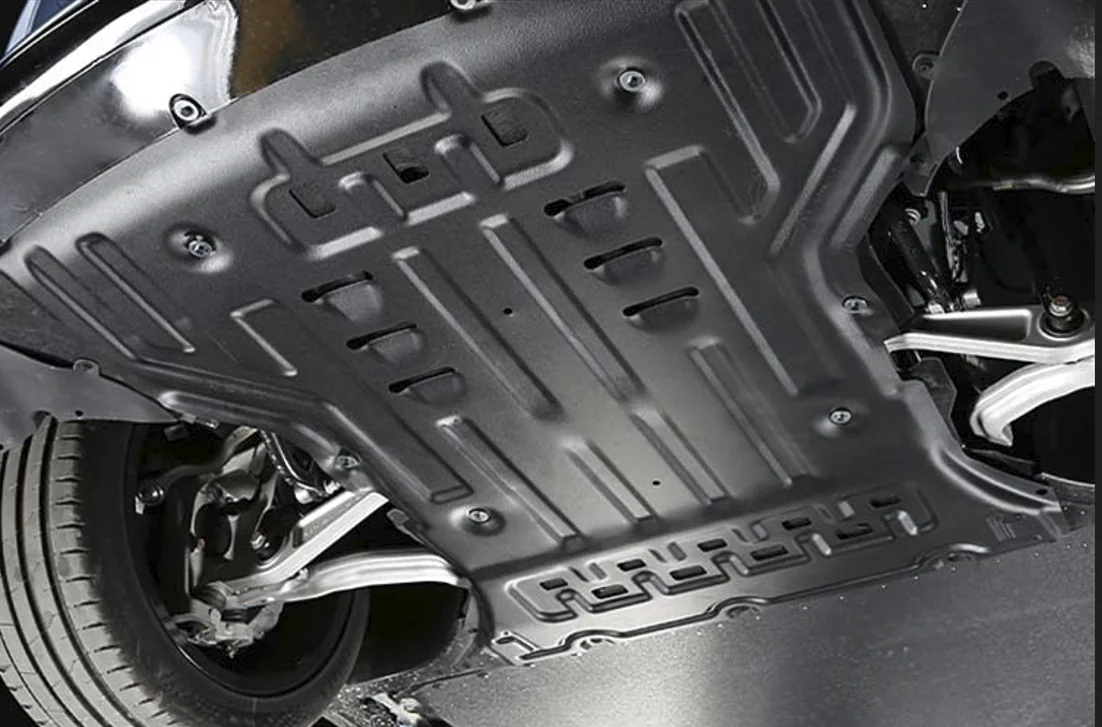
Where EV Composite Structural Underbody Shields Are Used
Precision-molded EV composite structural underbody shields deliver high impact resistance, lightweight crash protection, and superior stone-chip insulation. Their high-strength fiber-reinforced matrix and warp-free panel geometry make them essential structural components for protecting battery enclosures and undercarriage systems in electric vehicles.
Industry Applications
EV composite structural underbody shields are specified across passenger electric vehicles, commercial transport fleets, off-road industrial machinery, and aerospace ground support equipment. High-tonnage hydraulic compression molding ensures ultra-high fiber consolidation, exact wall thickness, and high tensile impact strength, enabling lightweight composite panels to endure severe kinetic strikes while safeguarding critical high-voltage battery systems.
Electric Passenger Cars, SUVs, and Cross-Country Crossovers
Provides lightweight structural bottom shielding to defend battery packs against high-speed road debris, rocks, and ground impacts. Delivers smooth aerodynamic floor coverage beneath the chassis, significantly reducing drag coefficient and extending overall driving range.
Heavy Commercial EV Trucks, Electric Buses, and Public Logistics Fleets
Protects large battery enclosures and high-voltage power distribution cables against extreme mechanical impacts and terrain scrapes. Offers non-corrosive, chemical-resistant underbody shielding that withstands harsh winter road salts, mud accumulation, and high humidity.
Military Electric Vehicles, Off-Road Utility Craft, and Mining Equipment
Serves as heavy-duty composite skid plates that absorb intense kinetic impact forces without cracking, rusting, or permanent deformation. Provides structural rigidity while keeping overall vehicle mass low, maximizing battery power efficiency in high-load industrial environments.
Automotive OEM Aerodynamic Underbody Enclosures and Battery Covers
Acts as lightweight acoustic and thermal insulation barriers between the road surface and sensitive passenger cabin floors. Ensures precise bolt-on mounting tolerances and structural flushness, facilitating quick maintenance access and seamless assembly line fitment.
Finished Product Gallery
05 — Key Advantages
Why Choose the 800-Ton Sinter Hydraulic Press
The 800-Ton Sinter Hydraulic Press delivers heavy-duty compression force and rigid parallel slide guidance for molding high-strength composite underbody shields. Its pre-stressed four-column architecture, precision heated platen controls, and multi-stage pressure ramping eliminate air voids and guarantee warp-free lightweight panels.
Technical & Commercial Benefits
High-Tonnage 800-Ton Compression for Maximum Fiber Consolidation
Applies massive, evenly distributed hydraulic force across large-format composite charge areas to eliminate internal voids and porosity. Ultra-high fiber consolidation provides exceptional impact resistance required for safeguarding underbody EV battery packs.
Multi-Stage Pressure Ramping Optimizing Resin Flow Dynamics
Features programmable pressure control that compresses thermoset and thermoplastic compounds gradually without causing fiber displacement or dry spots. Controlled curing pressure preserves uniform resin distribution while locking in consistent structural density.
Rigid Four-Column Architecture Guaranteeing Absolute Panel Flatness
Engineered with pre-stressed forged alloy steel pillars that maintain strict upper and lower platen parallelism under full 800-ton hydraulic loads. Zero platen deflection prevents panel warping, ensuring precise bolt-hole alignment and seamless underbody chassis fitment.
Integrated Heated Platen Interfaces Ensuring Uniform Resin Cure
Supports precise multi-zone thermal management across upper and lower platens to maintain target mold temperatures without hot or cold spots. Consistent cavity heating prevents localized thermal stress, curing composite panels evenly across complex geometries.
Smooth Variable-Speed Motion Preventing Surface and Shear Flaws
Decelerates slide travel speed precisely prior to mold closure, ensuring smooth resin flow without turbulence or flashing at the telescope shear edges. Controlled ram movement protects complex mold features and ensures clean, burr-free component perimeters.
High Output Cycle Efficiency Maximizing Manufacturing Profitability
Accelerated approach and return speeds up to 250 mm/Sec paired with fast hydraulic decompression deliver high throughput from 30 to 60 panels per hour. Fast cycle turnarounds reduce energy consumption per part and optimize high-volume automotive production line ROI.