1600T Four Column Hydraulic Press for Refractory Powder Block
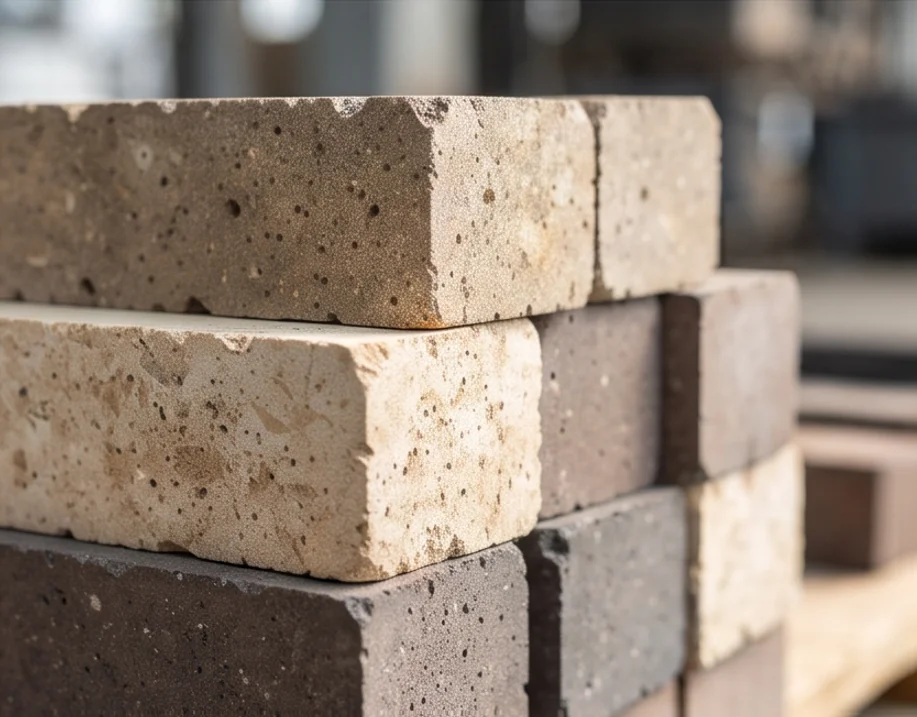
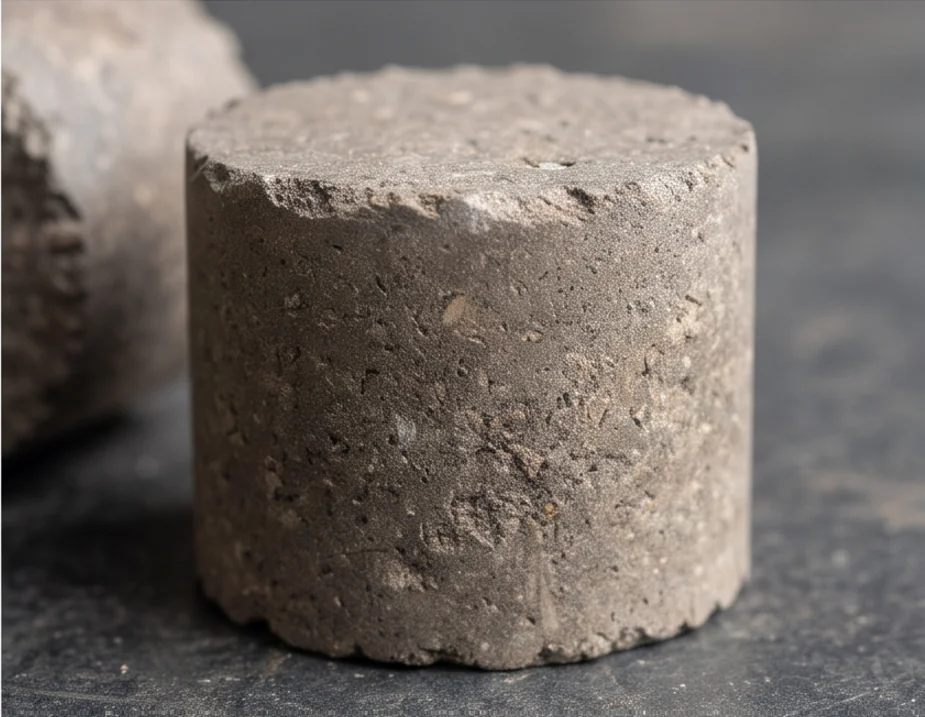
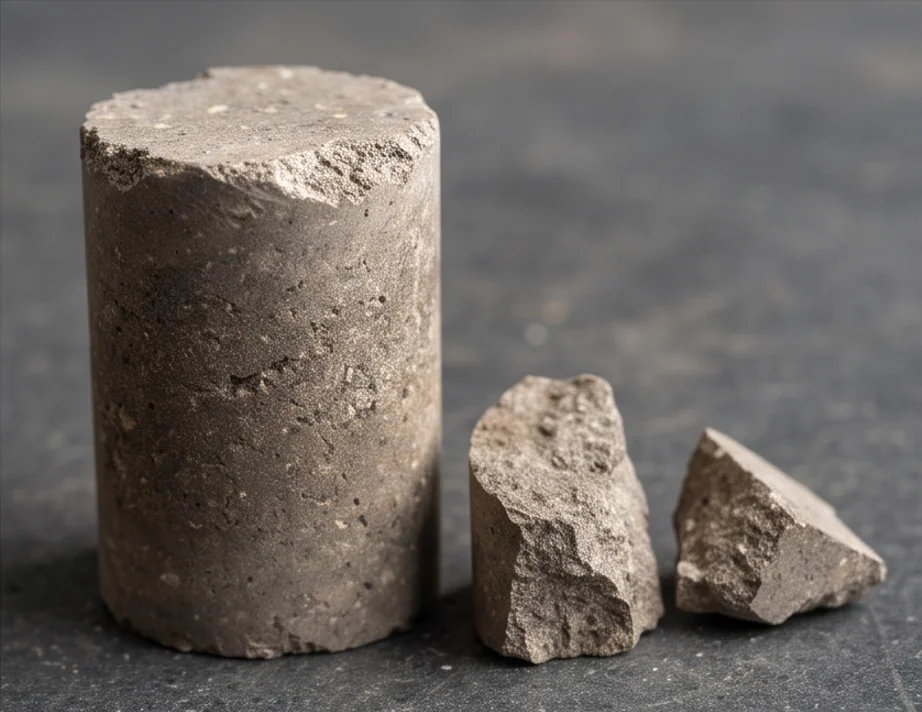
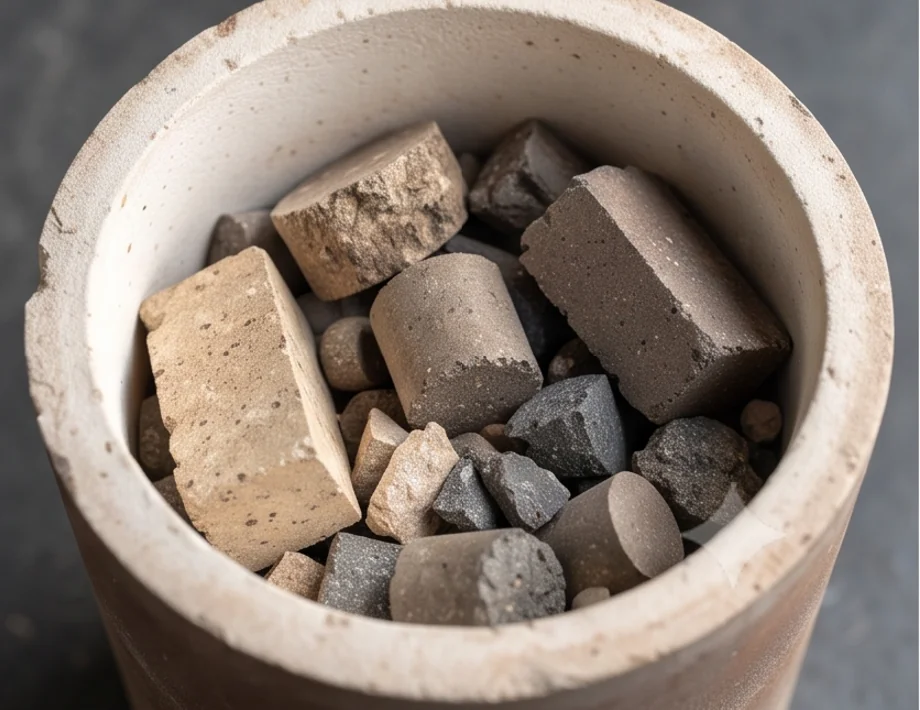
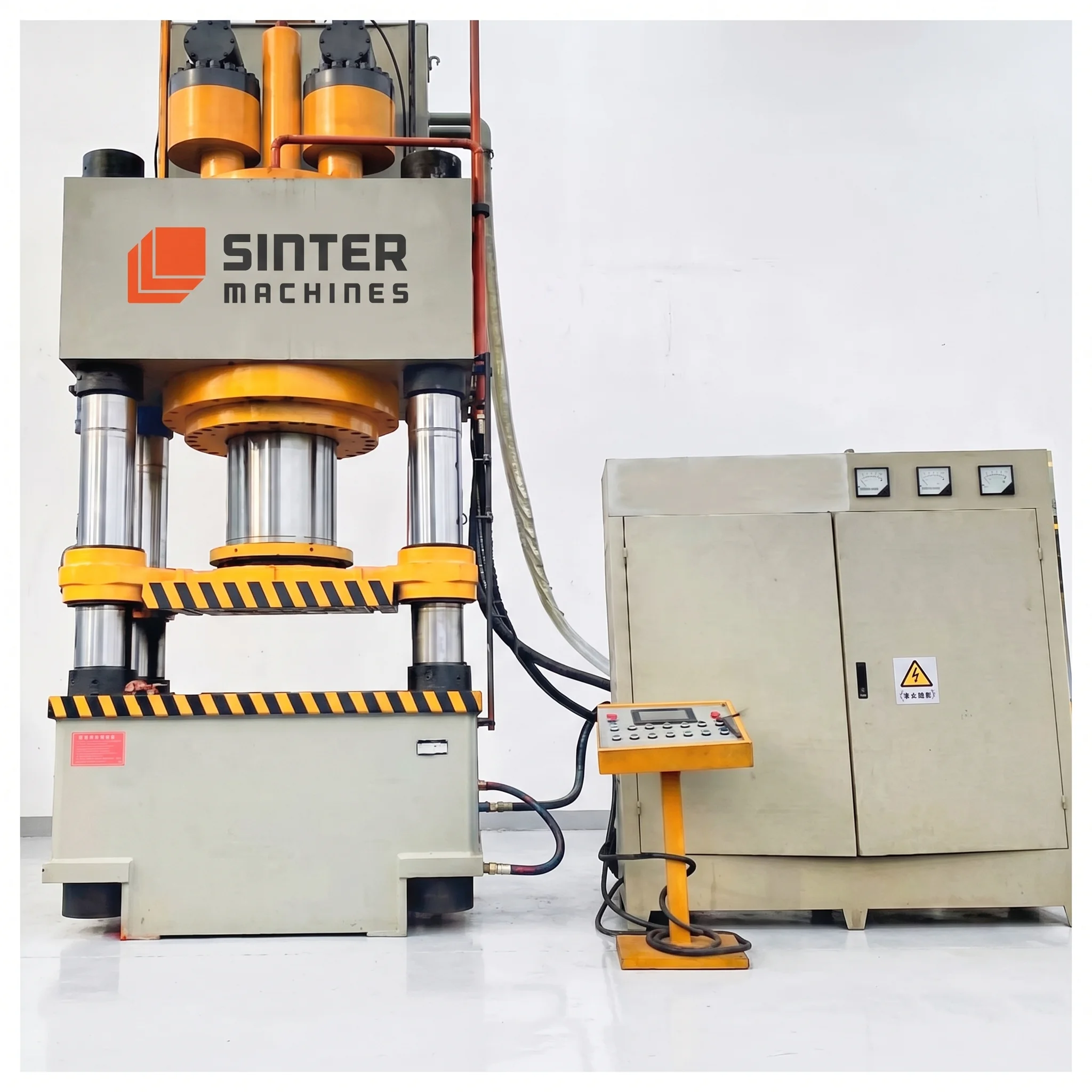
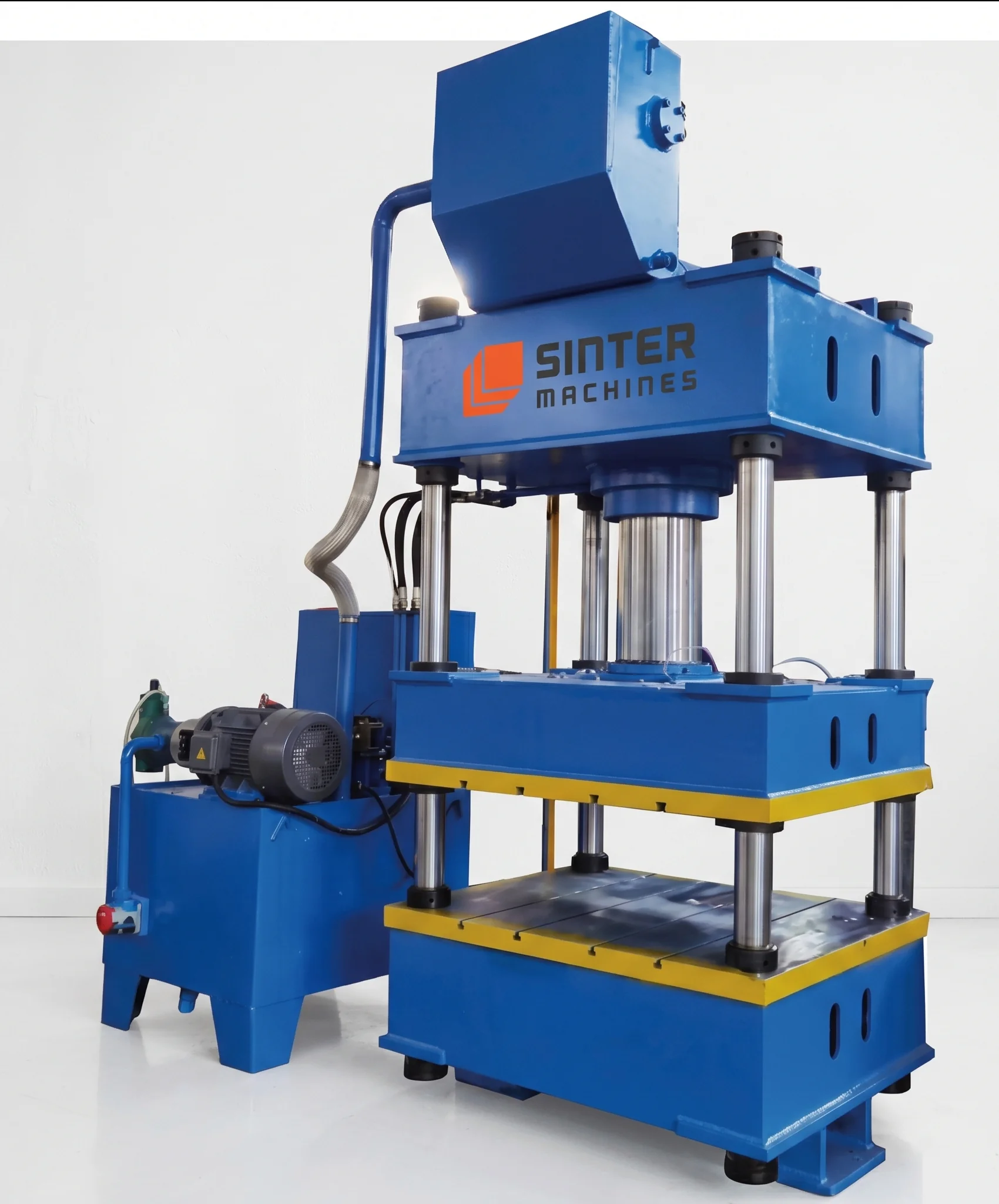
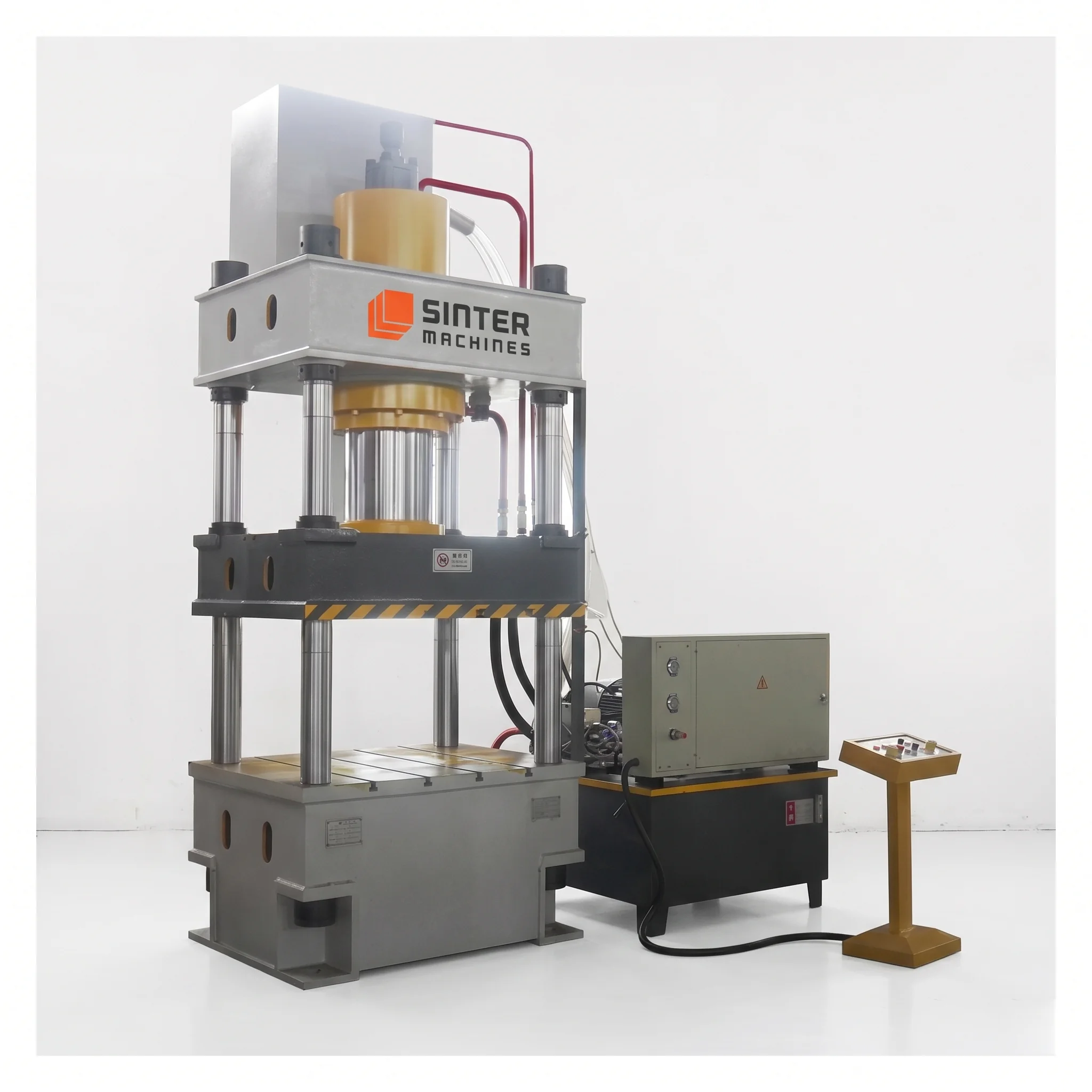
A Refractory Powder Block Forming 4-Column Hydraulic Press Machine is a specialized heavy-duty industrial compaction system engineered to compress fine refractory powders—such as calcined bauxite, alumina, magnesia, fireclay, or silica—into dense, uniform solid blocks, refractory bricks, or high-temperature furnace preforms.
These machines are utilized in steel mill lining manufacturing, kiln furniture production, glass furnace construction, and metallurgical reactor fabrication, where loose high-temperature mineral powders must be consolidated to minimize airborne dusting, eliminate internal porosity, and ensure exceptional thermal shock resistance and structural integrity prior to high-temperature firing.
01 — Engineering Considerations
Structural Design & Engineering Considerations (4-Column Architecture)
High-Precision Guidance & Parallelism: Refractory powders require strict control over compaction uniformity to prevent structural weak points or density gradients that can cause warping, cracking, or premature failure under extreme thermal stress. The four-pillar precision-ground column architecture ensures absolute platen parallelism and eliminates lateral play, preventing uneven wall pressures and ensuring consistent block density.
Rigid Load Distribution: Compacting abrasive, dense refractory powders into high-strength bricks requires continuous, balanced high tonnage. The 4-column frame withstands heavy cyclic loads without structural flexing, maintaining exact micro-tolerances between the punches and the die cavity over long operational lifespans.
Tooling Durability & Wear Resistance: Because many refractory raw materials are highly abrasive during high-pressure compaction, press tooling, die walls, and punches are engineered with hardened alloy tool steels or specialized tungsten carbide inserts to prevent rapid tooling degradation and material contamination.
02 — Technical Specifications
Key Technical Specifications
Feature | Industrial Specification Range |
Nominal Compaction Force | 50 Tons to 1200+ Tons (tailored to block cross-sectional area and target density) |
Guide Structure | 4 Hard-Chromed, Precision-Ground Steel Pillars with heavy-duty, low-friction bushings |
Die & Punch Assembly | Hardened alloy tool steel or specialized tungsten carbide inserts designed to handle abrasive refractory powders |
Hydraulic Drive | Variable displacement piston pumps or servo-hydraulic systems with smooth proportional pressure control |
Control Unit | PLC system with HMI touchscreen interface for programming fill depth, pressing tonnage, dwell time, and automated extraction |
03 — Operational Workflow
Operational Workflow
- Enclosed Volumetric Feeding: An automated, sealed feed shoe slides precisely over the die cavity to deposit a measured volume of loose refractory powder mix, minimizing airborne dust and ensuring uniform fill density.
- Multi-Stage Compression:
- Fast Approach: The top ram lowers quickly to the material surface.
- High-Pressure Compaction: The system applies controlled tonnage. A multi-action or dual-punch configuration ensures even particle interlocking and density distribution throughout the depth of the block.
- Dwell Phase: Peak pressure is held for a set duration to allow trapped air to evacuate and the refractory particles to firmly settle, minimizing internal stress or lamination.
- Controlled Decompression & Ejection: Hydraulic pressure is gradually bled off to prevent surface cracking from elastic springback. A bottom ejection cylinder then cleanly pushes the solid refractory block out of the die cavity for downstream drying, high-temperature firing, or packaging.
Finished Product Gallery