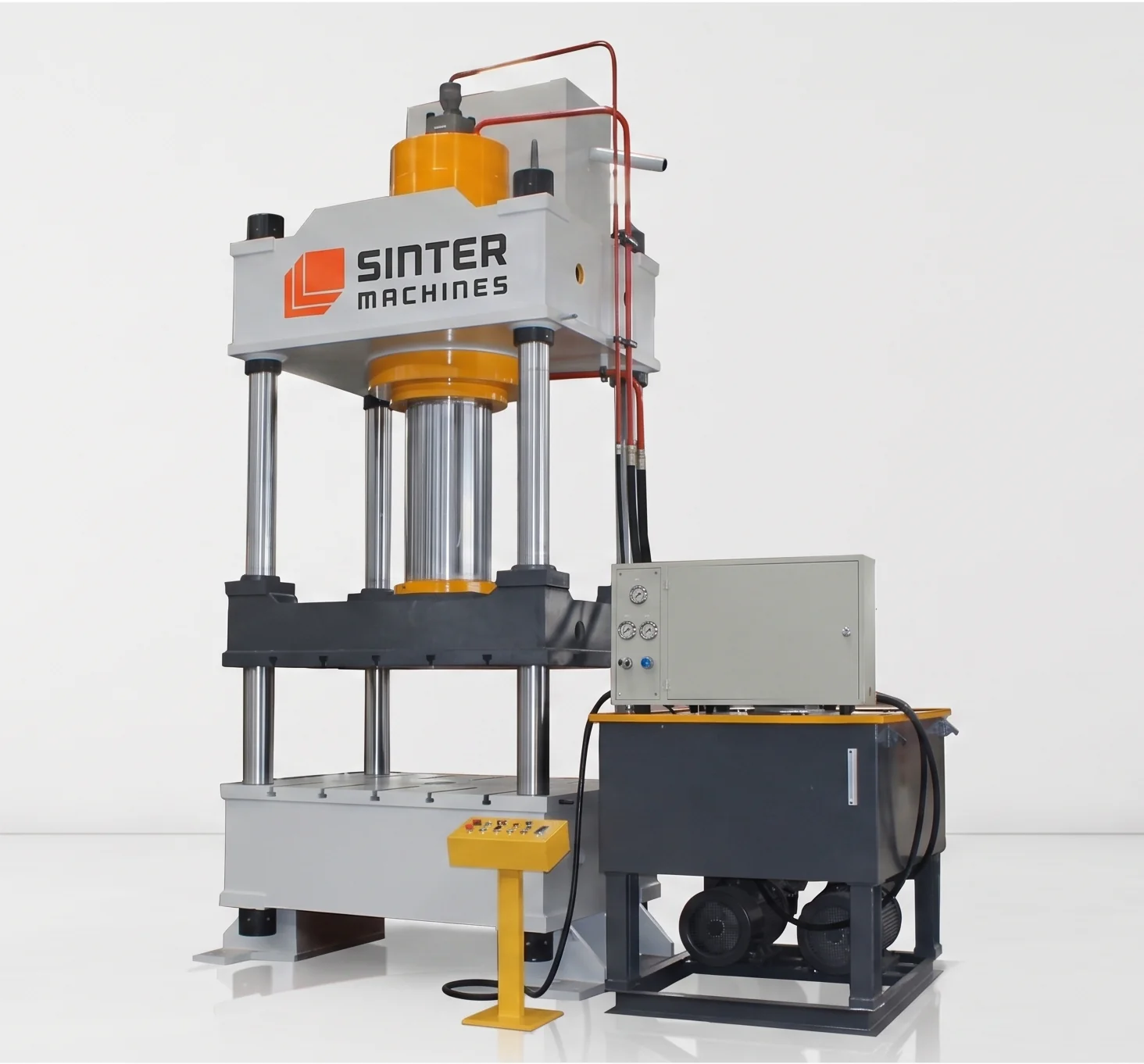
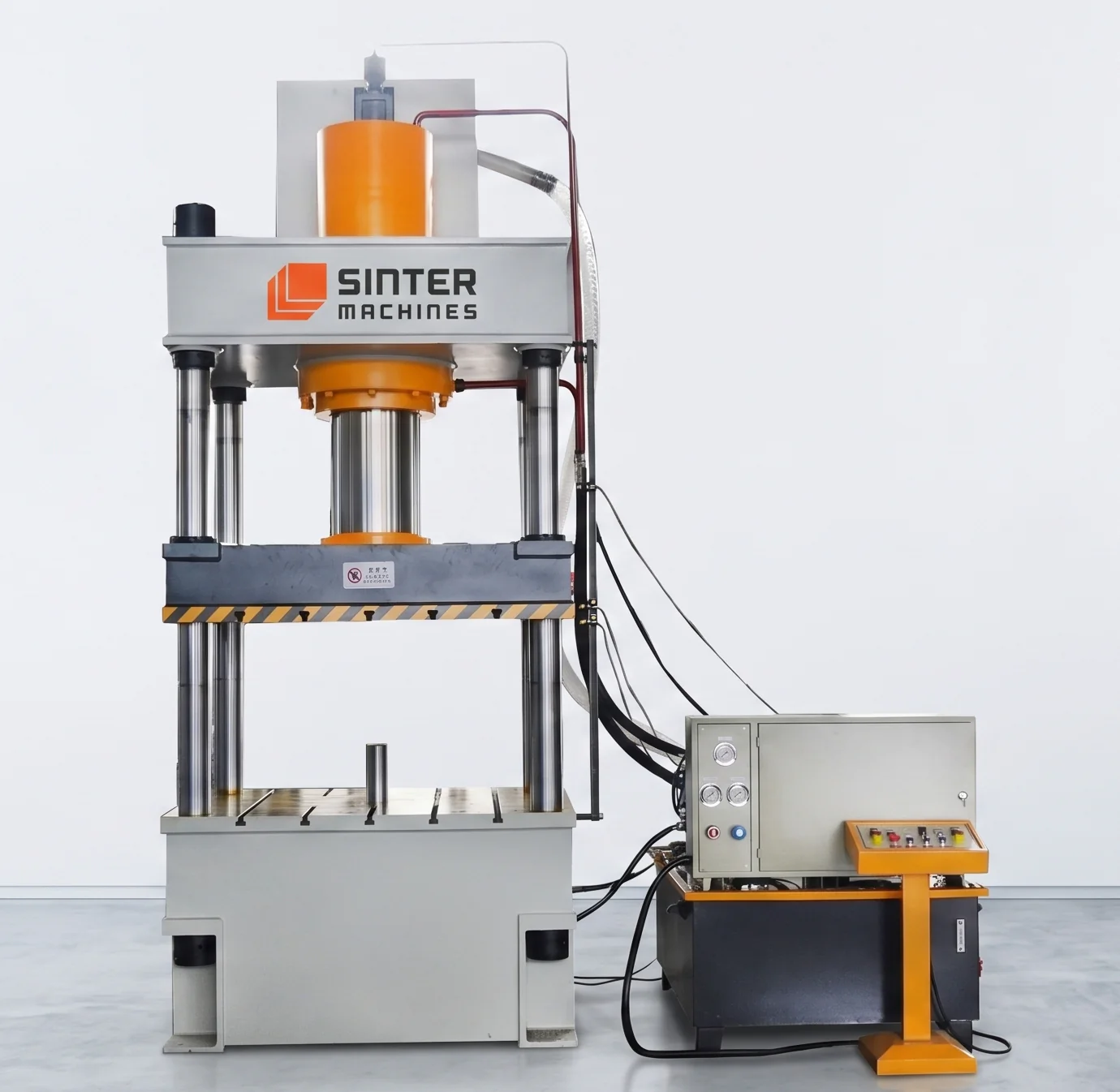
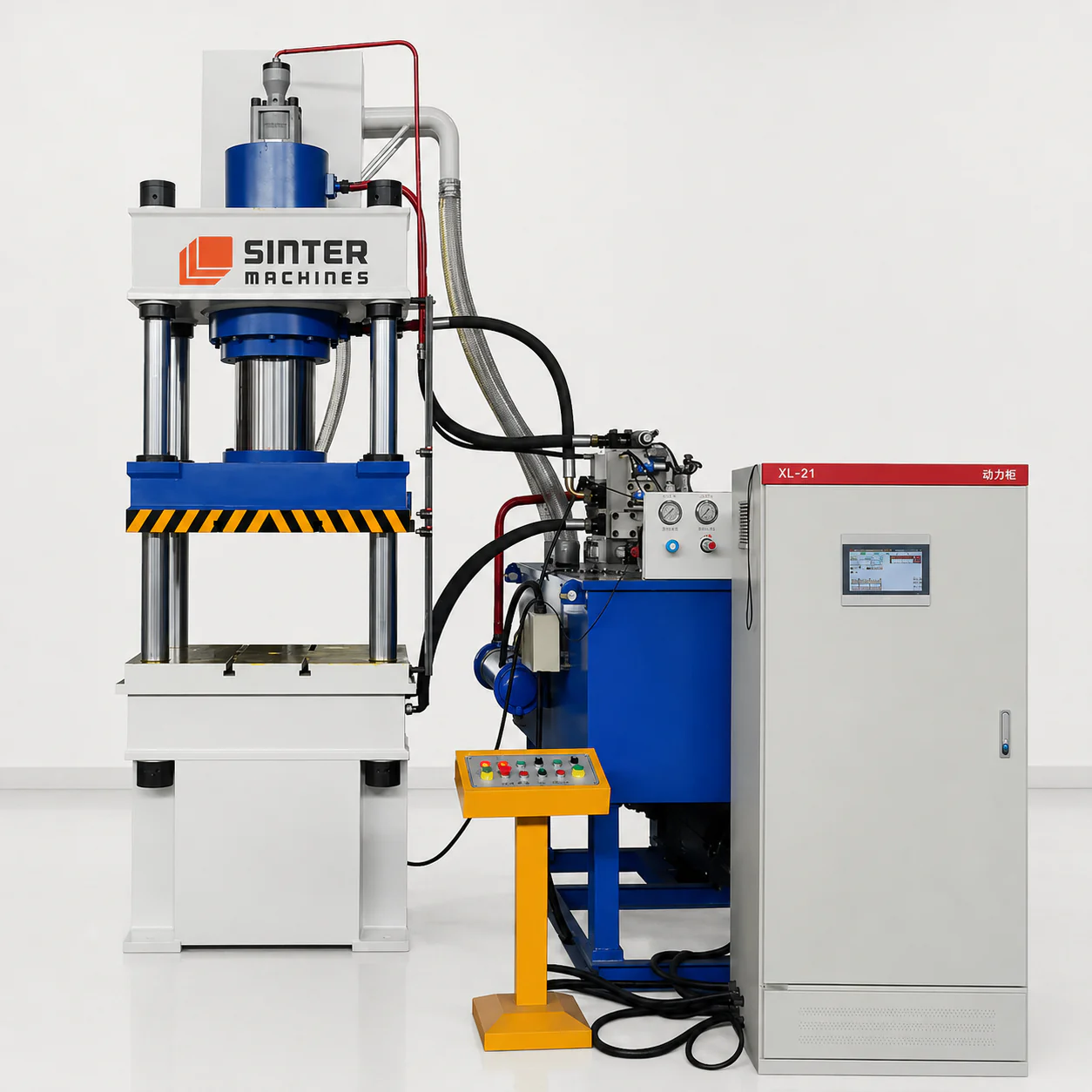
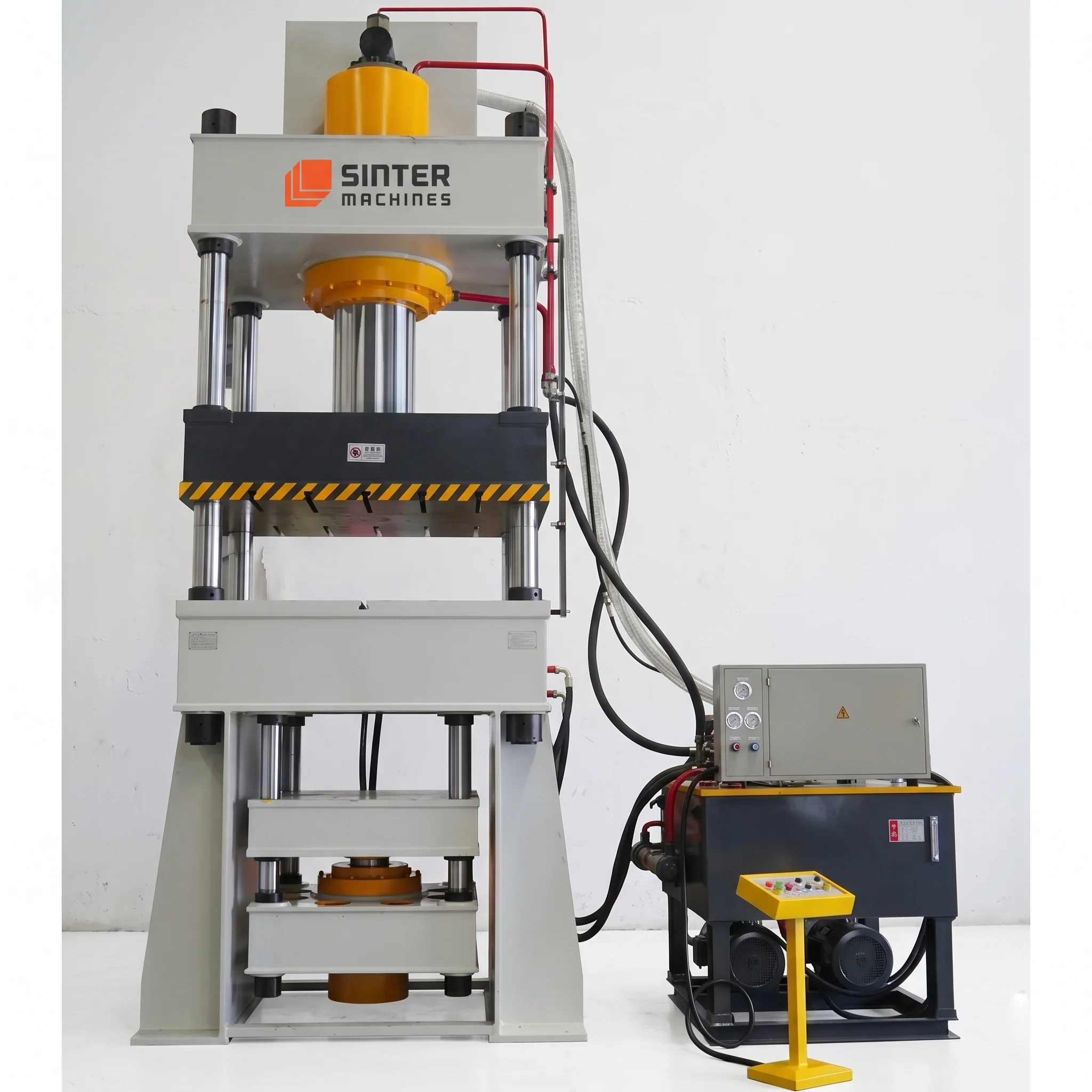
315T Welding Wire Slag Briqutte Press press view 1
Welding Wire Slag · Hydraulic Press Machine

315 Ton Four Pillar Hydraulic Press for Compacting Welding Wire Slag Briquettes

315T Rated Capacity
100 mm/s Slider Down Speed
7–12 mm/s Slider Pressing Speed
90 mm/s Slider Return Speed

01 — Press System

315 Ton Four Pillar Hydraulic Press Machine

The 315 T Four Pillar Hydraulic Press delivers powerful and uniform compaction of welding wire slag, producing dense, stable blocks that are easier to handle, transport, recycle, or dispose of efficiently.

Delivering:

  • Compacting metal powder or fines (wiredrawing dust, grindings, swarf) into briquettes
  • Forming flux cores (for fluxcored welding wires – FCAW)
  • Straightening & calibration operations
  • Recycling & waste recovery to improve yield and reduce scrap

Use Case

The 315-ton robust four-pillar structure ensures consistent pressure distribution, reduced material volume, improved workplace cleanliness, and reliable high-volume production performance with minimal maintenance requirements.

Core Applications: 

Compacting welding wire dust, metal fines, swarf, and grinding residues into dense briquettes for efficient handling and recycling. This helps reduce material waste, improve recovery rates, and lower disposal costs in welding wire production facilities.

Material: 

Welding wire slag, metal powder, wire drawing dust, steel fines, grinding particles, and metallic swarf generated during manufacturing processes. These recyclable materials are compressed into high-density blocks for reuse or value recovery.

Key Functions : 

Briquetting, compaction, flux core forming, and waste recycling operations with controlled hydraulic pressure. The press increases material density, reduces storage volume, and enhances process efficiency and sustainability.

Why 315 Ton Hydraulic Press?: 

The 315-ton capacity provides sufficient force to compact loose metallic waste into strong, uniform briquettes with high density. Its four-pillar design ensures stable pressure distribution, reliable performance, and consistent results in high-volume industrial production environments.

02 — Technical Specifications

SM 315 HP – HYDRAULIC PRESS MACHINE COMPLETE TECHNICAL DATA

The SM 315 HP – 315 Ton Hydraulic Press Machine provides high-force, uniform compaction of welding wire slag, metal fines, wire drawing dust, and grinding swarf, converting loose waste into dense, easy-to-handle briquettes for recycling and recovery.Its advanced hydraulic system and rigid four-pillar construction ensure consistent density, reduced material volume, improved yield, lower scrap handling costs, and reliable performance in high-volume welding wire production environments.

Capacity & Structural Design

  • Rated Press Capacity: 315 metric tons (≈ 3,090 kN)
  • Press Architecture: Fourpillar / fourcolumn guided hydraulic press
  • Frame Construction: Welded steel, fully stressrelieved
  • Duty Rating: Continuous precision PM production (medical)
  • Structural Safety Factor: ≥ 1.30
  • Elastic Deflection at Full Load: ≤ 0.05–0.07 mm
  • Load Distribution: Highly uniform across platen (critical for implant consistency)

Hydraulic System

Main Compaction Cylinder

  • Type: Doubleacting, precisionguided
  • Bore Diameter: 300–350 mm
  • Stroke: 350–500 mm
  • Maximum Working Pressure: 25–30 MPa (250–300 bar)

Hydraulics

  • Proportional or servo pressure control
  • Closedloop force & position feedback

Pressing Modes

  • Constantpressure compaction
  • Positioncontrolled compaction
  • Multistage pressure + dwell (density equalization for thick sections)

Platen & Working Envelope

Upper / Lower Platen Size

  • Standard: 600 × 600 mm
  • Optional: up to 750 × 750 mm

Guide Columns

  • Quantity: 4
  • Diameter: 90–120 mm
  • Finish: Hardened, hardchromed & precisionground
  • Daylight Opening: 700–900 mm
  • Platen Parallelism Accuracy: ±0.02 mm / 300 mm

Controls, Monitoring & Safety

  • Control System: PLC + medicalgrade HMI

Process Monitoring

  • Force vs stroke (each cycle)
  • Dwell time & pressure
  • Ejection position
  • Cycle data (SPCready)

Safety Systems

  • Twohand control (manual mode)
  • Full guarding / light curtains
  • Pressurerelief & overload protection
  • Emergency stop (medical manufacturing compliant)

SM 315 HP — Model Specifications

  • Nominal Force: 3150 KN
  • Maximum Hydraulic Pressure: 25 MPa
  • Max Opening Height of the Slider: 1000 mm
  • Max Stroke of the Slider: 600 mm
  • Effective Bed Size: 800 × 800 mm
  • Slider Down Speed: 100 mm/s
  • Slider Pressing Speed: 7–12 mm/s
  • Slider Return Speed: 90 mm/s
  • Ejector Cylinder Nominal Force: 300 KN
  • Stroke of the Ejection Cylinder: 300 mm
Production Case Study

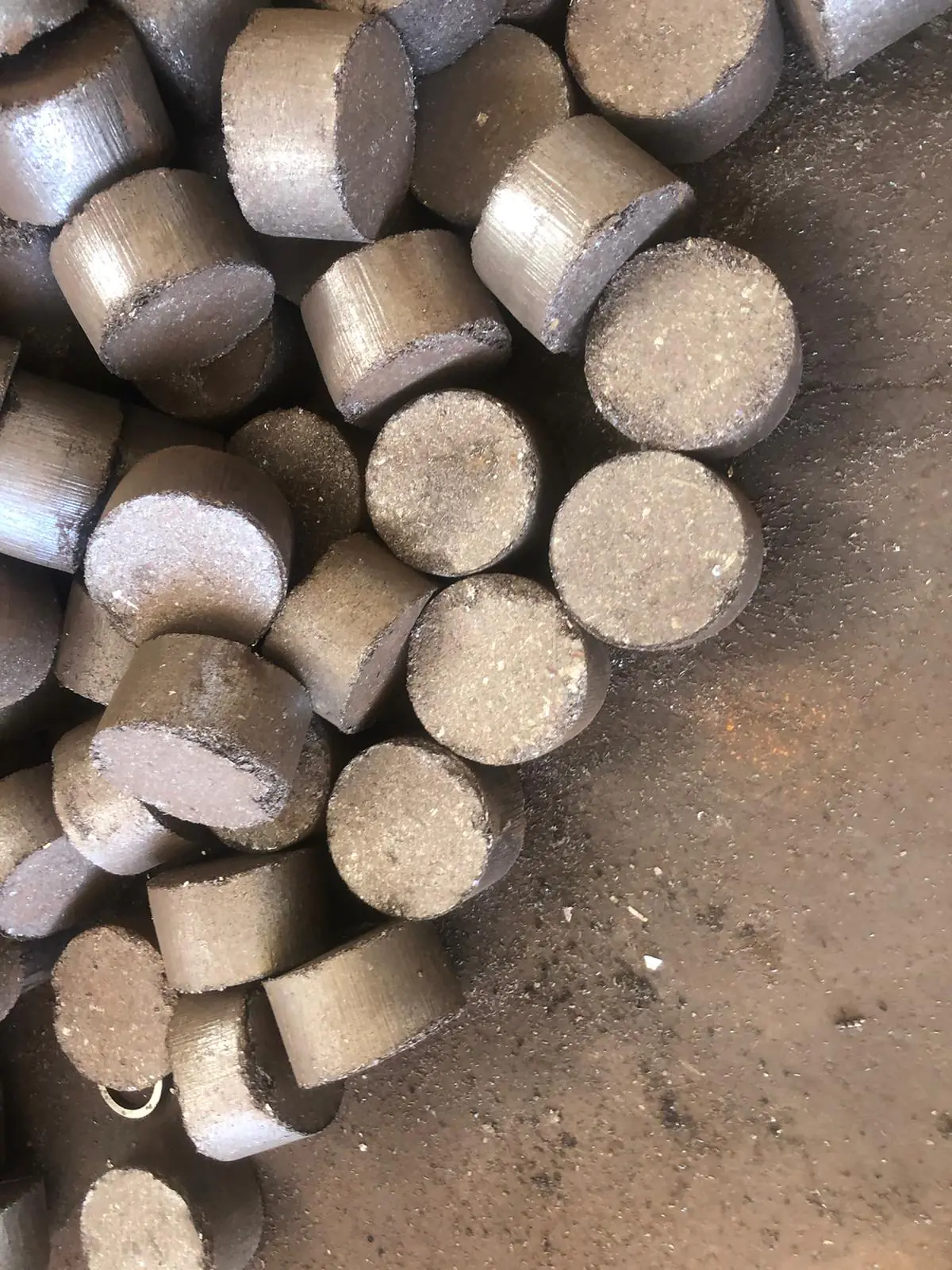
Compacting Welding Wire Slag Briquettes Production Line

Ø15–60 mmSize range
250–300 tonsPress Load
10–25 SecCycle time
5.5 – 7.0 g/cm³Briquette Density
High dimensional accuracy
Uniform density
Consistent mechanical properties
Improved Implant Quality
Enhanced Process Reliability
Better Regulatory Compliance
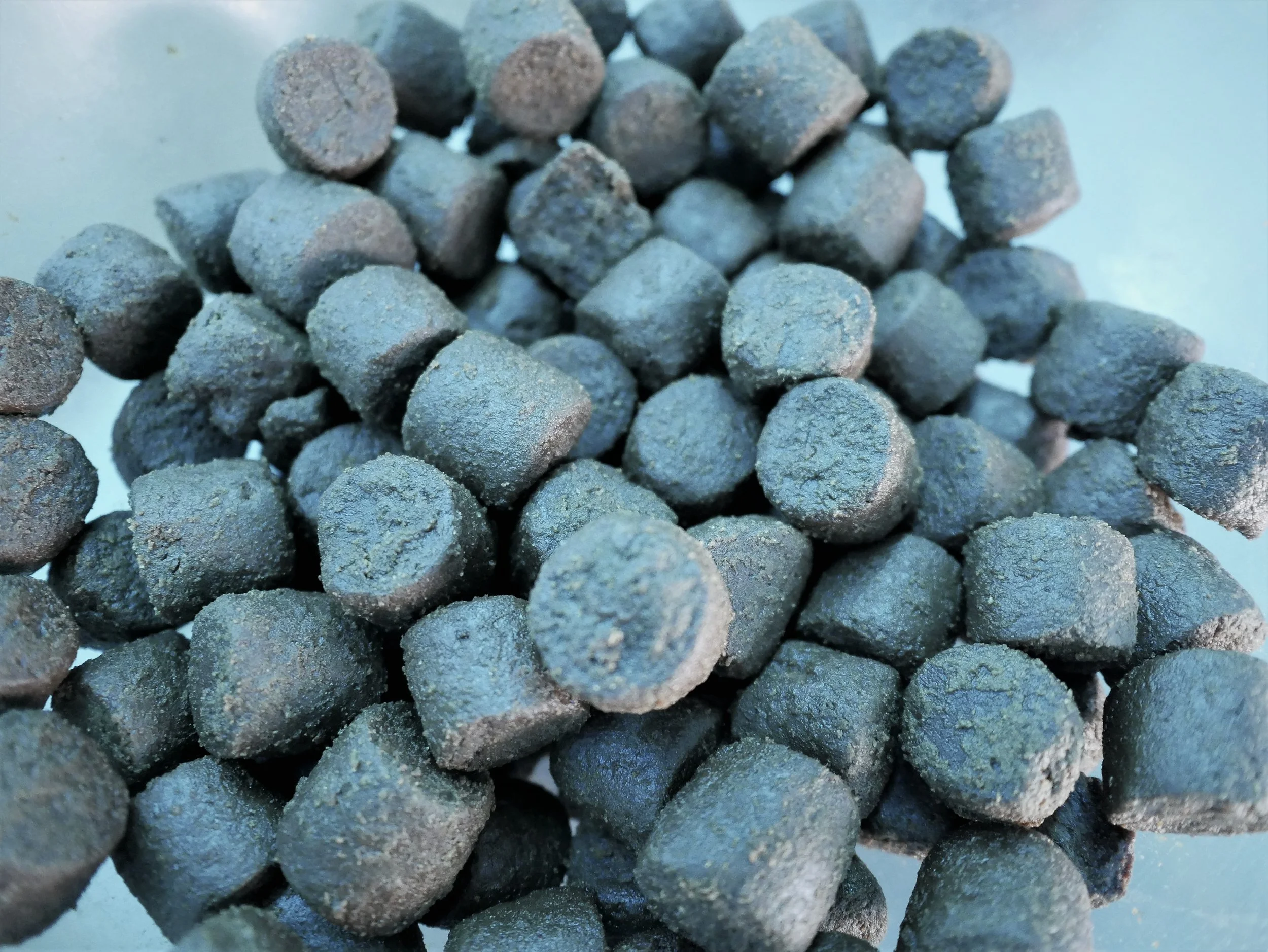
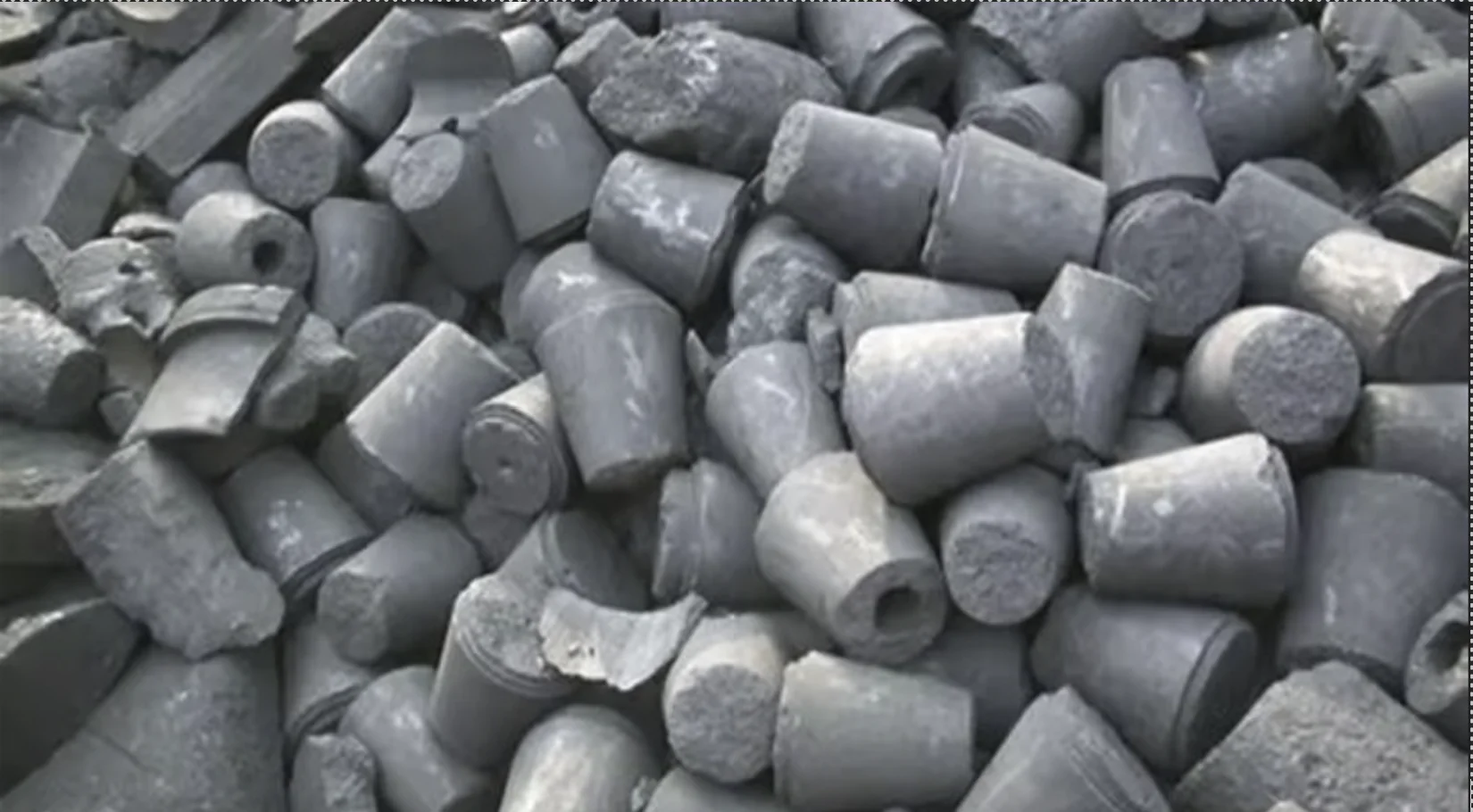
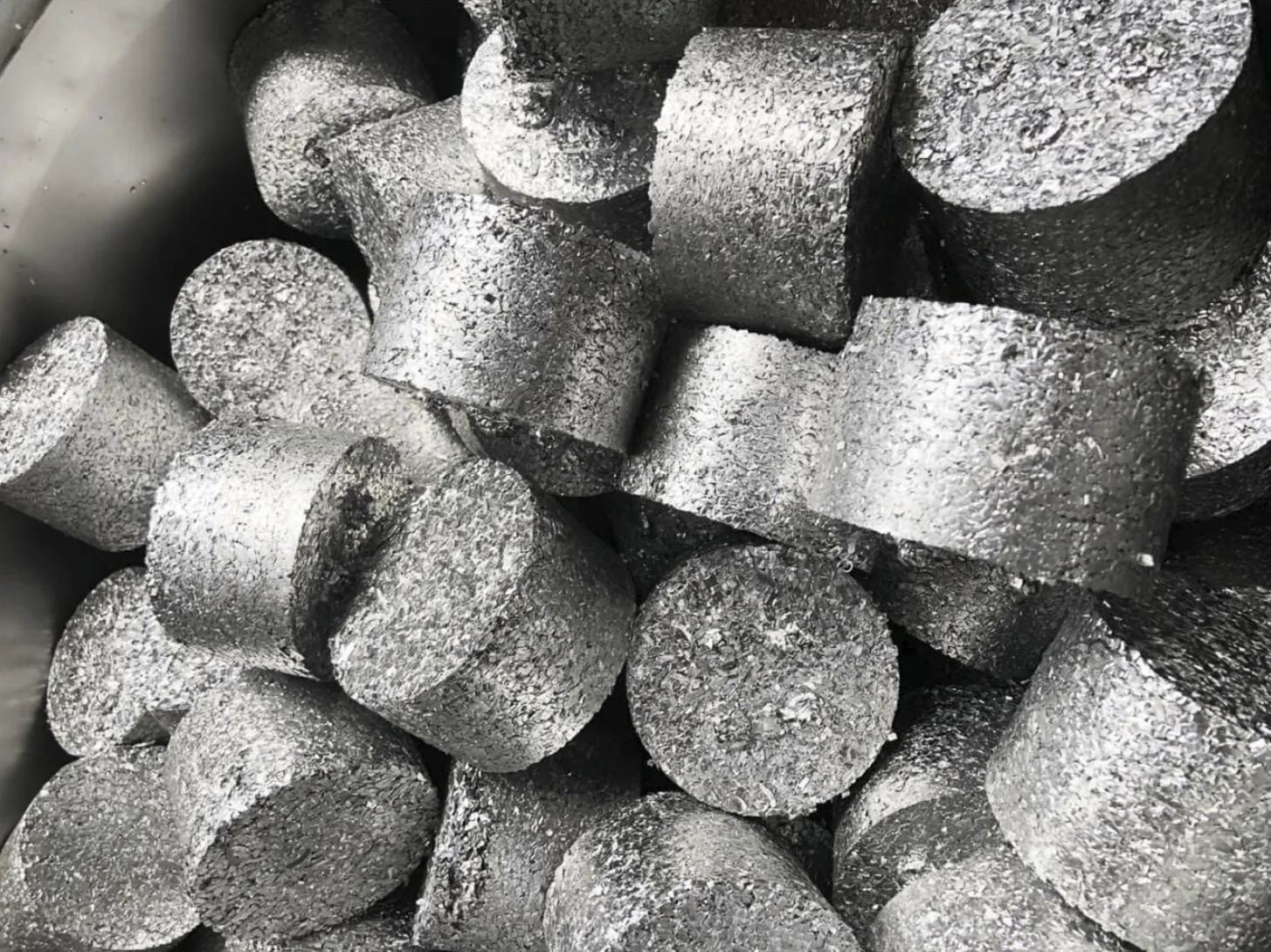
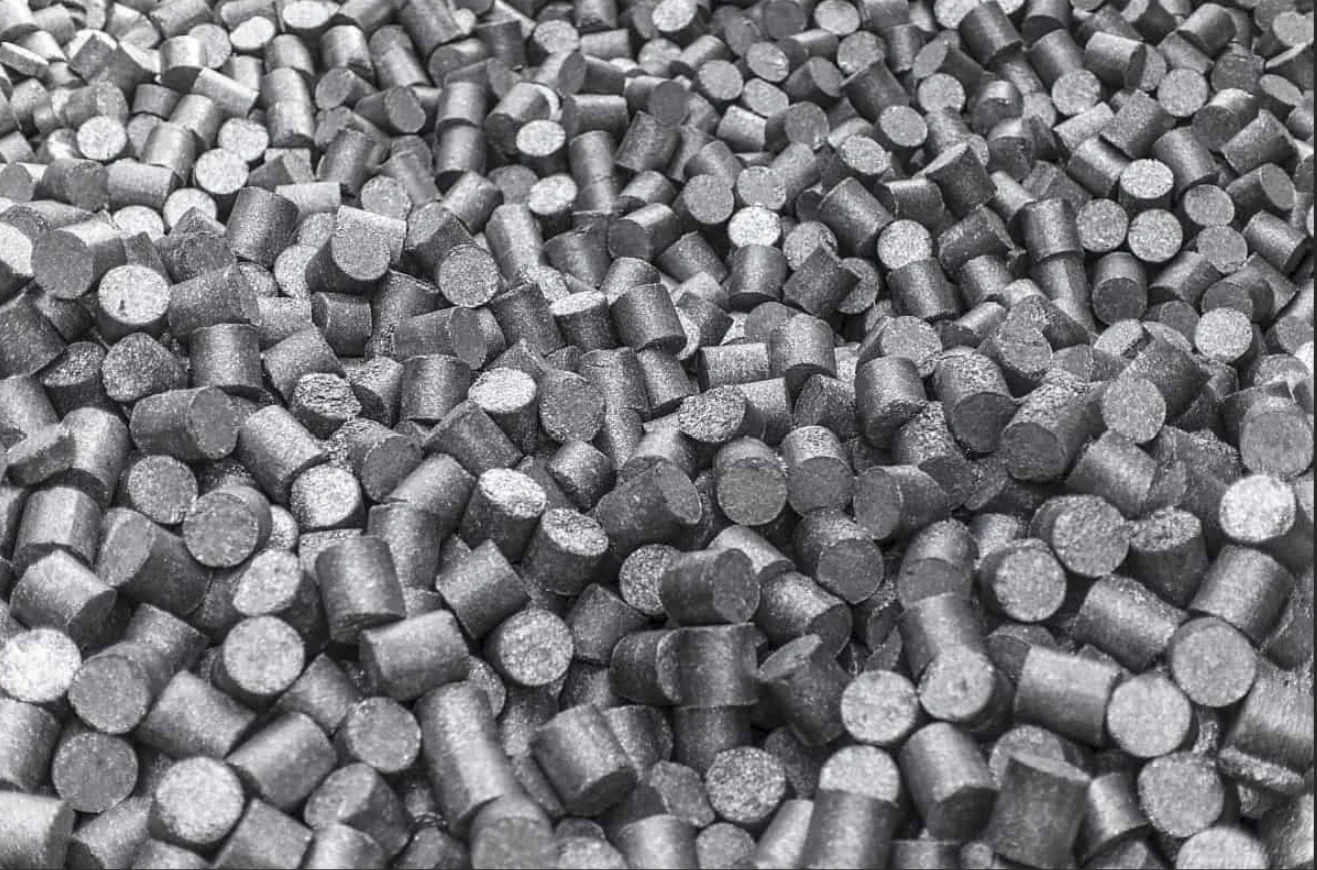
High-density briquettes
Reducing waste volume by up to 80–90%

03 — Die / Mold System

Precision Compacting Welding Wire Slag Briquettes Die Mold Engineering

The die mold system is specially engineered for compacting welding wire slag into high-density briquettes with consistent shape, dimensional accuracy, and optimum compaction strength. Its precision tooling design ensures stable operation under high hydraulic loads while minimizing wear and maximizing production efficiency.

Technical Specifications (Tooling)

Die Type Closed-compaction cylindrical or rectangular briquetting die with high-pressure compression design.

Die Materials Hardened alloy tool steel (H13 / D2 grade) with wear-resistant heat treatment.

Tool Configuration & Construction Precision-machined die cavity, punch, guide pillars, guide bushes, backing plates, and heavy-duty die holder assembly.

Key Tooling Features High compressive strength, replaceable wear parts, anti-galling surfaces, and optimized slag discharge design.

Alignment Accuracy Precision-guided system with alignment accuracy up to ±0.05 mm for consistent briquette formation.

Materials Formed Welding wire slag, grinding dust, metallic fines, welding residues, and other r recyclable industrial waste materials.

Surface Finish Fine-ground and polished working surfaces with Ra 0.8–1.6 µm finish for smooth compaction and reduced friction.

Tool Life Typically 500,000–1,000,000 compaction cycles depending on material characteristics, operating pressure, and maintenance practices.
Case Study (Die Performance)

Precision Compacting Welding Wire Slag Die Mold Engineering

H13 / D2 / alloy tool steelDie Material
54–60 HRCHardness
Nitriding / TiNSurface Treatment
Excellent performance in compacting welding wire slag
Producing uniform high-density briquettes with consistent dimensions and structural integrity
Accurate punch-to-die alignment minimized material losses
Extended service life with minimal wear
Reducing maintenance downtime and replacement costs

04 — Product Application

Where Compacting Welding Wire Slag Briquettes Are Used

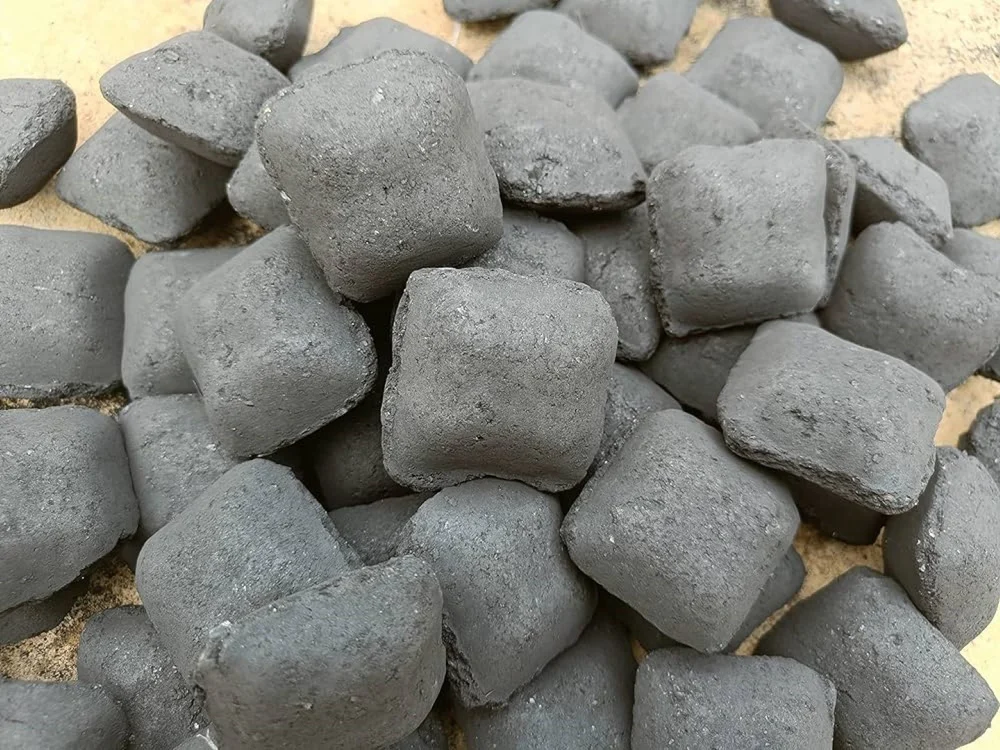
Precision compacting converts welding wire slag into dense, uniform briquettes that are easier to handle, transport, and recycle. These briquettes help industries improve waste management, recover valuable materials, and reduce environmental impact.

Industry Applications

Metal Recycling Plants

Compacted welding wire slag briquettes are processed in recycling facilities for the recovery of metallic content. Their high density improves handling efficiency and reduces transportation costs.

Steel and Foundry Industries

Briquettes can be reused as secondary raw materials in steelmaking and foundry operations. This supports resource conservation while lowering material procurement expenses.

Industrial Waste Management Centres

Waste processing facilities use briquettes for organized storage and environmentally responsible disposal. The compact form minimizes dust generation and storage space requirements.

Manufacturing Plants with Circular Economy Programs

Industries integrate slag briquettes into recycling and sustainability initiatives to maximize material recovery. This helps reduce landfill waste and enhance overall operational efficiency.

Finished Product Gallery

05 — Key Advantages

Why Choose the 315-Ton Sinter Hydraulic Press

The 315-Ton Sinter Hydraulic Press is engineered to deliver powerful, reliable, and efficient compaction of welding wire slag into high-density briquettes. Its robust construction, precision hydraulic control, and durable tooling ensure maximum productivity, reduced waste volume, and long-term operational savings.

01

High Compaction Force

The 315-ton hydraulic capacity generates exceptional compression pressure for producing dense and durable slag briquettes. This results in significant volume reduction and improved material handling.

02

Consistent Briquette Quality

Precision hydraulic control ensures uniform density, shape, and dimensional accuracy in every briquette. Consistent output enhances storage, transportation, and recycling efficiency.

03

Heavy-Duty Industrial Construction

Built with a rugged steel frame and high-strength components, the machine withstands demanding industrial applications. Its durable design ensures reliable long-term performance.

04

Reduced Waste Management Costs

Compacting welding wire slag minimizes storage requirements and lowers transportation expenses. The increased density also improves the economic value of recyclable material.

05

Low Maintenance and Long Tool Life

Advanced hydraulic systems and wear-resistant die tooling reduce maintenance requirements and downtime. This helps maximize machine availability and production efficiency.

06

Enhanced Sustainability and Material Recovery

Briquetting enables efficient recovery and recycling of valuable metallic residues from welding wire slag. This supports environmental goals while reducing landfill disposal and raw material consumption.