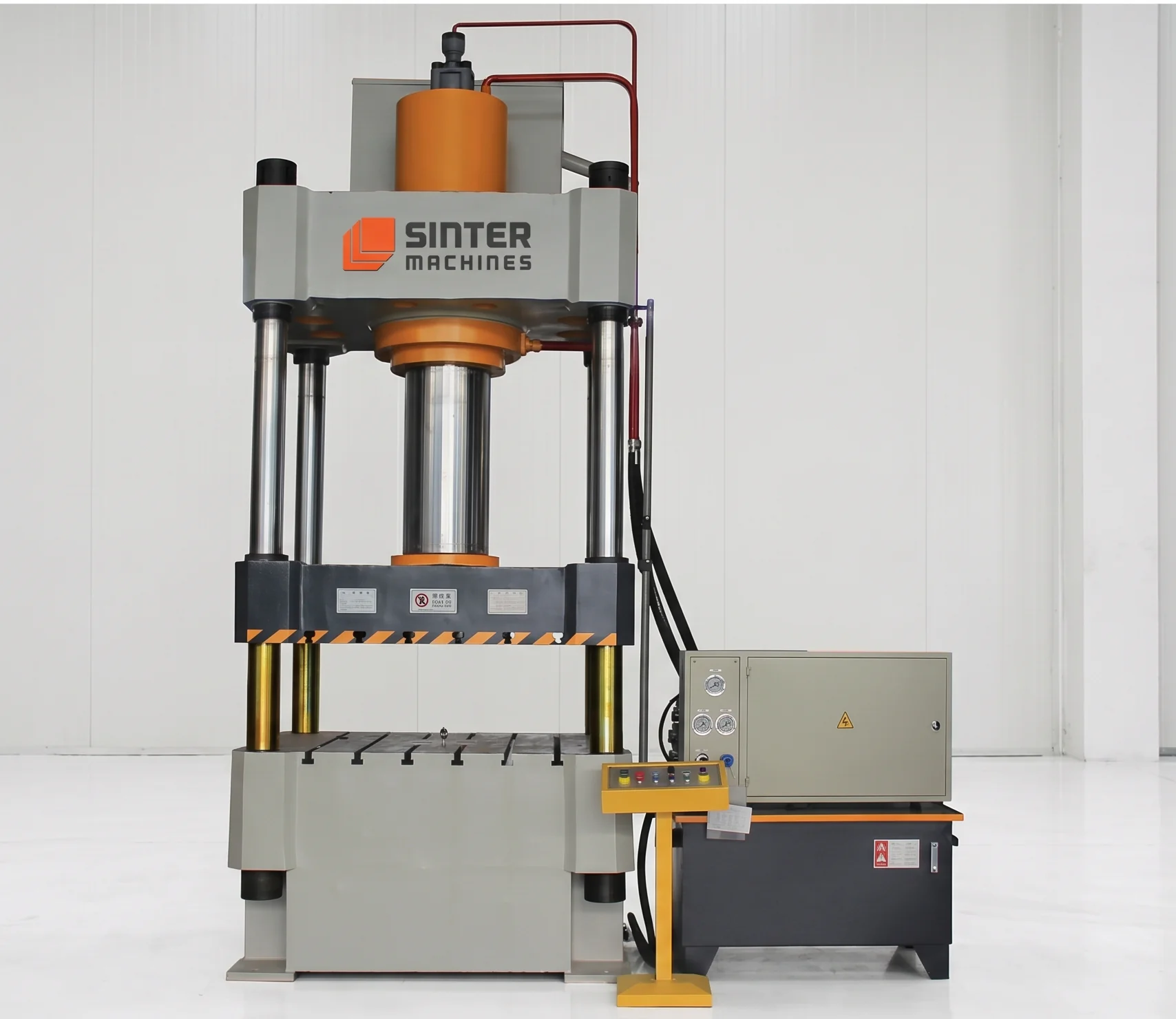
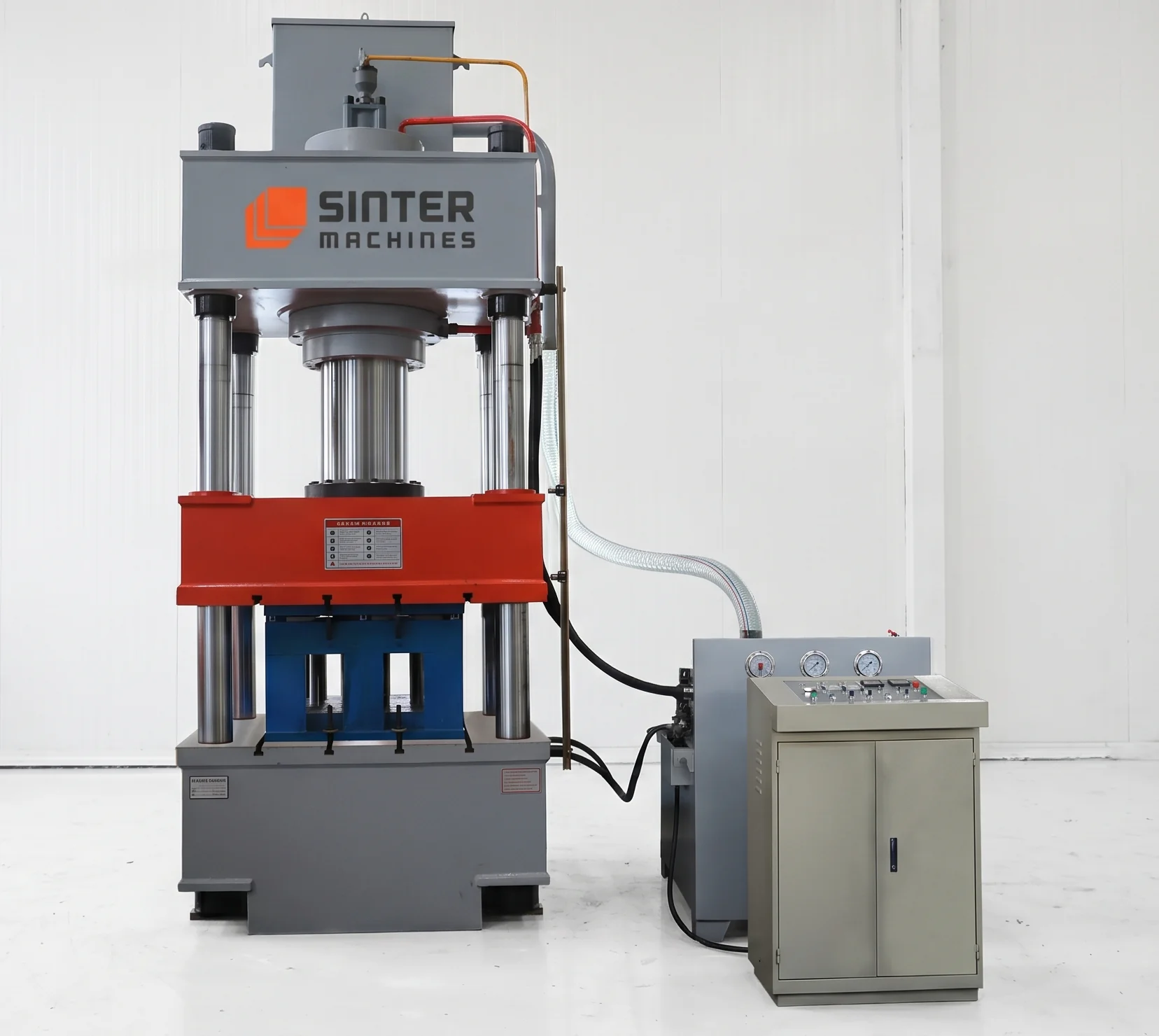
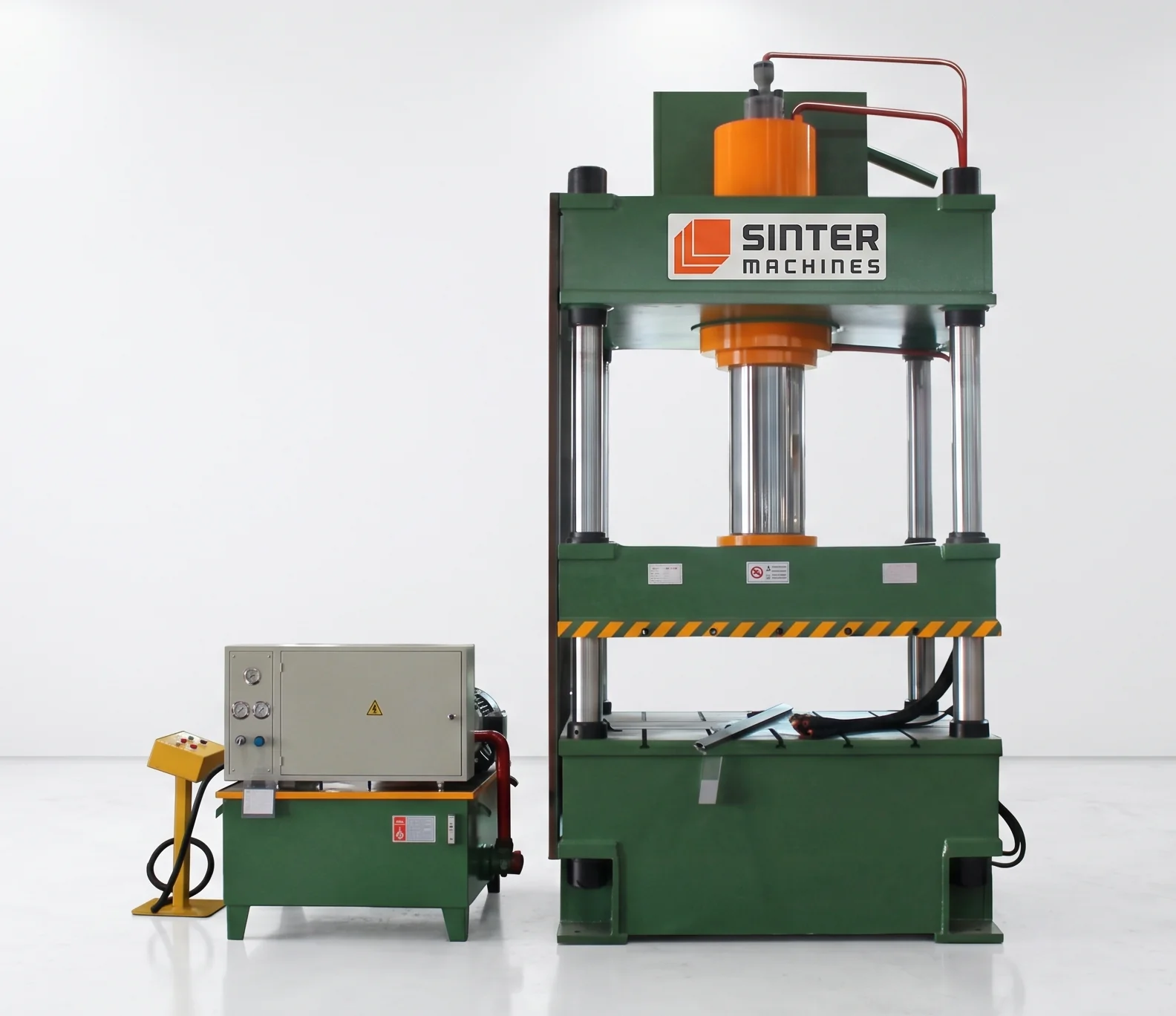
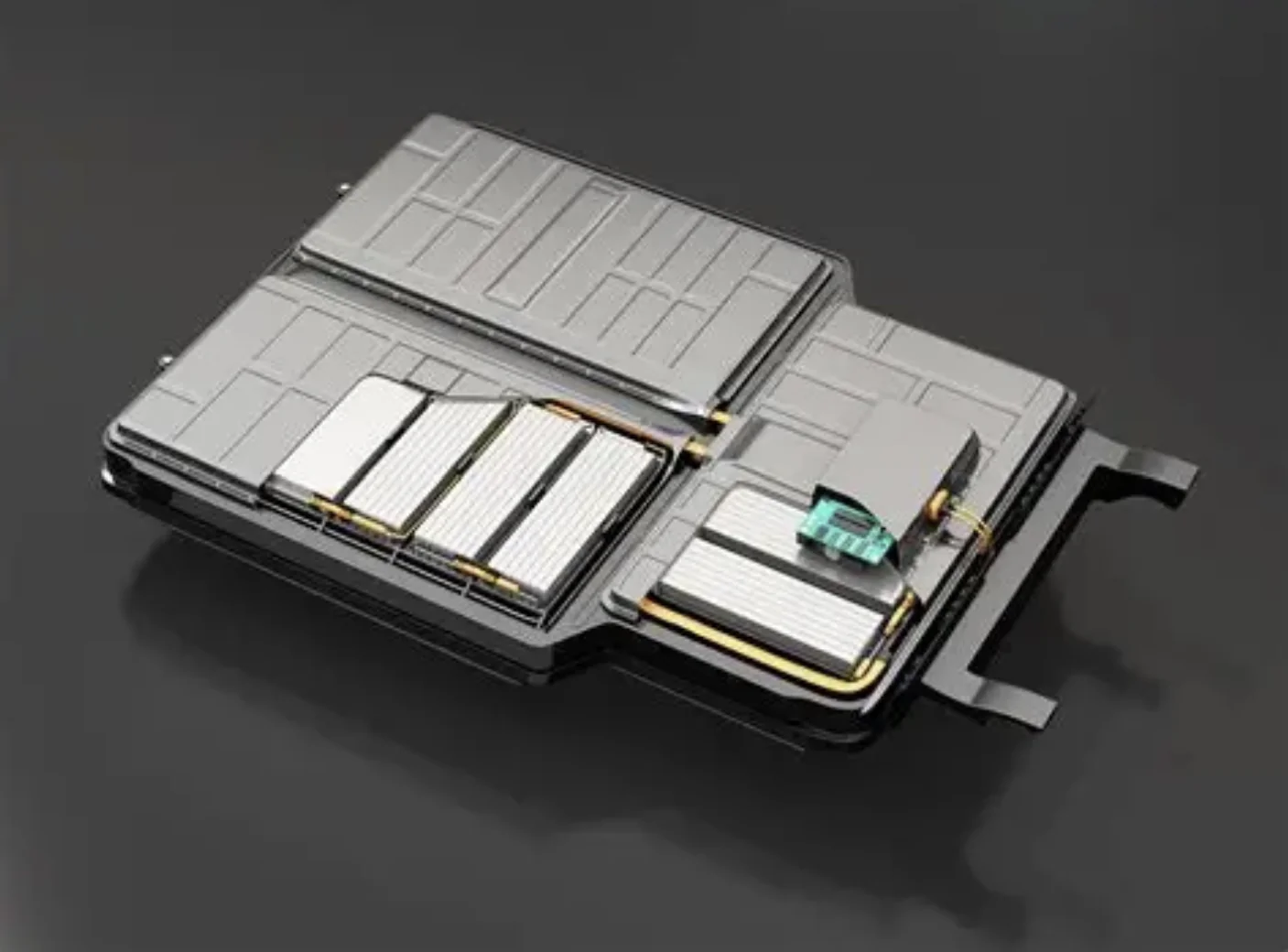
315T Electrical housings Press press view 1
Electrical housings · Hydraulic Press Machine

315 Ton Four Pillar Hydraulic Press for Forming Sheet Metal Electrical housings and enclosures

315T Rated Capacity
100 mm/s Slider Down Speed
7–12 mm/s Slider Pressing Speed
90 mm/s Slider Return Speed

01 — Press System

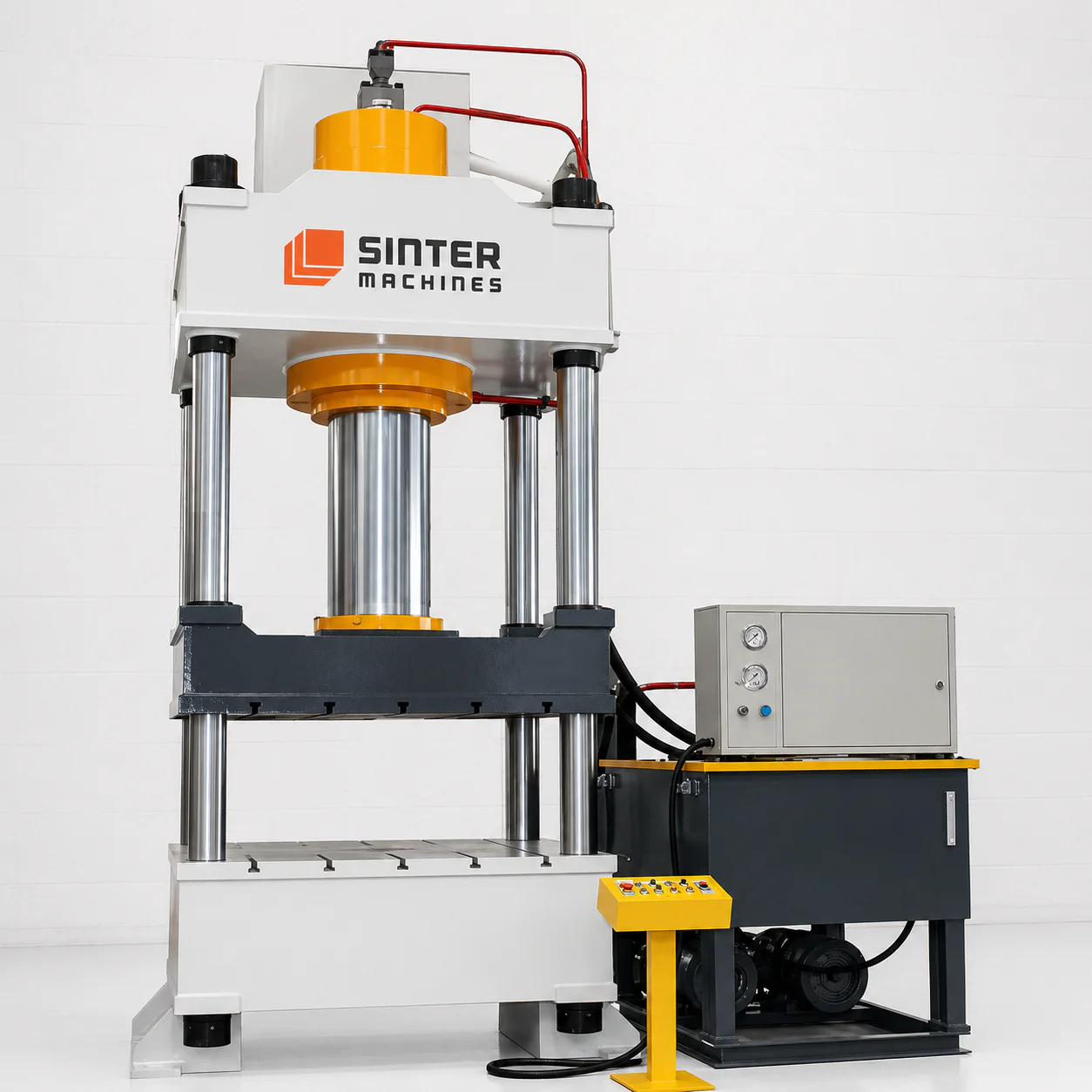
315 Ton Four Pillar Hydraulic Press Machine

The 315-ton four-pillar hydraulic press provides a rigid, highly precise forming solution tailored specifically for electrical housings and enclosures. It ensures exceptional dimensional accuracy, handles pre-coated materials without surface damage, and lowers scrap rates for high-volume OEM manufacturing.

Use Case

Electrical housings protect sensitive components and require absolute geometric precision for proper mounting, sealing, and automated assembly. The 315-ton four-pillar press provides the rigid guidance and controlled pressure needed to form flat, distortion-free panels and box sections.

Core Applications: Deep drawing, shallow dish forming, structural bending, and precise punching/blanking of panels for industrial electrical distribution networks and control systems.

Material: Cold-rolled carbon steel, galvanized iron (GI), stainless steel (grades 304 and 316), and pre-painted aluminum sheets ranging from 1.0mm to 3.0mm in thickness.

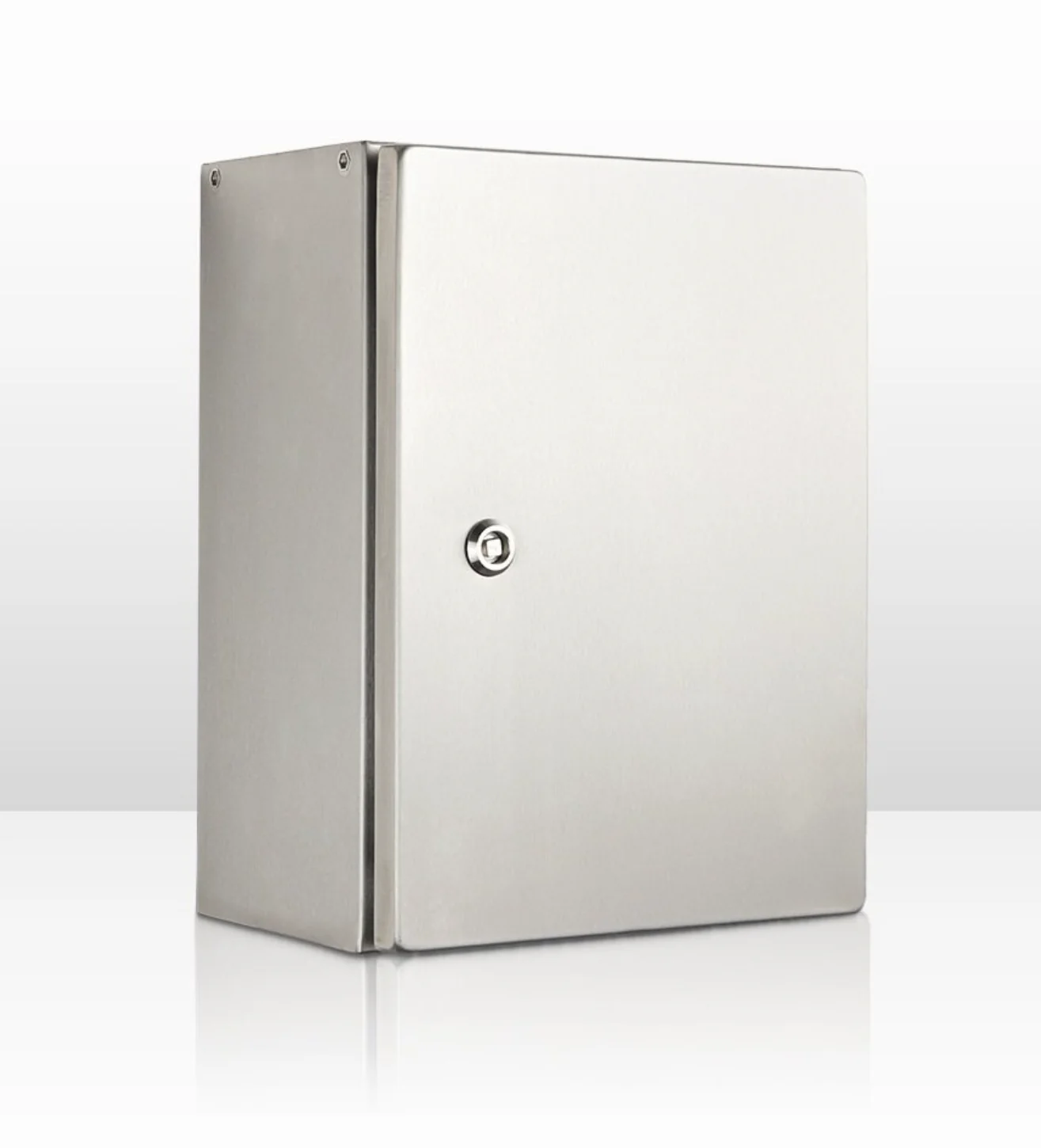
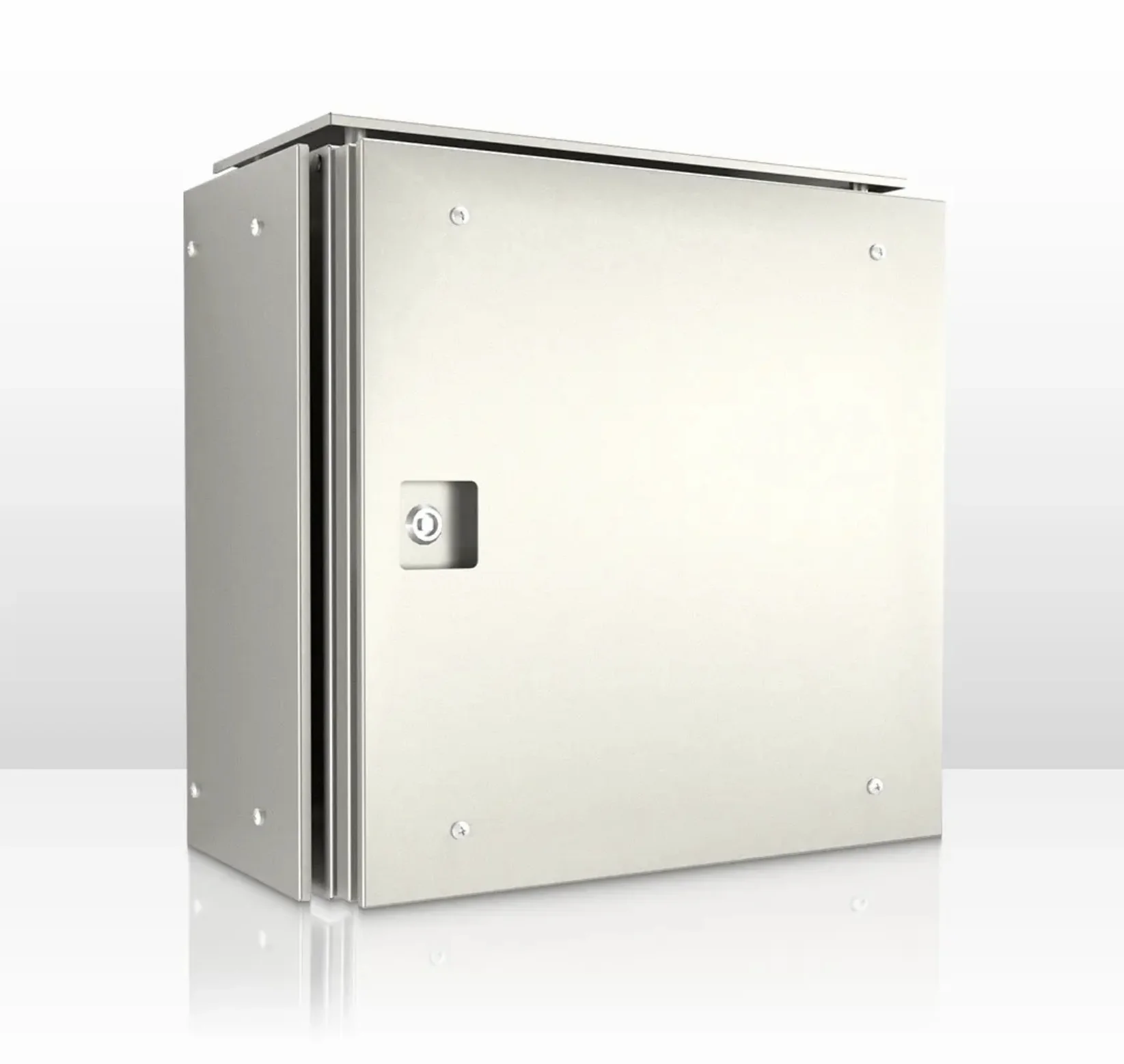
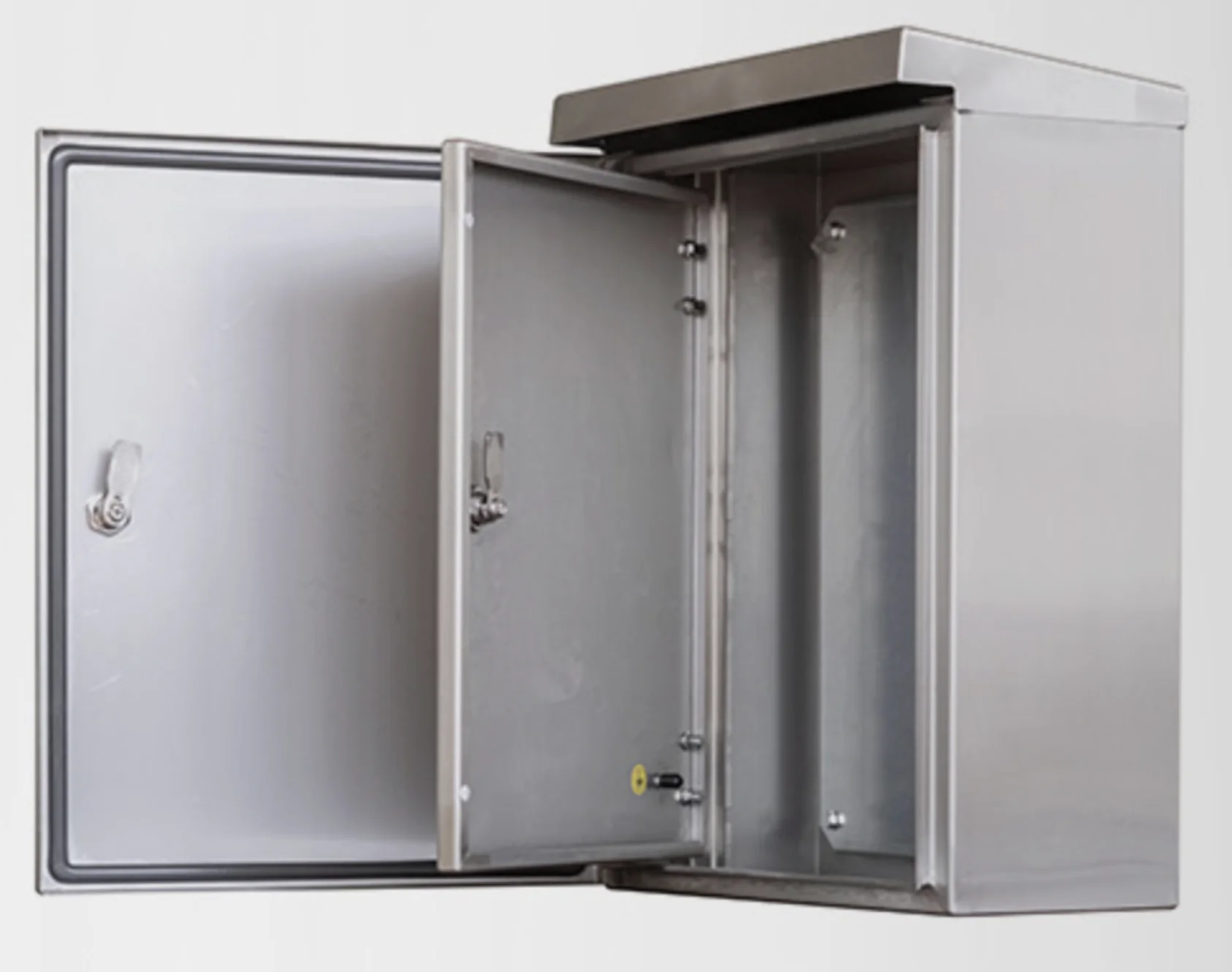
Typical Products Formed: Wall-mount electrical junction boxes, modular distribution board panels, severe-duty industrial switchgear cabinets, and outdoor, weather-proof telecommunication kiosk enclosures.

Key Functions: Maintains perfectly uniform four-point pressure, executes multi-stage programmable stroke speeds, protects delicate surface coatings, and controls material flow to eliminate localized tearing.

Why 315-Ton Hydraulic Press?: It provides the exact tonnage sweet spot for medium-sized enclosure gauges, combining rigid four-pillar guidance to stop off-center deflection with lower operating costs than oversized heavy machinery.

02 — Technical Specifications

SM 315 HP – HYDRAULIC PRESS MACHINE COMPLETE TECHNICAL DATA

The SM 315 HP is a complete 315-ton hydraulic press system engineered for precision sheet metal forming and medium-depth drawing operations. This datasheet details the structural, hydraulic, and control specifications required to maintain high dimensional accuracy in industrial component manufacturing.

Technical Data Sheet

Capacity

  • Tonnage rating of 315 Ton maximum pressing force for consistent metal deformation
  • Blank holder cushion force of 120 Ton adjustable capacity for wrinkling control

Structural Design

  • Finite Element Analysis optimized steel welded construction for rigid deflection control
  • Heavy duty slide guide arrangements ensuring minimal lateral movement under full load

Frame Type

  • Classical four pillar style configuration offering high visibility and accessible setup
  • High structural rigidity index designed to minimize stress deflection during off center loading

Hydraulic System

  • Energy efficient closed loop hydraulic circuit minimizing thermal build up
  • Integrated oil filtration and water cooling system maintaining uniform fluid temperature

Main Ram Stroke

  • Total stroke length of 500 mm adjustable to suit shallow and medium draw depths
  • Linear electronic transducer feedback providing precise ram position monitoring

Working Hydraulic Pressure

  • Rated system operating pressure of 25 MPa for reliable force output
  • Proportional pressure valves enabling precise regulation throughout the stroke

Daylight Gap

  • Maximum open height daylight of 800 mm between bed and upper platen
  • Generous clearing window allowing easy die mounting and seamless part extraction

Approach Speed

  • Rapid down movement approach speed of 180 mm per Sec
  • Minimizes cycle idle time before the upper tool contacts the blank plate

Pressing / Drawing Speed

  • Finely controlled variable pressing speed of 8 to 15 mm per Sec
  • Smooth speed adjustment to prevent sheet cracking or tearing during deformation

Return Speed

  • Rapid up return speed of 140 mm per Sec
  • Accelerates slide retraction to improve total hourly production numbers

Bed / Platen Size

  • Clear working table area dimensions of 1100 mm by 1000 mm
  • Machined standard T slots for rapid secure die clamping changes

Columns

  • Four hard chrome plated solid steel pillars providing balanced structural alignment
  • Precision ground column guide bushes ensuring highly accurate parallel platen travel

Working Envelope

  • Four sided open access setup facilitating easy integration of feeding mechanisms
  • Standard lower bed hydraulic cushion space envelope for clean component ejection

Control System

  • Programmable Logic Controller system paired with a user friendly HMI touchscreen screen
  • Digital storage for tool parameters real time error alerts and cycle monitoring graphs

Main Motor Power

  • High efficiency primary drive electric motor rated at 37 kW
  • Optimized power usage characteristics reducing total factory electricity consumption

Valves & Hydraulics

  • High response cartridge check valves and manifold blocks from top industrial brands
  • Leak proof piping layout designed for rapid switching between speed zones

Automation

  • Fully compatible with automatic sheet de stackers and robotic arm pickers
  • Industry standard communication interface links for integrated production lines

Safety Features

  • Dual side infrared safety light curtains protecting the workspace entry zones
  • Emergency stop circuits mechanical ram locking bars and hydraulic overload relief valves

SM 315 HP — Model Specifications

  • Nominal Force: 3150 KN
  • Maximum Hydraulic Pressure: 25 MPa
  • Max Opening Height of the Slider: 1000 mm
  • Max Stroke of the Slider: 600 mm
  • Effective Bed Size: 800 × 800 mm
  • Slider Down Speed: 100 mm/s
  • Slider Pressing Speed: 7–12 mm/s
  • Slider Return Speed: 90 mm/s
  • Ejector Cylinder Nominal Force: 300 KN
  • Stroke of the Ejection Cylinder: 300 mm
Production Case Study

Forming Sheet Metal Electrical housings and enclosures Production Line

1.2 -2.5 mmThickness
Up to 1500 mmSheet Size
12 -15 SecCycle time
240-300 PartsOutput/Hour
Lifespan increased significantly
Scrap rate lowered 35%
Dimensional variance eliminated
Production throughput maximized
Surface scratching prevented
Maintenance downtime minimized
Assembly alignment perfected

03 — Die / Mold System

Precision Forming Sheet Metal Electrical housings and enclosures Die Mold Engineering

Precision forming die mold engineering utilizes advanced modular tooling sets to form electrical enclosures with uncompromised geometric accuracy. The system integrates highly durable materials and robust guidance mechanics to guarantee long-term operational stability and flawless part repeatability.

Use Case

This tooling system is custom-engineered to execute multi-stage bending, drawing, and punching operations for electrical housings. It ensures sharp edge definitions, eliminates material springback, and prevents surface marring on industrial-grade sheet metals.

Technical Specifications (Tooling)

Die Type

  • Progressive metal stamping die system
  • Multi station transfer forming tooling
  • g punches
  • High chromium D2 steel for forming matrices

Tool Configuration and Construction

  • Four pillar rear post die set configuration
  • Modular insert design for swift component replacement

Key Tooling Features

  • Nitrogen gas spring strippers for uniform pressure
  • Integrated scrap shedding chutes for continuous operation

Alignment Accuracy

  • Punch and die clearance control within 0.02 mm
  • Guide pillar positioning tolerance within 0.005 mm

Materials Formed

  • Cold rolled carbon steel sheets up to 2.5 mm thickness
  • Galvanized iron and pre painted aluminum alloys

Surface Finish

  • Mirror polished forming radii under 0.4 micrometers Ra
  • Titanium Aluminum Nitride physical vapor deposition coating

Tool Life

  • Expected lifetime performance of 3000000 total production cycles
  • Regrinding maintenance interval required every 300000 production cycles
Case Study (Die Performance)

Precision Forming Sheet Metal Electrical housings and enclosures Die Mold

SKD11 / D2Die Material
Vacuum hardeningHeat Treatment
58 - 62 HRCHardness
Tool lifespan doubled
Scrap rate lowered
Burr formation eliminated
Maintenance costs reduced
Production velocity maximized
Surface defects prevented
Perfect geometric repeatability

04 — Product Application

Where Precision Forming Sheet Metal Electrical housings and enclosures Are Used

Precision formed sheet metal electrical housings and enclosures protect critical control systems across diverse operating environments. They provide high dimensional accuracy, structural durability, and reliable environmental sealing essential for infrastructure stability.

Industry Applications

Power Distribution and Renewable Energy

These rugged enclosures protect high-voltage switchgear, circuit breakers, and industrial transformers from harsh environmental elements. They are increasingly deployed in solar inverter stations and wind turbine control hubs to ensure grid reliability.

Industrial Automation and Factory Floors

Precision panels house programmable logic controllers, variable frequency drives, and automated motor control centers. Their exact tolerances prevent the ingress of manufacturing dust, oil mist, and airborne contaminants into sensitive electronics.

Telecommunications and Data Centers

Robust server racks, outdoor network kiosks, and fiber optic distribution hubs require perfect alignment for modular equipment installation. The engineered enclosures provide vital electromagnetic interference shielding and optimized airflow paths for heat dissipation.

Commercial Infrastructure and Building Management

Wall-mounted junction boxes, lighting control panels, and HVAC monitoring enclosures are installed across smart commercial high-rises. They ensure strict compliance with fire safety codes and building electrical standards while maintaining clean aesthetics.

Finished Product Gallery

05 — Key Advantages

Why Choose the 315-Ton Sinter Hydraulic Press

The 315-Ton Four-Pillar Hydraulic Press offers the optimal tonnage and structural rigidity required to produce distortion-free electrical enclosures with extreme flatness. It bridges technical precision with commercial viability, enabling manufacturers to efficiently meet strict IP-rated sealing specifications.

01

Optimal Tonnage for Enclosure Metallurgy

The 315-ton capacity delivers the exact pressure sweet spot needed to cleanly form and punch medium-gauge industrial sheet metal. This prevents structural over-stressing, eliminates oil-canning panel defects, and ensures structural rigidity across large surface areas.

02

Rigid Four-Pillar Geometric Alignment

The ultra-stable four-pillar guidance system prevents ram deflection caused by uneven forces during off-center punching or shallow forming. This strict mechanical alignment guarantees consistent panel flatness and flawlessly square box corners essential for automated welding.

03

Precise Stroke and Springback Control

Advanced proportional hydraulic valves combined with linear encoders enable micro-adjustable stroke depths and controlled pressure dwelling times. This level of precise command completely neutralizes material springback, maintaining strict dimensional tolerances for DIN-rail mounting.

04

Lower Infrastructure and Utility Costs

This machine profile requires a compact footprint and far less energy consumption than oversized, heavy-tonnage hydraulic presses. It reduces initial facility foundation costs and daily power bills, significantly dropping the total manufacturing cost per enclosure.

05

Surface Protection for Coated Sheets

The smooth, controllable velocity curve of hydraulic ram movement avoids the harsh, violent impacts characteristic of mechanical presses. This gentle application of force prevents scratching or cracking on pre-painted, galvanized, or coated sheet metal materials.

06

Accelerated Changeovers and High Yield

Intuitive programmable logic controllers allow quick recipe changes for rapid switching between different enclosure panel sizes and configurations. Faster setup times combine with zero-defect production runs to maximize total line throughput and operational profitability.