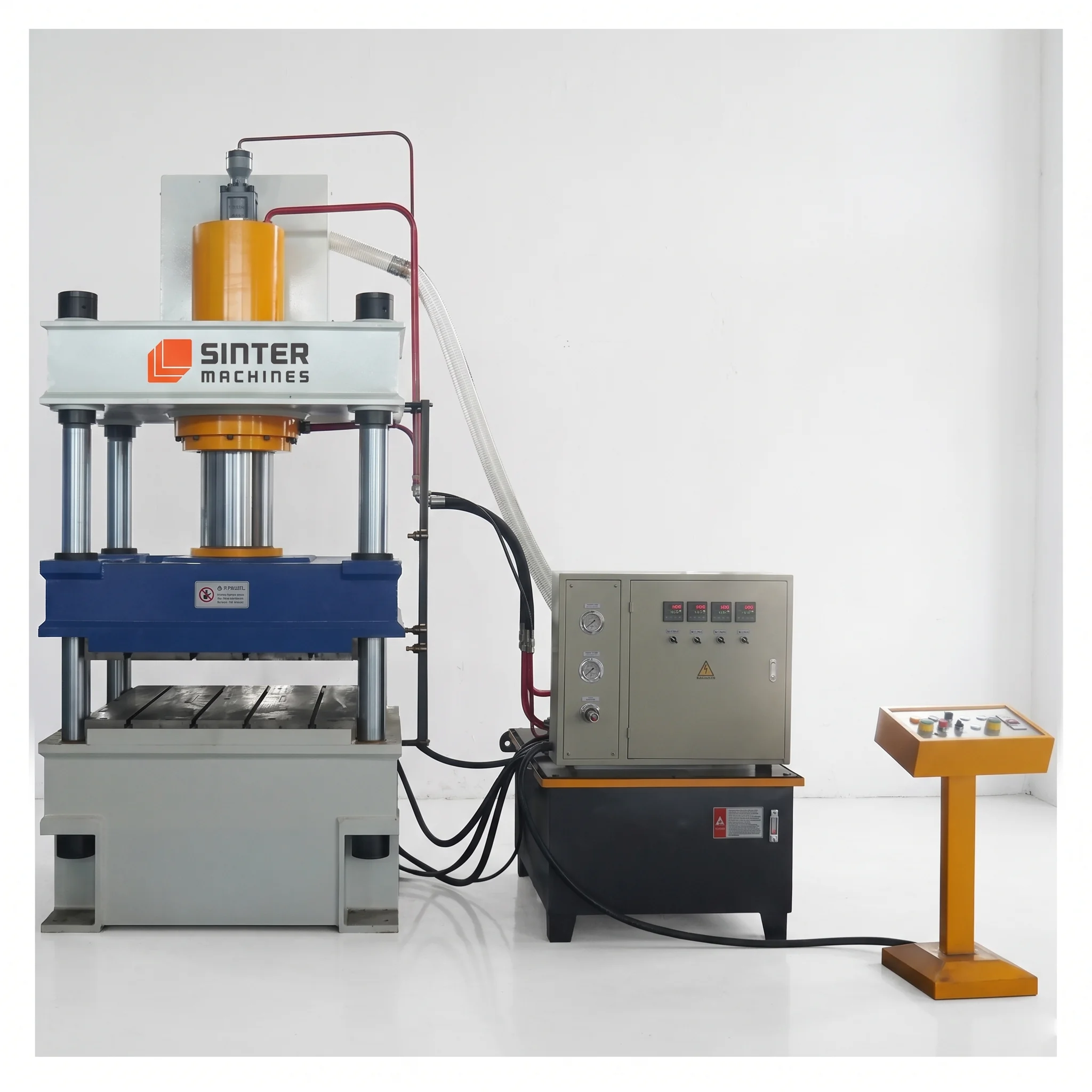
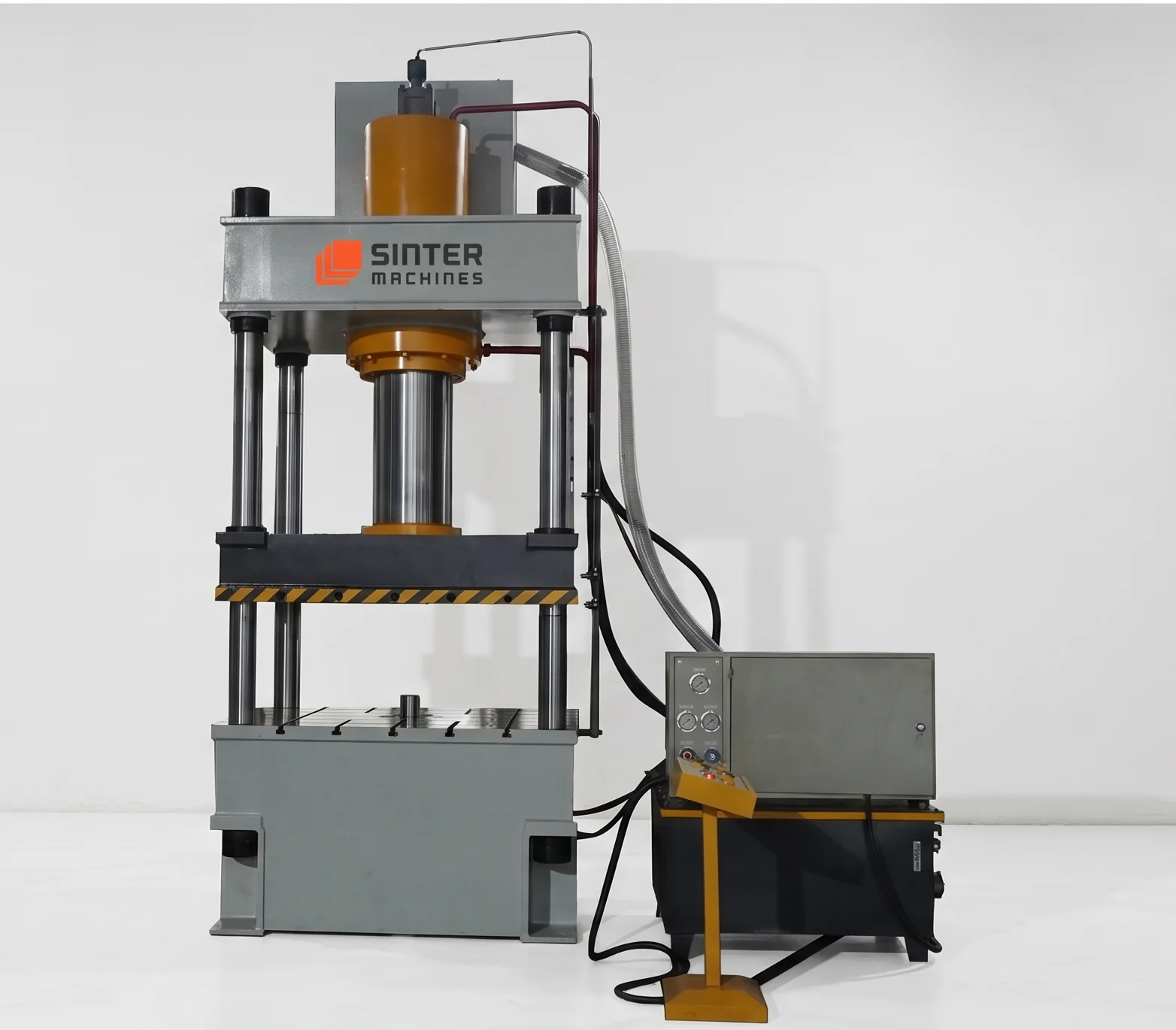
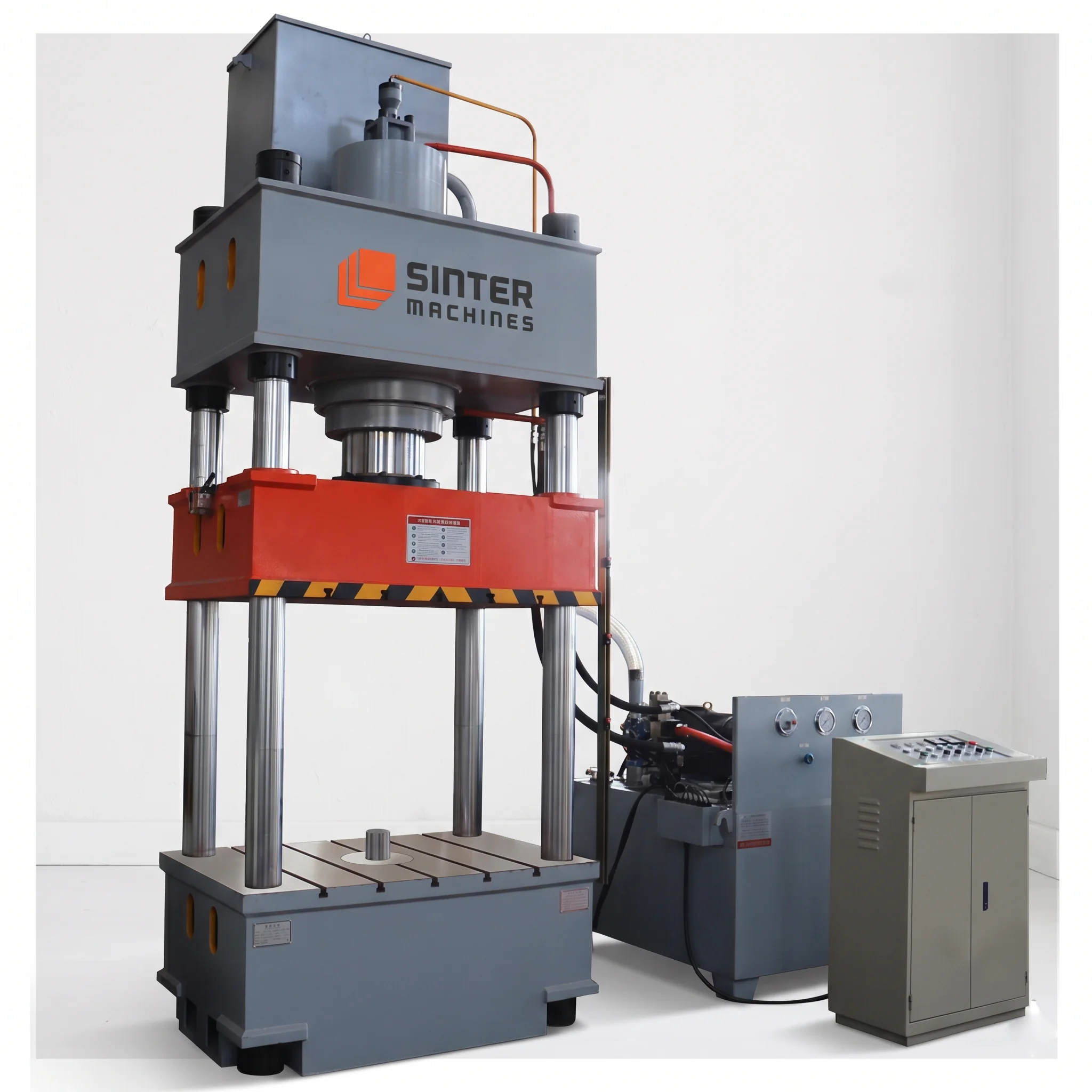
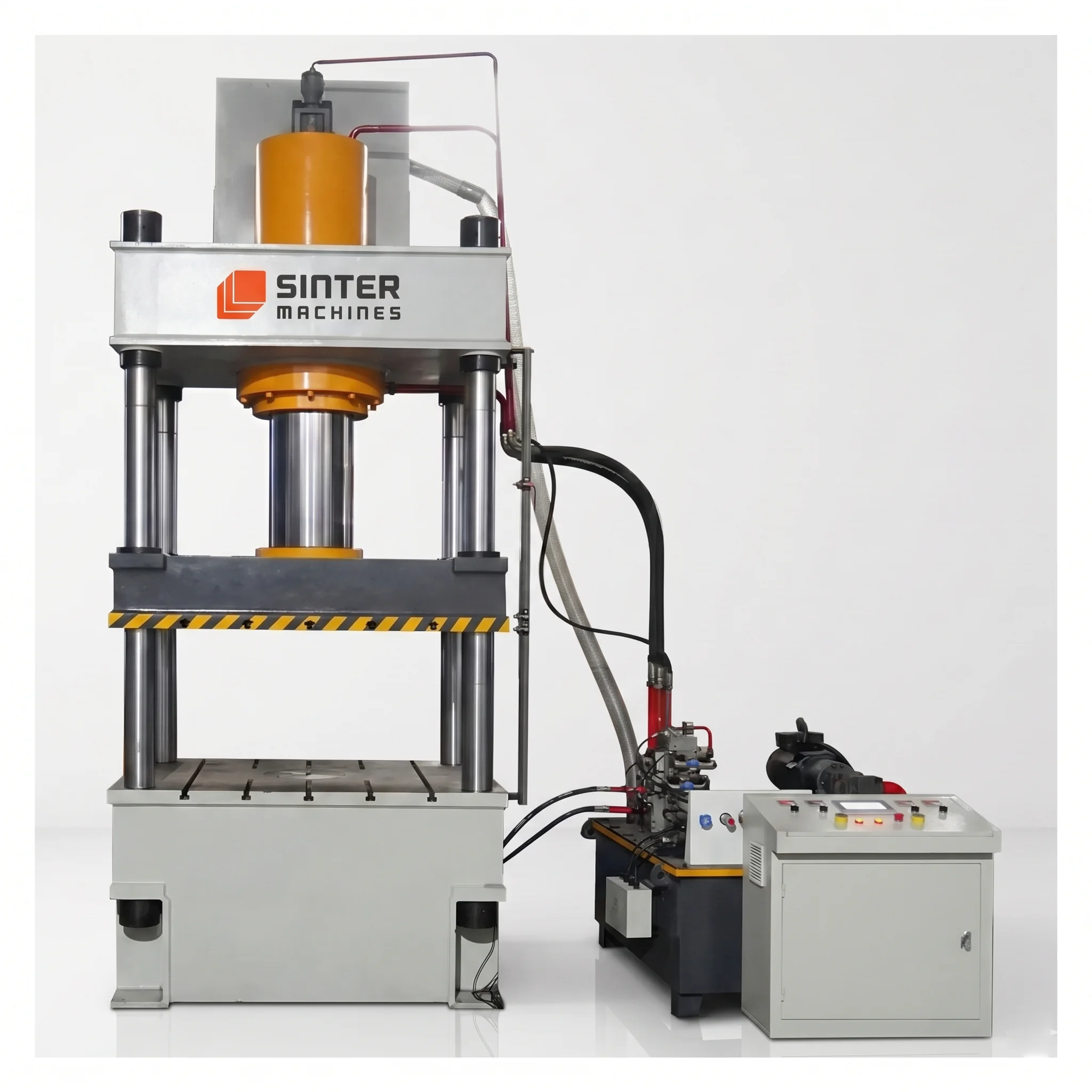
315T Fly Ash Bricks Press press view 1
High Density Fly Ash Bricks · Hydraulic Press Machine

315 Ton Four Pillar Hydraulic Press for High Density Fly Ash Bricks

315T Rated Capacity
100 mm/s Slider Down Speed
7–12 mm/s Slider Pressing Speed
90 mm/s Slider Return Speed

01 — Press System

315 Ton Four Pillar Hydraulic Press Machine

The 315-ton four-column hydraulic press machine for making wall construction fly ash bricks in a fully automated production line is an advanced heavy-duty manufacturing system engineered by Sinter Hydraulics India. Its rigid pre-stressed frame, proportional hydraulic controls, and automated material handling deliver uniform compaction force and maximum daily brick yields.

Use Case

Production of 26,400 Bricks/8 hour operations. Integrated into a fully automated production line, this press compacts semi-dry fly ash mixtures under heavy hydraulic force to continuously manufacture high-strength, dimensionally uniform bricks for fast-track wall construction.

Core Applications

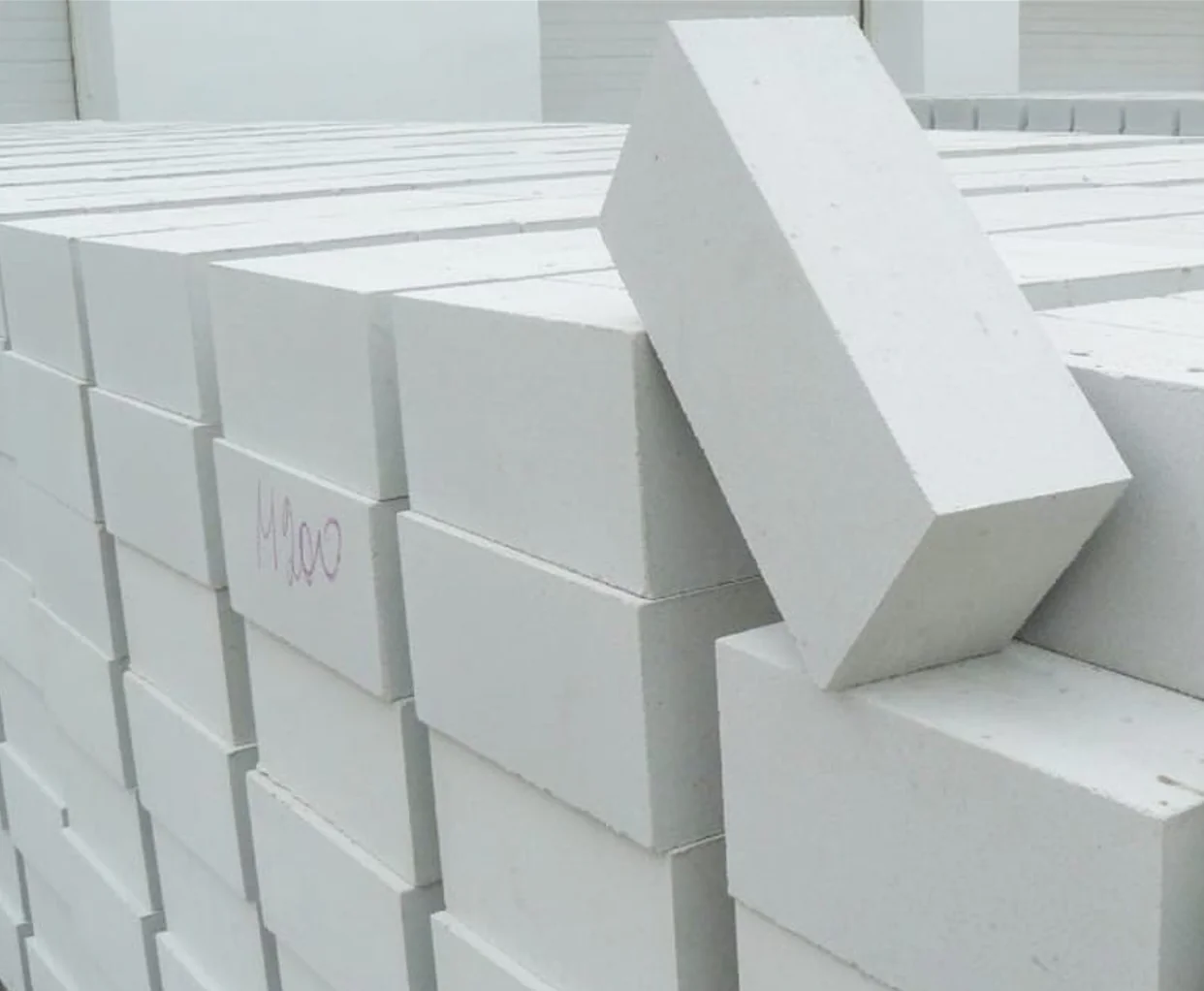
  • Manufacturing high-strength, dimensionally uniform fly ash bricks for load-bearing and non-load-bearing masonry wall construction work
  • High-volume eco-friendly building material production in fully automated commercial brick manufacturing facilities

Material

  • Fly Ash, Sand, Lime/Cement, Water, Gypsum/Admixture binder thoroughly mixed into a homogenous semi-dry slurry matrix
  • Industrial thermal power plant fly ash combined with sand or stone dust aggregate and hydraulic setting binders

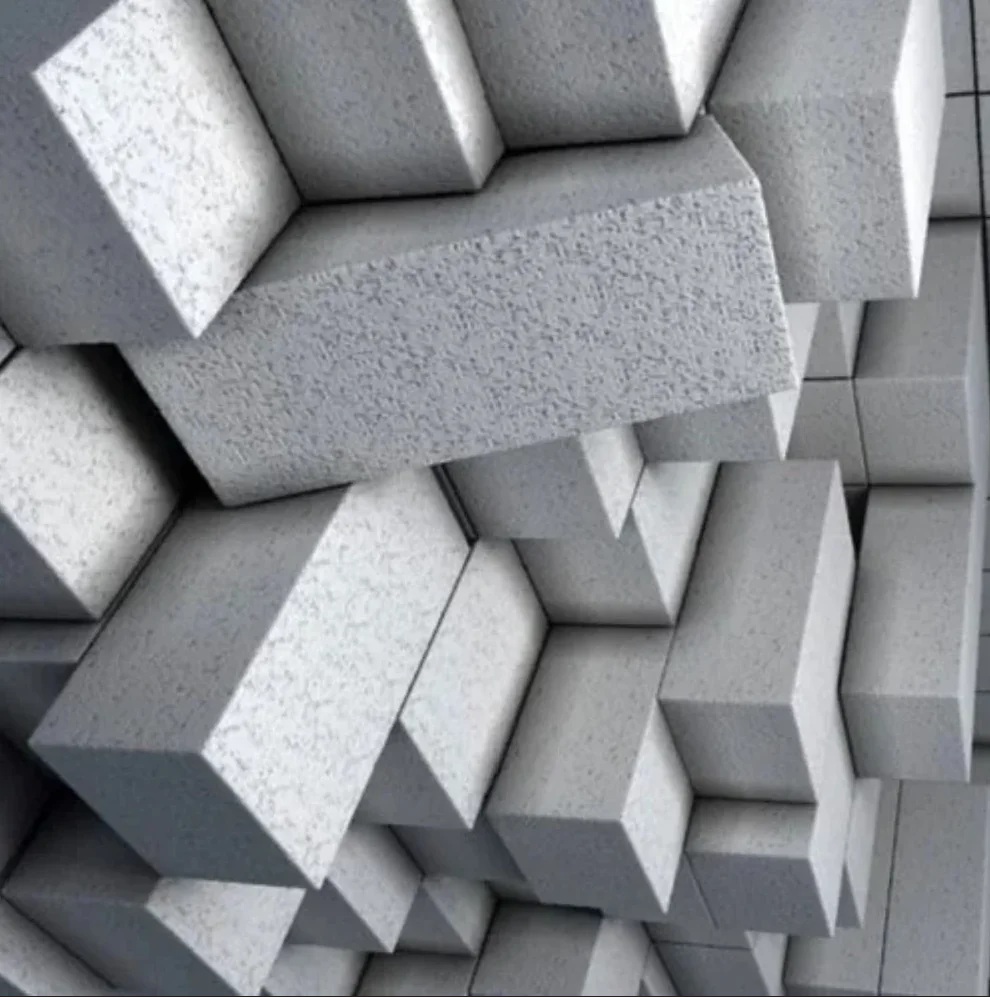
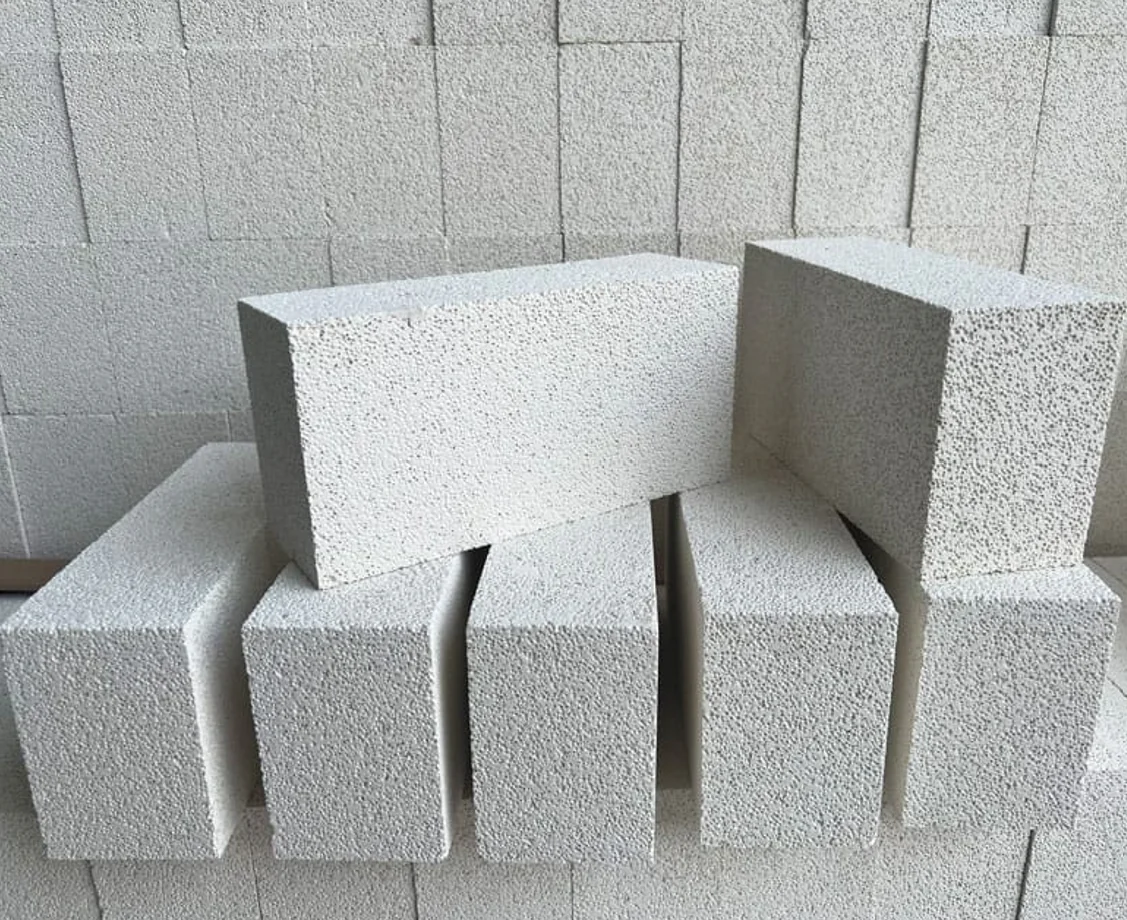
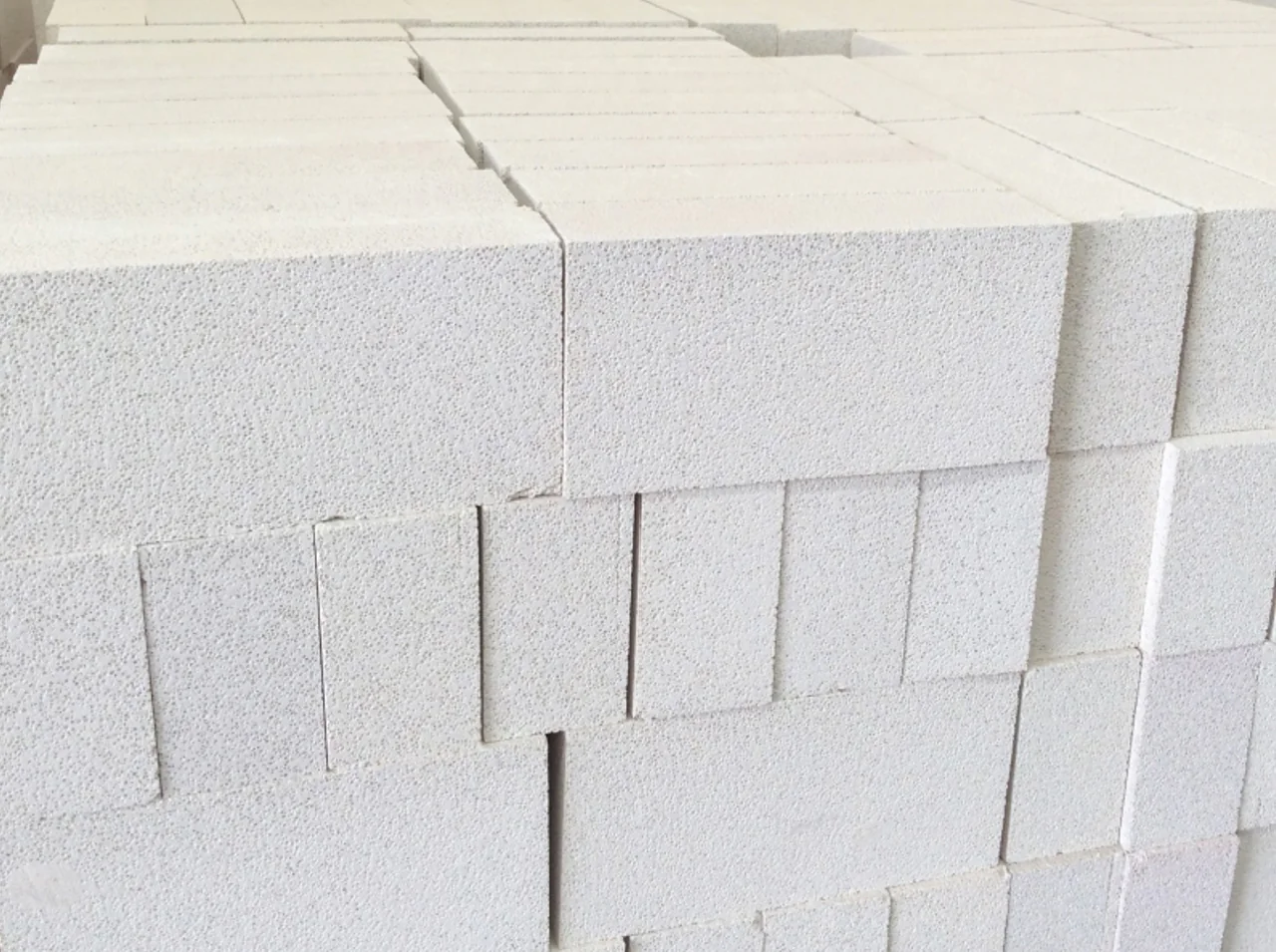
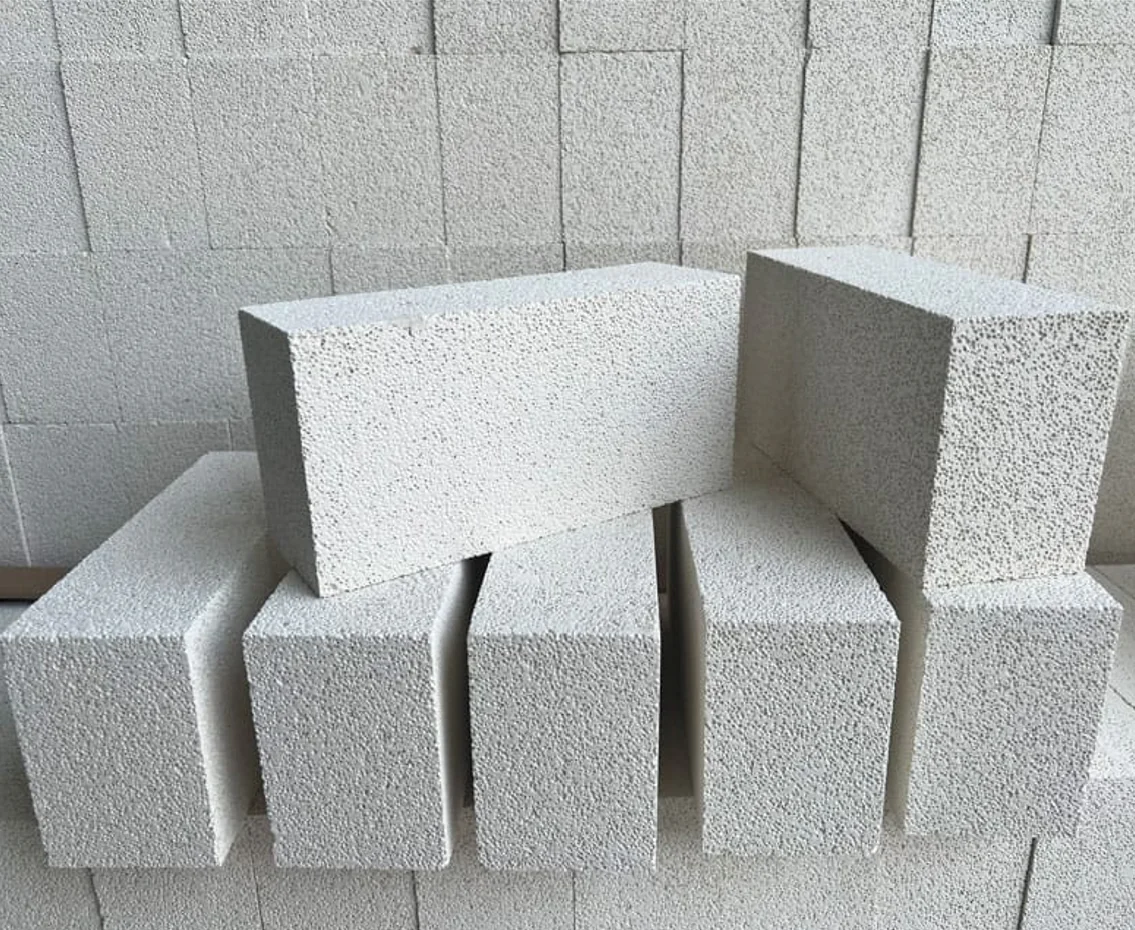
Typical Products Processed: Standard 228 x 104 x 75 mm Brick Size, standard modular wall bricks, solid building blocks, and custom paving units

Key Functions

  • Application of a uniform 315-ton hydraulic pressing force to compress raw powder mix and eliminate internal void spaces
  • Dual-stage hydraulic compression cycle featuring top and bottom pressing for consistent density throughout the brick body
  • Fully automated mold feeding, fast hydraulic press stroke cycle, synchronized multi-cavity brick ejection, and robotic palleting integration

Why 315 Ton Hydraulic Press?

  • Delivers high compaction tonnage to drive multi-cavity production while achieving compressive strengths exceeding 10 to 12 MPa
  • Four-column guide architecture maintains absolute platen parallelism under continuous automated operation, ensuring uniform brick thickness, sharp edges, and zero cracking

02 — Technical Specifications

SM 315 HP – HYDRAULIC PRESS MACHINE COMPLETE TECHNICAL DATA

The SM 315 HP heavy-duty hydraulic press delivers high-precision compaction force and rigid four-column guidance engineered for high-capacity fully automated fly ash brick production lines. Its pre-stressed frame, high-flow proportional hydraulics, and automated material handling eliminate density variations, ensuring high compressive strength and sharp brick geometry.

Capacity

  • Maximum continuous vertical compaction force capacity of 3150 kN
  • Dedicated hydraulic mold ejection mechanism force capacity of 600 kN

Structural Design

  • Heavy stress relieved four column pillar structure engineered for high volume abrasive slurry compaction
  • FEA stress relieved heavy steel plate welded bolster and upper moving press platen assembly

Frame Type

  • Precision aligned solid induction hardened column frame guide structure
  • Heavy duty stress relieved welded steel plate base bolster and guided compression slide plate

Hydraulic System

  • High flow variable displacement axial piston pump fluid power assembly
  • Multi stage high capacity offline oil filtration loop with integrated oil coolers

Main Ram Stroke

  • Maximum vertical slide compaction travel distance capability of 450 mm
  • Adjustable mechanical and electronic stroke limitation positioning system

Working Hydraulic Pressure

  • Maximum continuous operating main hydraulic system fluid pressure of 250 bar
  • Peak shock safety valve pressure relief calibration threshold limit of 280 bar

Daylight Gap

  • Maximum open vertical daylight window working clearance of 800 mm
  • Minimum closed compaction mold height space of 350 mm

Approach Speed

  • Accelerated downward advance slide rapid travel speed of 250 mm/Sec
  • Controlled mold contact deceleration compaction velocity of 20 mm/Sec

Pressing / Drawing Speed

  • Precision high pressure fly ash brick compaction speed of 12 to 25 mm/Sec
  • Maximum resistance continuous pressing velocity of 28 mm/Sec

Return Speed

  • Smooth upward ram retraction extraction travel speed of 220 mm/Sec
  • Fast automated hydraulic decompression pre return system cycle timing

Bed / Platen Size Platen

  • Total clear mold installation bed width left to right of 1200 mm
  • Total clear mold installation bed depth front to back of 1000 mm

Columns

  • High tensile forged alloy steel column diameter of 180 mm
  • Heavy duty wear resistant bronze guide bushings with automatic grease lubrication

Working Envelope

  • Total internal mold mounting area of 1200 by 1000 mm
  • Maximum allowable top platen compaction load resistance capacity of 315 tons

Control System

  • Industrial programmable logic controller linked with a graphical touchscreen station
  • Dual redundant non contact linear transducer position tracking systems accurate within 0.010 mm

Main Motor Power

  • High efficiency primary hydraulic pump electric drive motor power of 45 kW
  • Dedicated auxiliary cooling and continuous oil filtration motor power of 4 kW

Valves & Hydraulics

  • High dynamic response proportional pressure and flow control cartridge valve manifold block
  • Fast acting overhead gravity pre fill oil valve unit assembly

Automation

  • Digital interface connection ports for synchronized raw material feeder and automated stacker systems
  • Integrated multi cavity hydraulic brick ejectors and automatic feeder box movement

Safety Features

  • Dual channel infrared light curtain barriers guarding operator workspace zones
  • Automated heavy duty dual fail safe mechanical anti drop ram safety locking blocks

SM 315 HP — Model Specifications

  • Nominal Force: 3150 KN
  • Maximum Hydraulic Pressure: 25 MPa
  • Max Opening Height of the Slider: 1000 mm
  • Max Stroke of the Slider: 600 mm
  • Effective Bed Size: 800 × 800 mm
  • Slider Down Speed: 100 mm/s
  • Slider Pressing Speed: 7–12 mm/s
  • Slider Return Speed: 90 mm/s
  • Ejector Cylinder Nominal Force: 300 KN
  • Stroke of the Ejection Cylinder: 300 mm
Production Case Study

315 Ton High Density Fly Ash Bricks Fully Automated Production Line

228 x 104 x 75 mmBrick Size
3,300 BricksOutput/Hour
10-12 MPaCompressive Strength
20 SecondsCycle Time
High compressive brick strength
Uniform dimension accuracy achieved
Hourly target output met
Low water absorption rate
Material rejection rate minimized
Smooth multi-cavity ejection completed
Reduced production power cost

03 — Die / Mold System

Precision 18 Cavity Fly Ash Bricks Die Mold Engineering

This precision multi-cavity die mold system features hardened alloy steel cavity liners, wear-resistant punch faces, and an integrated hydraulic top and bottom pressing arrangement. Engineered for 315-ton fully automated hydraulic press operations, it enables simultaneous high-density compaction of 18 standard fly ash bricks with sharp edges and uniform structural strength.

Use Case

The 18-cavity fly ash brick die mold system integrates into fully automated 315-ton four-column hydraulic presses to mass-produce 228 x 104 x 75 mm construction bricks from semi-dry fly ash mixtures. Synchronized hydraulic compaction, automated feeder box movement, and multi-pin ejection ensure continuous 26400 brick per 8 hour shift throughput with minimal dimensional variance.

Technical Specifications (Tooling)

Die Type: 18 Cavity Mold

  • Multi cavity precision steel die block engineered for simultaneous pressing of eighteen standard 228 by 104 by 75 mm fly ash bricks
  • Heavy duty bottom hydraulic ejector assembly with synchronized multi punch ejection pins

Die Materials

  • Premium high carbon high chromium D2 alloy tool steel inner mold cavities for extreme abrasion resistance
  • Heavy duty Hardox 450 steel top punch face plates and base bolster support plates

Tool Configuration & Construction

  • Precision CNC machined modular steel plate assembly with replaceable cavity liner inserts
  • Rigid structural steel outer mold frame designed to absorb lateral hydraulic compaction stresses up to 315 tons

Key Tooling Features

  • Integrated hydraulic top press punches paired with bottom ejection ram linkages for uniform density
  • Quick change modular cavity liner plates facilitating easy maintenance and zero downtime refurbishment

Alignment Accuracy

  • Upper punch to lower cavity mold entry guide clearance deviation kept strictly under a limit of 0.010 mm
  • Multi cavity bed flatness and parallelism variance across active area restricted within a tolerance of 0.010 mm

Surface Finish

  • Inner cavity mold surfaces precision wire EDM finished down to a surface roughness of Ra 0.40 microns
  • Friction reducing chrome plated punch faces ensuring smooth brick release and zero edge chipping

Tool Life

  • Expected operational span of 350000 pressing cycles per set of replaceable inner cavity wear liners
  • Total structural outer mold frame lifespan capacity reaching 1500000 production cycles before major overhauls
Case Study (Die Performance)

Precision 18 Cavity Fly Ash Bricks Die Mold Engineering

D 2 & HARDOX 450Die Material
56-60 HRCHardness
Vacuum HardeningHeat Treatment
Maximum brick density achieved
Sharp edge definition retained
Cavity wall wear minimized
Multi cavity ejection completed
Zero brick surface cracking
Machine operational downtime reduced
Extended mold service life

04 — Product Application

Where Fly Ash Bricks Are Used

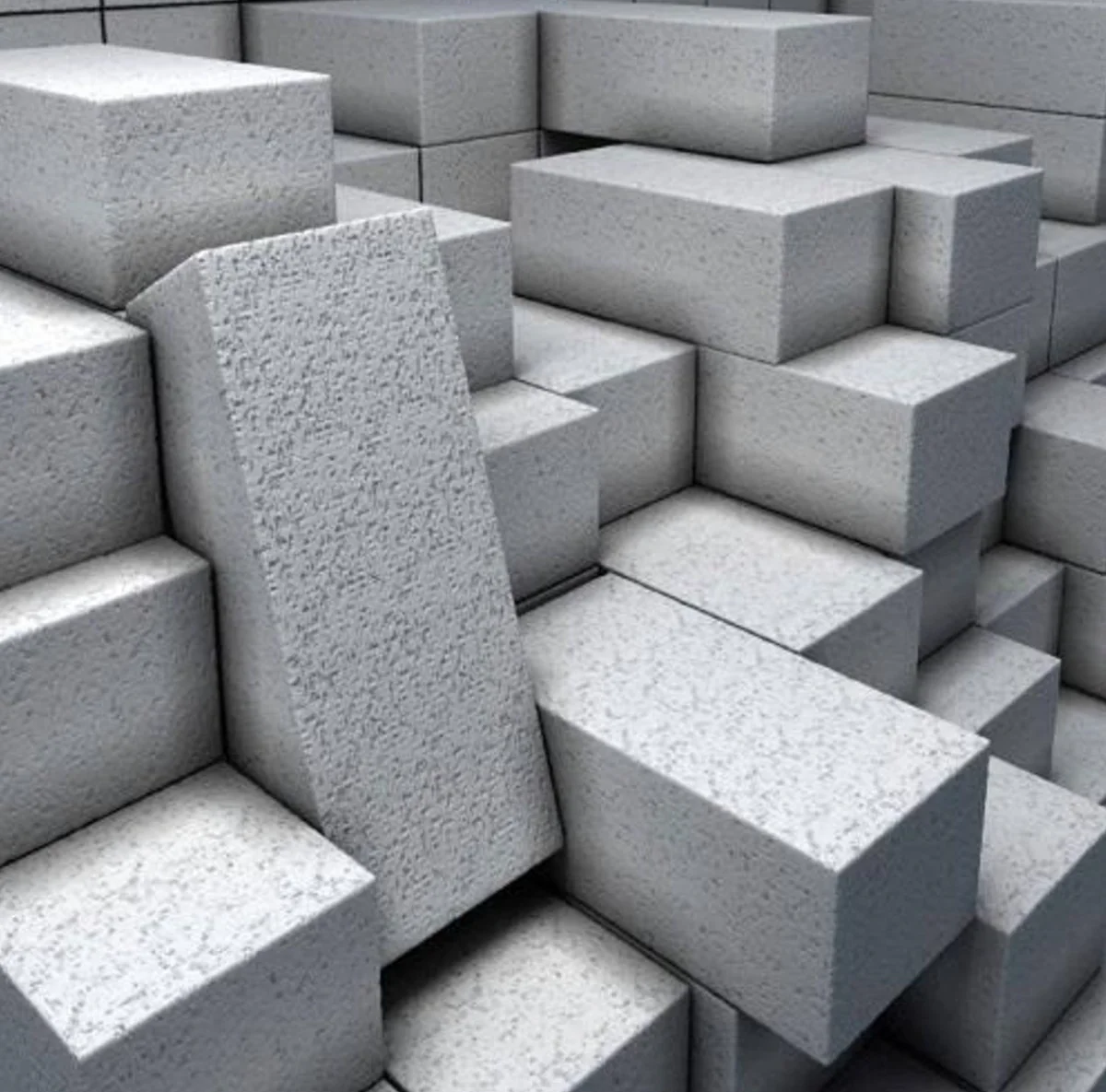
Fly ash bricks serve as eco-friendly, highly durable alternatives to traditional clay bricks across modern building and infrastructure developments. Their superior compressive strength, uniform dimensions, and low water absorption make them ideal for load-bearing walls and fast-track masonry construction.

Industry Applications

Fly ash bricks produced via fully automated 315-ton hydraulic lines are widely deployed in commercial real estate, high-density residential housing, industrial plant construction, and civic infrastructure works. High-tonnage hydraulic press compaction guarantees consistent compressive strength exceeding 15 to 20 MPa, sharp corner definition, and exceptional thermal efficiency, significantly lowering construction mortar costs and overall project execution timelines.

Residential and Commercial Building Construction

Provides high-strength masonry units for load-bearing external walls, internal partition walls, and high-rise framed structures. Ensures uniform brick dimensions that reduce mortar consumption and speed up structural masonry laydown times.

Industrial Plants and Warehouse Infrastructure

Used to construct heavy-duty boundary walls, fire-resistant enclosure partitions, and factory storage facilities. Delivers exceptional structural integrity and thermal insulation to withstand demanding industrial environmental conditions.

Government and Public Infrastructure Projects

Integrated into mass housing schemes, educational institutions, healthcare facilities, and civic infrastructure developments. Meets green building standard certifications by utilizing thermal power station waste products to replace topsoil clay bricks.

Pavements, Compound Walls, and Land Development

Employed in durable perimeter security wall construction, retaining barriers, and agricultural compound enclosures. Resists weather degradation, efflorescence, and moisture penetration better than traditional red clay bricks.

Finished Product Gallery

05 — Key Advantages

Why Choose the 315-Ton Sinter Hydraulic Press

The 315-Ton Sinter Hydraulic Press delivers heavy compaction force and rigid four-column guidance to produce high-strength fly ash bricks in high-capacity automated production lines. Its rapid hydraulic response, 18-cavity mold compatibility, and energy-efficient power pack maximize daily brick yield while minimizing operational manufacturing overhead.

Technical & Commercial Benefits

01

High 315-Ton Compaction Force Delivering Compressive Strength Above 15 to 20 MPa

Applies massive hydraulic pressing force to compress semi-dry fly ash mixtures into dense, void-free bricks. Exceptional compaction density yields superior load-bearing strength and keeps water absorption well below critical industry thresholds.

02

Rigid Four-Column Guide Frame Maintaining Superior Platen Parallelism

Constructed with heavy-duty induction-hardened alloy columns that maintain precise upper punch to lower mold alignment. Rigid column guidance eliminates uneven pressure distribution across all 18 cavities, preventing brick corner chipping and structural cracking.

03

18-Cavity High-Capacity Tooling Achieving Up to 26400 Bricks Per Shift

Designed to accommodate large 18-cavity precision molds operating on fast 20-second pressing cycles in fully automated production lines. High throughput enables brick manufacturers to comfortably fulfill large-scale infrastructure orders and scale factory operations.

04

Synchronized Hydraulic Top and Bottom Compression Ensuring Uniform Density

Utilizes double-action hydraulic pressure application to compact raw material simultaneously from both top and bottom directions. Balanced compaction eliminates internal density variations, ensuring consistent structural integrity throughout the entire brick body.

05

Wear-Resistant Hardox and D2 Tool Steel Molds Minimizing Maintenance Downtime

Fitted with hardened D2 tool steel cavity liners and polished face plates engineered to withstand continuous abrasion from raw fly ash mixtures. Exceptional mold longevity reduces tool replacement cycles, lowering maintenance costs and preventing unscheduled downtime.

06

Energy-Efficient Proportional Hydraulics Lowering Electricity Cost Per Brick

Incorporates high-flow variable axial piston pumps and fast-acting cartridge valves that deliver rapid approach speeds up to 250 mm/Sec. Low motor power consumption of 45 kW significantly lowers energy expenditure per unit produced, boosting commercial profitability.