01 — Press System
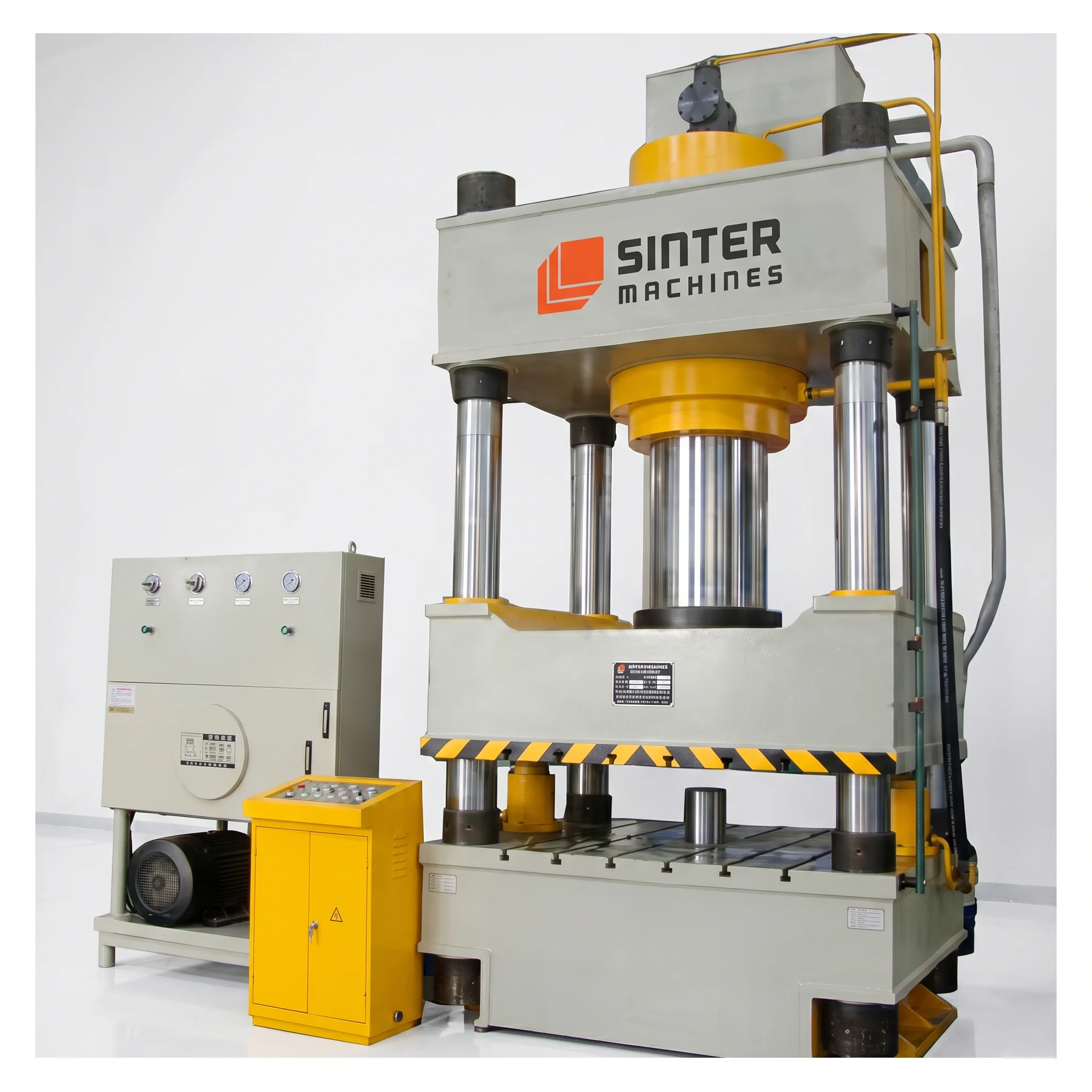
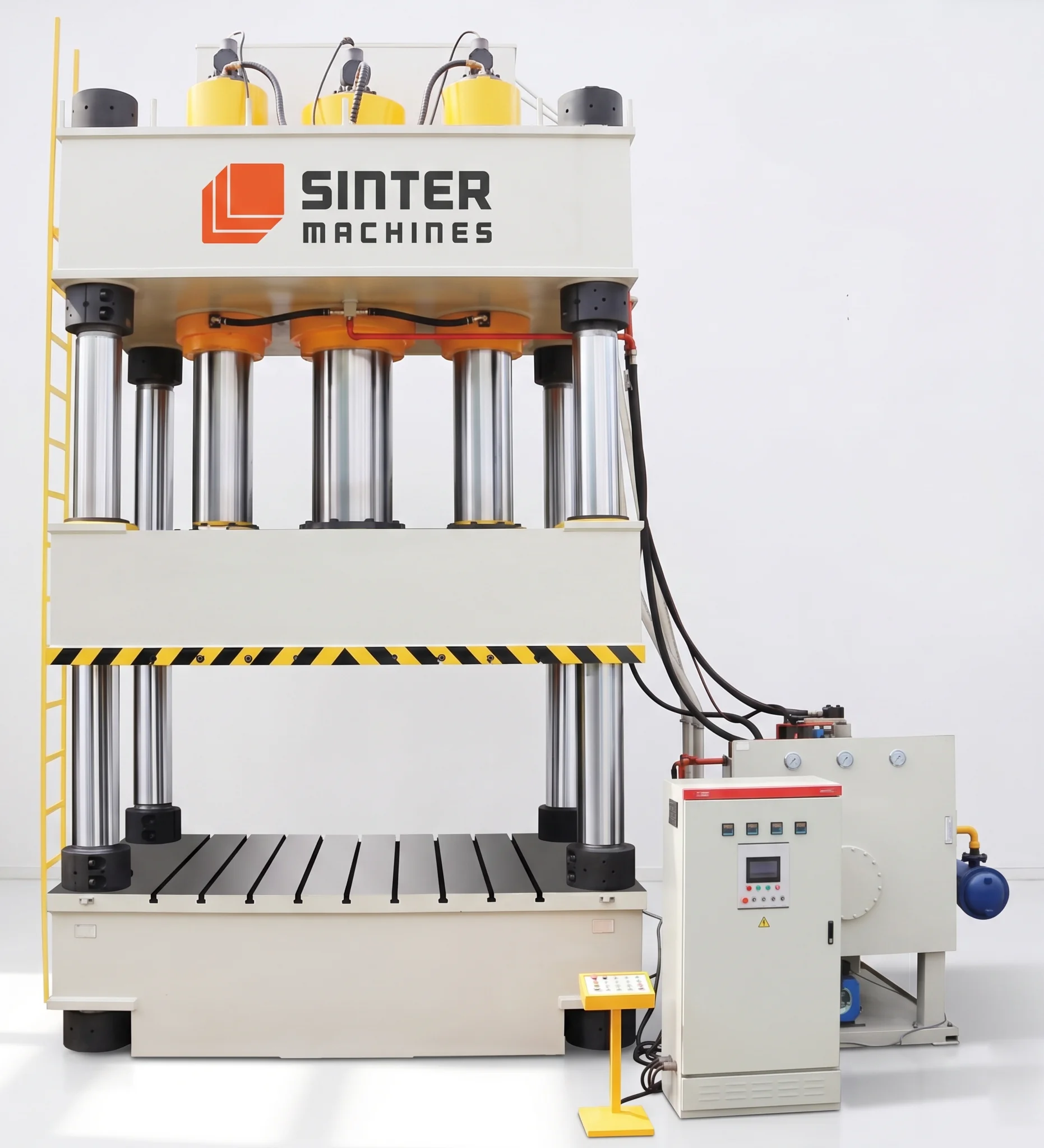
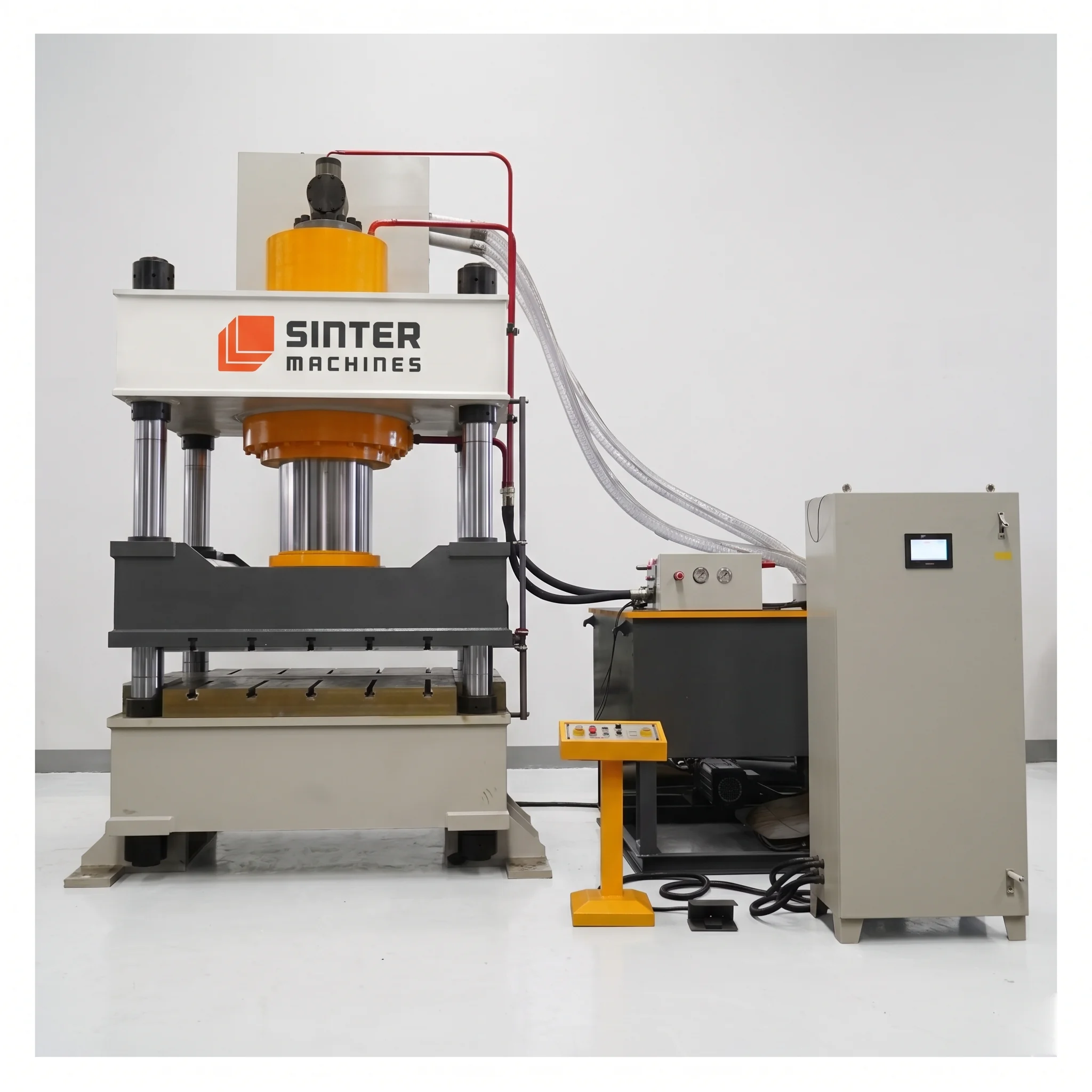
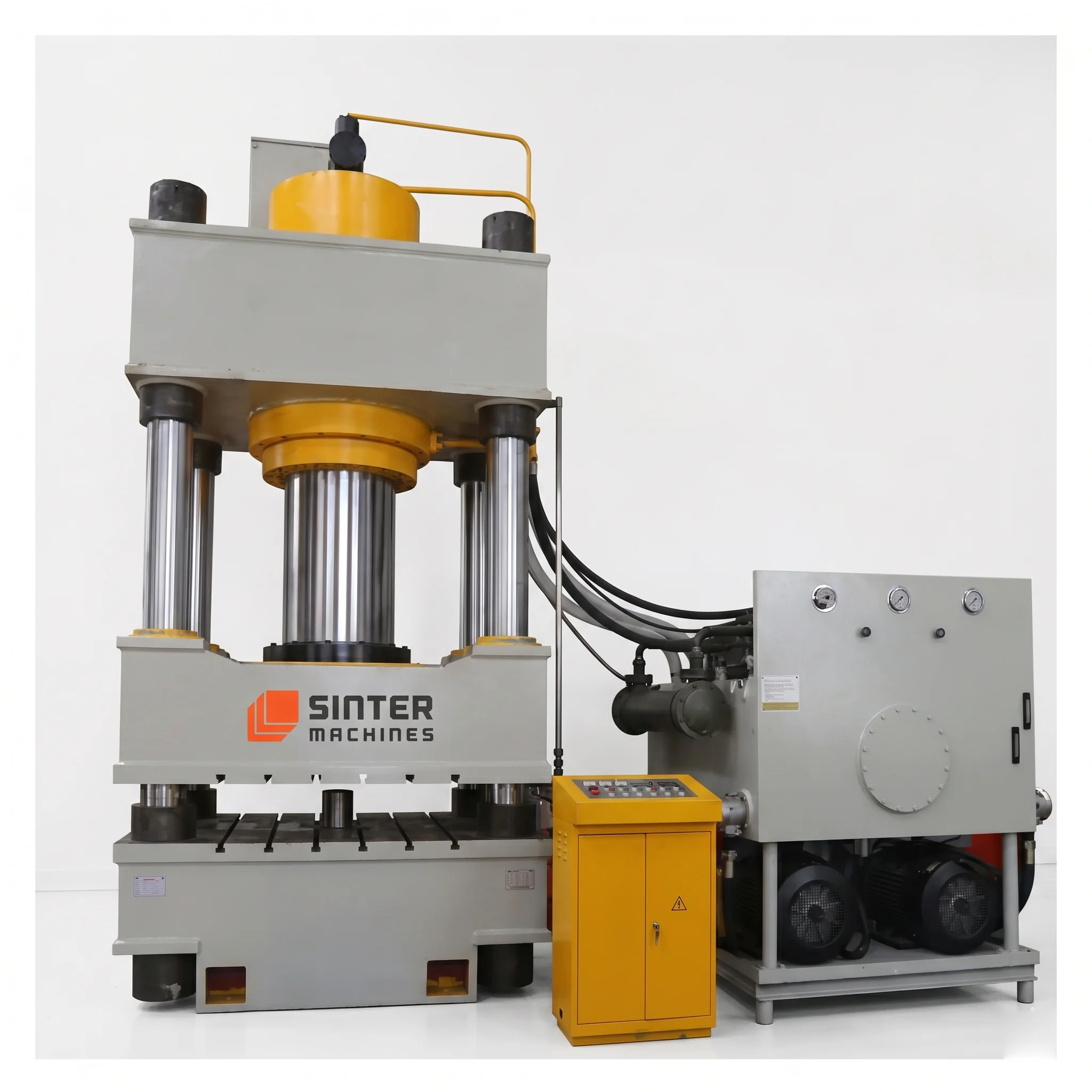
1250T Four Column Hydraulic Press Machine
The 1250-ton four-column hydraulic press delivers ultra-high force compaction with closed-loop proportional hydraulic control for heavy-duty powder metallurgy components. Its heavy-duty four-column guidance system maintains minimal deflection under high load, ensuring exceptional parallelism and dimensional stability.
Use Case
This system is designed for large-scale powder compaction of heavy-duty industrial gears, sprockets, and high-load structural parts. It generates high green density across large projected surface areas, minimizing structural porosity prior to high-temperature sintering.
- Core Applications: Engineered for heavy industrial machinery, construction equipment, mining gearboxes, and heavy commercial vehicles. It manufactures high-torque transmission components that demand high load capacity and high fatigue strength.
- Material: Processes iron-based, alloy steel (Fe-Cu-C, Fe-Ni, Fe-Mo), and stainless steel powders blended with graphite, binders, and solid lubricants. Copper and bronze powders are also processed for specialized heavy-duty wear plates and bush components.
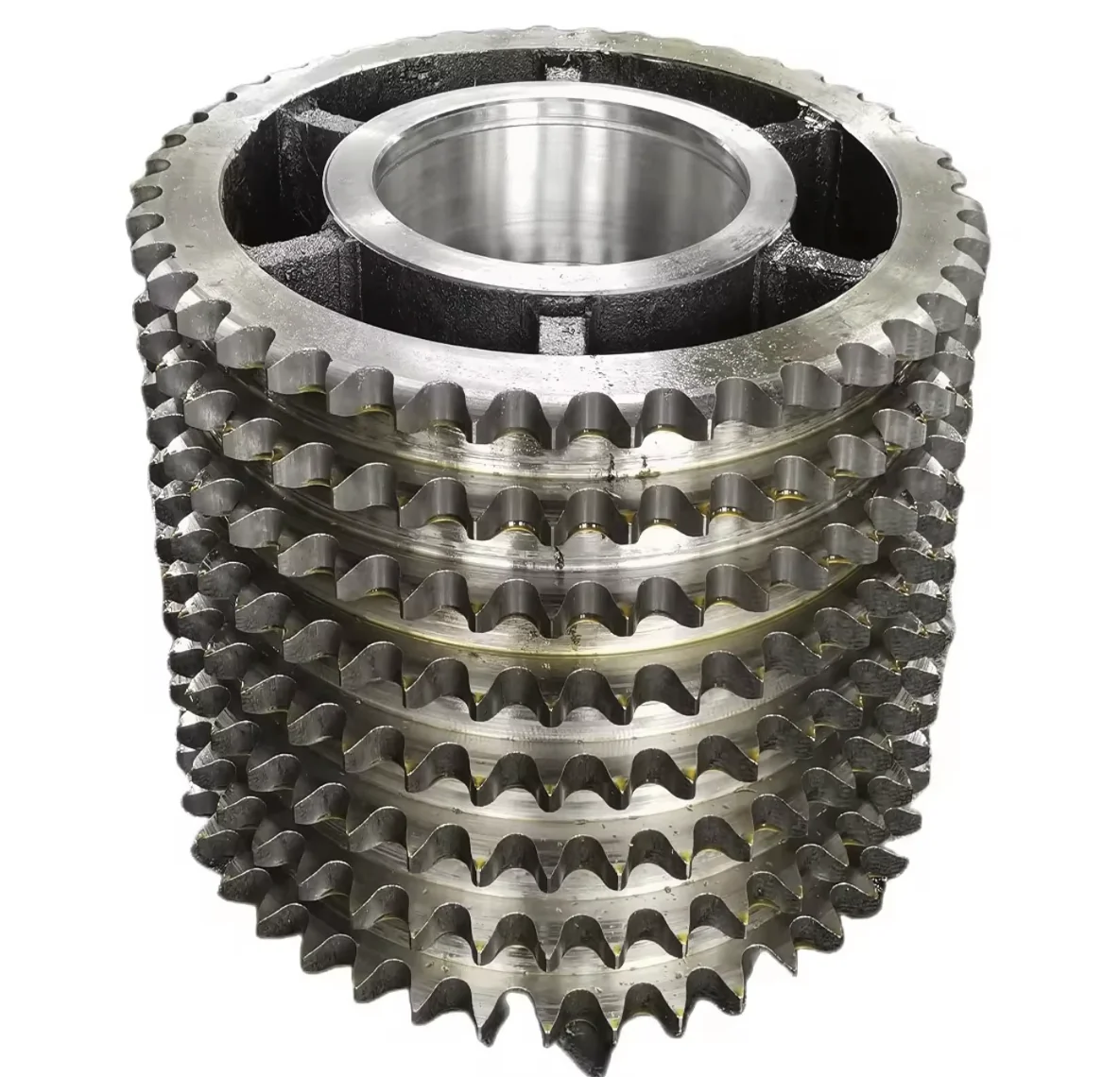
- Products Processed: Compacts large industrial spur gears, heavy-duty helical gears, drive sprockets, planetary gear carriers, and high-torque flange hubs. It handles complex multi-step geometries with thick cross-sections requiring high press force.
- Why 1250-Ton Hydraulic Press: Delivers the extreme compaction force required to achieve high green density over large cross-sectional surface areas where smaller presses lack tonnage. The precise hydraulic control manages long stroke lengths and smooth multi-stage ejection without causing crack formation in large compacts.
02 — Technical Specifications
SM 1250 HP – HYDRAULIC PRESS MACHINE COMPLETE TECHNICAL DATA
The SM 1250 HP – Hydraulic Press Machine is an ultra-heavy-duty 1250-ton four-pillar hydraulic press engineered for the production of heavy-duty powder metallurgy gears and sprockets used in high-load industrial applications. Its powerful compaction force ensures deep and uniform densification of large components, resulting in exceptional strength, wear resistance, and structural integrity.
Capacity & Structural Design
- Rated Capacity: 1250 Tons (≈ 12,260 kN)
- Press Type: Fourpillar hydraulic PM compaction press
- Frame: Ultra-heavy rigid welded steel (stress relieved)
- Safety factor: ≥ 1.35–1.40
- Parallelism accuracy: ≤ 0.03–0.05 mm
Hydraulic System
- Cylinder type: Multi-action hydraulic system
- Bore: 600–750 mm
- Stroke: 500–1000 mm
- Working pressure: 30–32 MPa
- Control: Servo-proportional precision system
Multi-Level Compaction System
- Independent upper punch control
- Independent lower punch control
- Floating die system (optional)
- Multi-stage pressure control
Benefits:
- Eliminates density gradients
- Ensures uniform density in teeth and hub
- Enables complex geometry compaction
Compaction Cycle
- Powder dosing into cavity
- Upper & lower punch approach
- Pre-compaction (air evacuation)
- Main compaction (high pressure)
- Holding stage (density stabilization)
- Controlled decompression
- Ejection of green component
Working Envelope
- Platen size:
- Standard: 900 × 900 mm
- Optional: 1100 × 1100 mm
- Daylight: 800–1200 mm
- Column diameter: 200–260 mm
Control System
- PLC: Siemens / Beckhoff / Mitsubishi
- HMI: Advanced programmable system
Controls:
- Pressure stages
- Punch position & stroke
- Compaction speed
- Density profile
Features:
- Real-time monitoring
- Data logging (automotive/industrial QA)
- Industry 4.0 integration
- Safety PLC
SM 1250 HP — Model Specifications
- Nominal Force: 12500 KN
- Maximum Hydraulic Pressure: 25 MPa
- Max Opening Height of the Slider: 1500 mm
- Max Stroke of the Slider: 900 mm
- Effective Bed Size: 1600 × 1600 mm
- Slider Down Speed: 180 mm/s
- Slider Pressing Speed: 6–15 mm/s
- Slider Return Speed: 200 mm/s
- Ejector Cylinder Nominal Force: 600 KN
- Stroke of the Ejection Cylinder: 300 mm
03 — Die / Mold System
Precision Powder Metallurgy Heavy Duty Gears & Sprockets Die Engineering
Precision Powder Metallurgy Heavy Duty Gears & Sprockets Die Engineering focuses on the development of high-precision tooling for manufacturing large, high-load powder metallurgy gears and sprockets with exceptional dimensional accuracy and density uniformity. The die system is engineered to ensure controlled powder flow, deep compaction, and precise formation of complex tooth profiles, thick hubs, and reinforced structures.
Technical Specifications (Tooling)
Tool Type
- Heavy-duty multi-piece PM compaction tooling
- Multi-level precision die system
Tool Materials
- Tool steels: H13 / D2 high-performance steel
- Carbide inserts (for high wear zones)
Hardness: 60–64 HRC
Tool Construction
- Upper punch: Gear/sprocket tooth geometry
- Lower punch: Base + hub shaping
- Die cavity: High precision tooth cavities
- Core rods: Inner bore formation
Multi-Level Tooling Design
- Split punches for hub + flange + tooth
- Floating die system
- Multi-stage punch movement
Alignment Accuracy: ±0.01–0.02 mm
Surface Finish
| Area | Finish |
| Gear teeth | High precision polished |
| Sprocket profile | Smooth |
| Bore | Precision ground |
Lubrication
- Powder lubrication
- Advanced coatings (TiN, DLC optional)
Tool Life: 150,000 – 400,000 cycles
Precision Powder Metallurgy Heavy Duty Gears & Sprockets Die Mold
04 — Product Application
Where Powder Metallurgy Heavy Duty Gears & Sprockets Are Used
The Powder Metallurgy Heavy Duty Gears & Sprockets industry serves demanding sectors that require high-strength, wear-resistant, and precision-engineered power transmission components. These components are widely used in construction equipment, mining machinery, agricultural machinery, industrial gearboxes, conveyors, and heavy material handling systems, where high load-bearing capacity and durability are essential.
Industry Applications
Heavy Industrial Machinery
The Heavy Industrial Machinery sector extensively uses powder metallurgy heavy-duty gears and sprockets in demanding power transmission applications. These components are commonly employed as conveyor sprockets, ensuring reliable material movement and continuous operation in manufacturing and processing facilities.
Automotive (Heavy-Duty / Commercial)
The Automotive (Heavy-Duty / Commercial) sector extensively uses powder metallurgy heavy-duty gears and sprockets in applications that demand high strength, durability, and reliable performance under heavy loads. These components are commonly manufactured as truck transmission gears, providing efficient power transfer and long service life in commercial vehicles.
Manufacturing Industry
The Manufacturing Industry widely uses powder metallurgy heavy-duty gears and sprockets in machine tool gears and industrial drive components that require high precision, strength, and reliability. These components ensure efficient power transmission, smooth operation, and long service life in demanding production environments.
Energy & Infrastructure
The Energy & Infrastructure sector extensively uses powder metallurgy heavy-duty gears and sprockets in critical applications such as wind turbine gearing and power plant equipment. These components are designed to withstand high loads, continuous operation, and demanding environmental conditions while maintaining excellent strength and wear resistance.
| Industry | Scenario |
|---|---|
| Mining | Heavy-duty sprocket systems |
| Manufacturing | High-load gear drives |
| Automotive | Commercial vehicle transmissions |
| Energy | Wind & power systems |
| Industrial | Conveyor & heavy machinery |
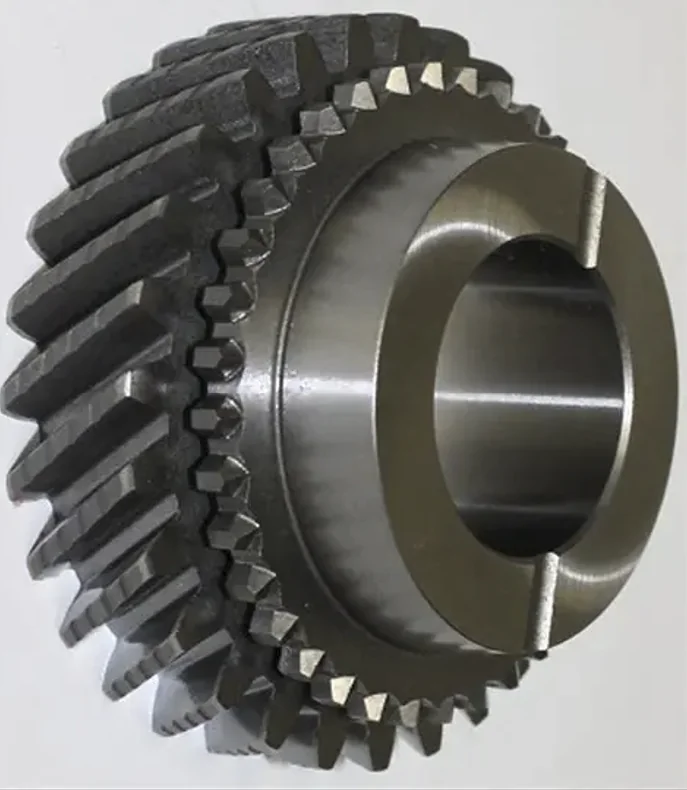
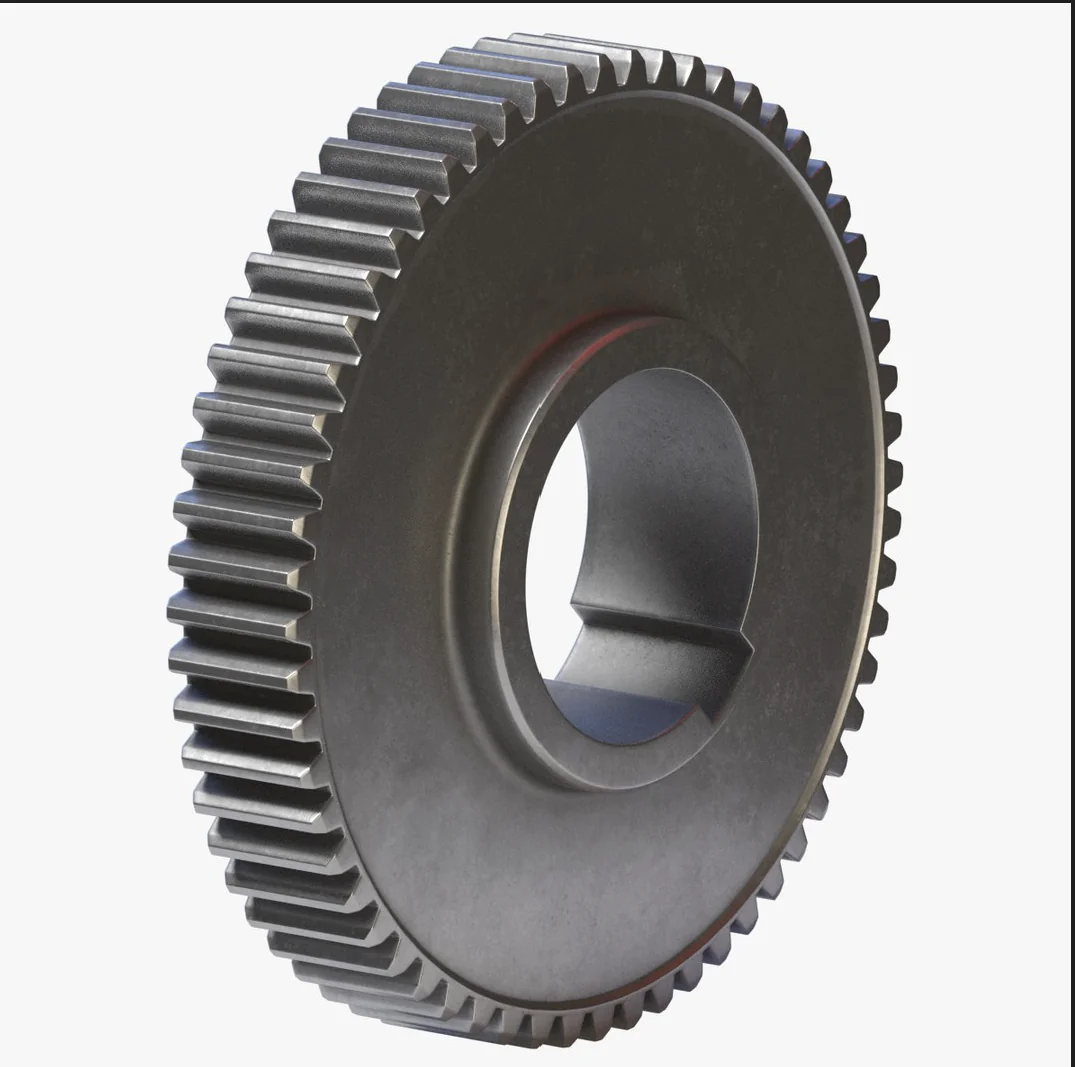
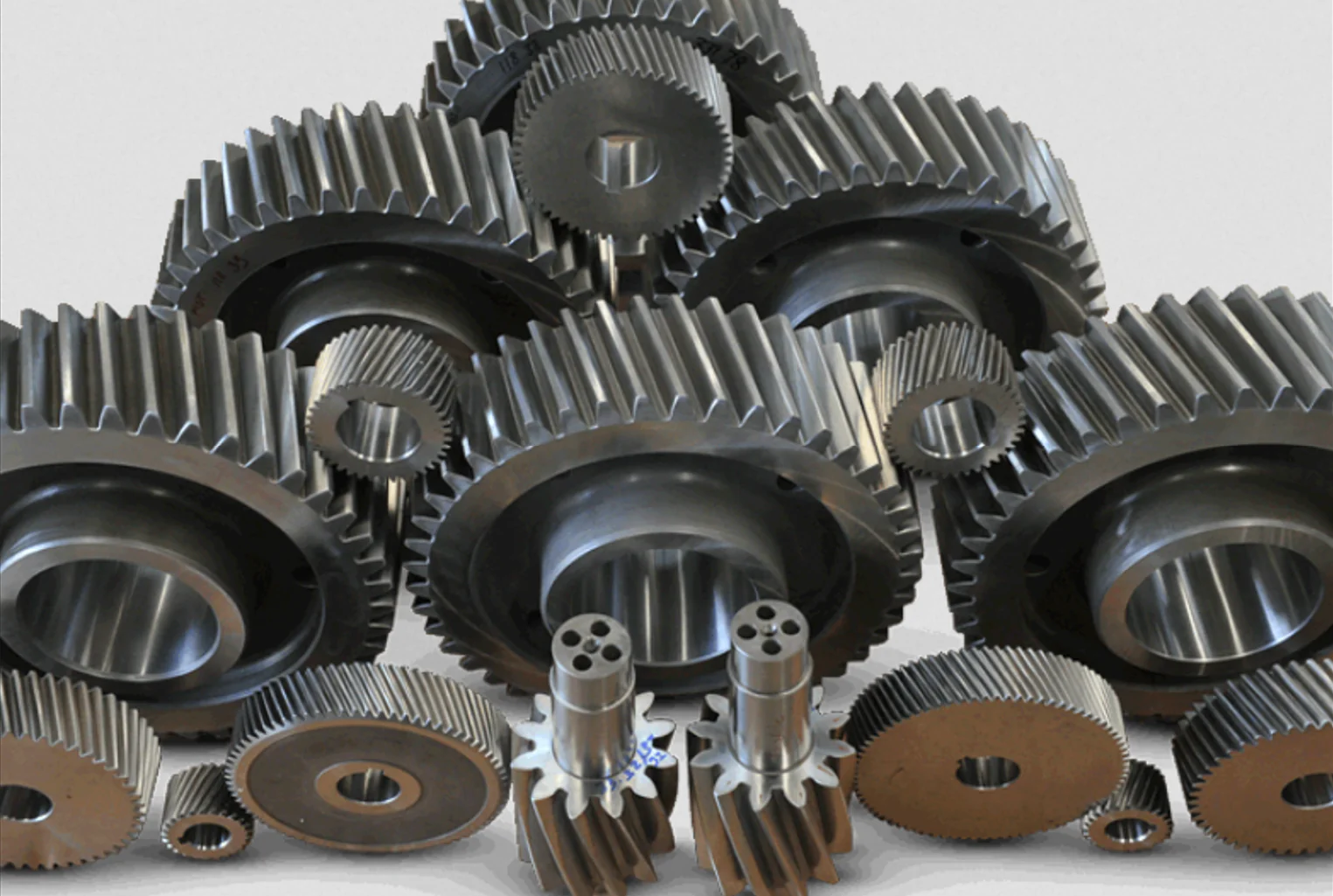
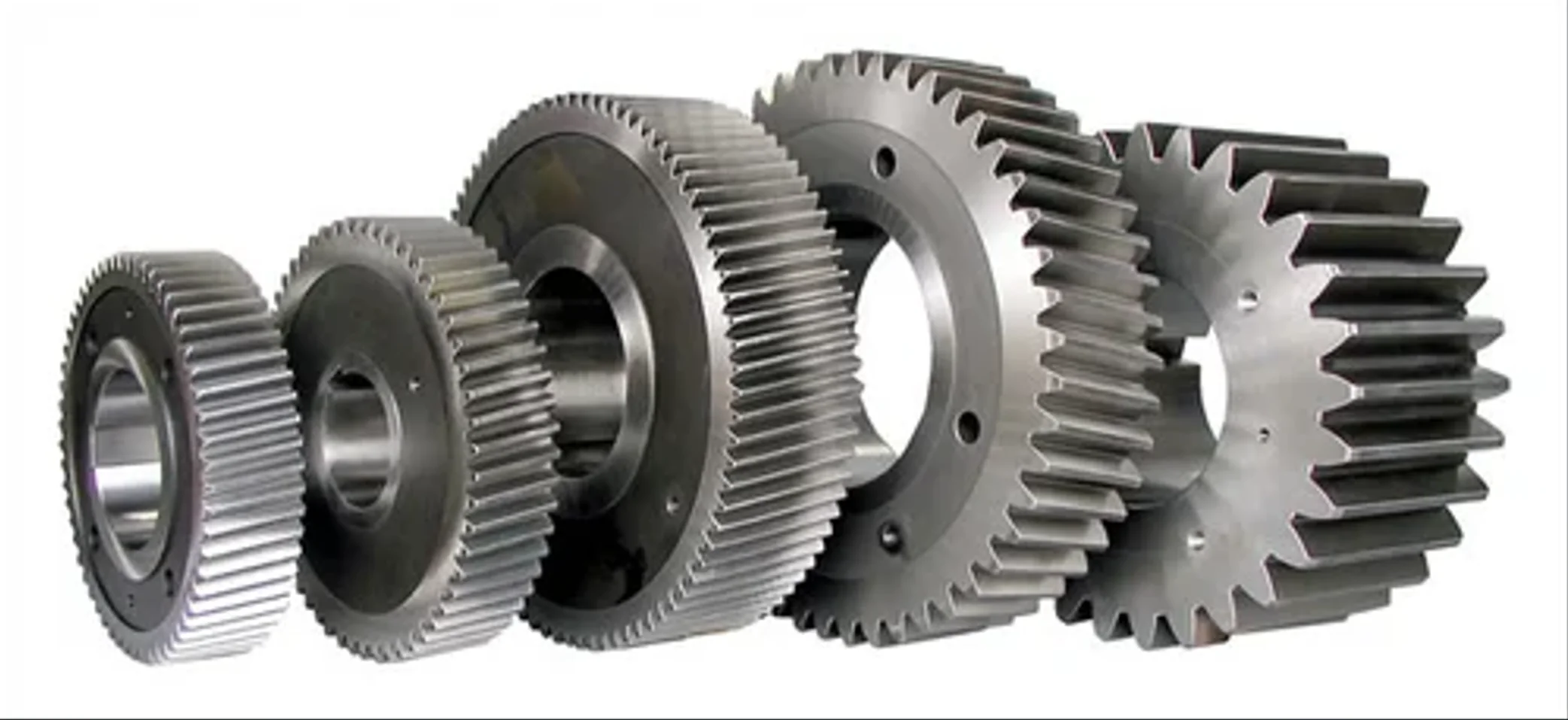
Finished Product Gallery
05 — Key Advantages
Why Choose the 1250-Ton Sinter Hydraulic Press
The 1250-Ton Sinter Hydraulic Press is the ideal solution for manufacturing powder metallurgy heavy-duty gears and sprockets, delivering the ultra-high compaction force required for large, complex, and high-load components. Its advanced hydraulic system ensures uniform densification, exceptional dimensional accuracy, and superior mechanical strength throughout the part.
Uniform compaction of large parts
Uniform compaction of large parts is a key advantage of the 1250-Ton Sinter Hydraulic Press for manufacturing heavy-duty powder metallurgy gears and sprockets. Its high-tonnage hydraulic system ensures even pressure distribution throughout large and complex components, eliminating density variations and weak zones.
Near-net shape manufacturing
Near-net shape manufacturing is a major advantage of the 1250-Ton Sinter Hydraulic Press for heavy-duty powder metallurgy gears and sprockets. The high-precision compaction process forms components very close to their final dimensions, significantly reducing the need for secondary machining and finishing operations.
High structural strength
High structural strength is a key advantage of components produced using the 1250-Ton Sinter Hydraulic Press. The powerful compaction force creates high-density powder metallurgy gears and sprockets with excellent mechanical integrity and load-bearing capacity.
Excellent wear resistance
Excellent wear resistance is a significant advantage of heavy-duty powder metallurgy gears and sprockets produced using the 1250-Ton Sinter Hydraulic Press. The high-compaction process creates components with uniform density and a strong microstructure, enabling them to withstand friction, abrasion, and continuous heavy-load operation.
Suitable for high-value industrial parts
Suitable for high-value industrial parts is a key benefit of the 1250-Ton Sinter Hydraulic Press, enabling the production of large, complex powder metallurgy components with exceptional precision, density, and structural integrity. Its high compaction force ensures superior mechanical properties, making components suitable for critical applications where reliability and performance are essential.
Reduces machining cost significantly
Reduces machining cost significantly is a major advantage of the 1250-Ton Sinter Hydraulic Press for heavy-duty powder metallurgy gears and sprockets. Its near-net shape compaction capability produces components very close to final dimensions, minimizing the need for extensive machining, grinding, and finishing operations.