01 — Press System
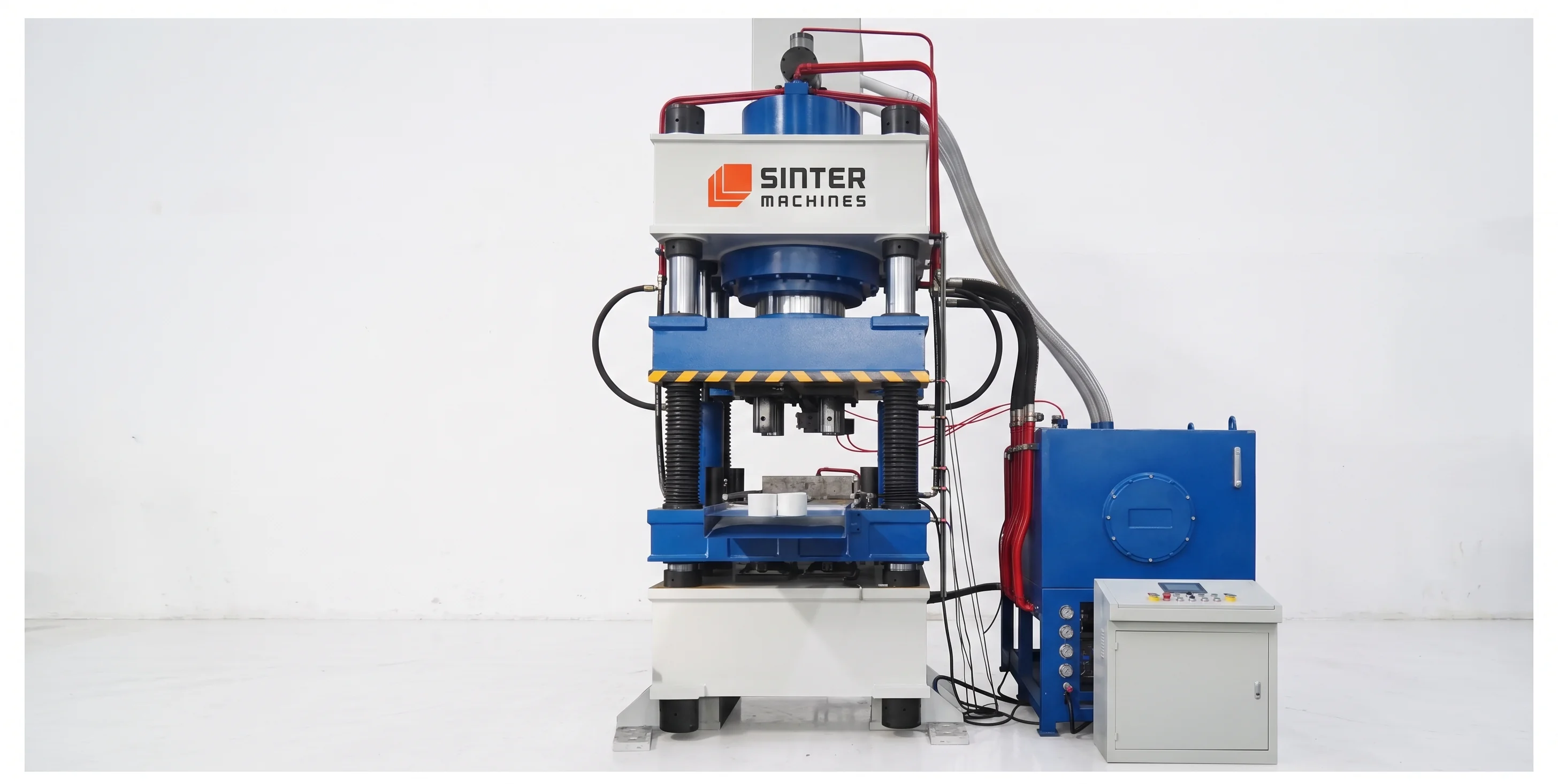
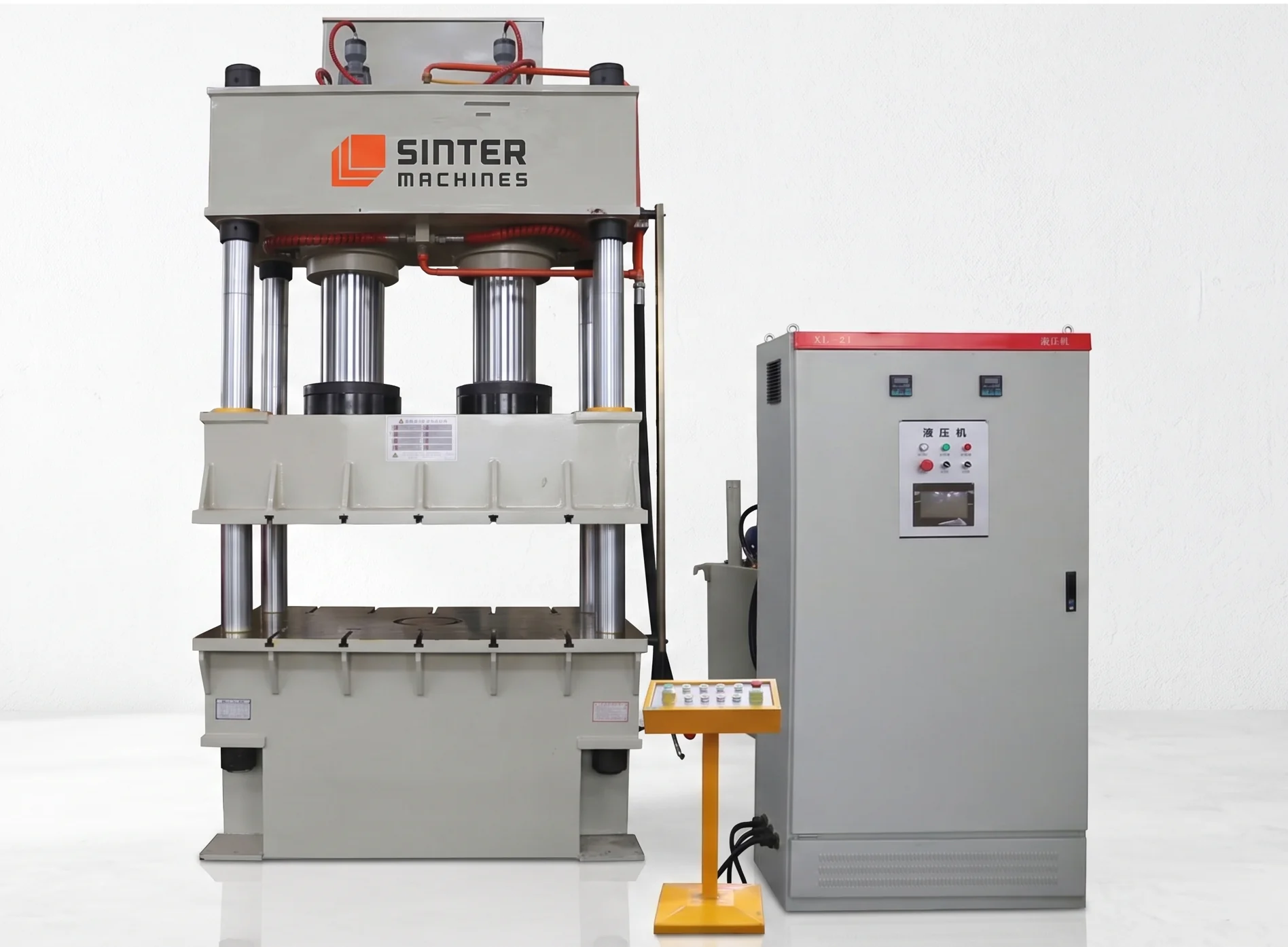
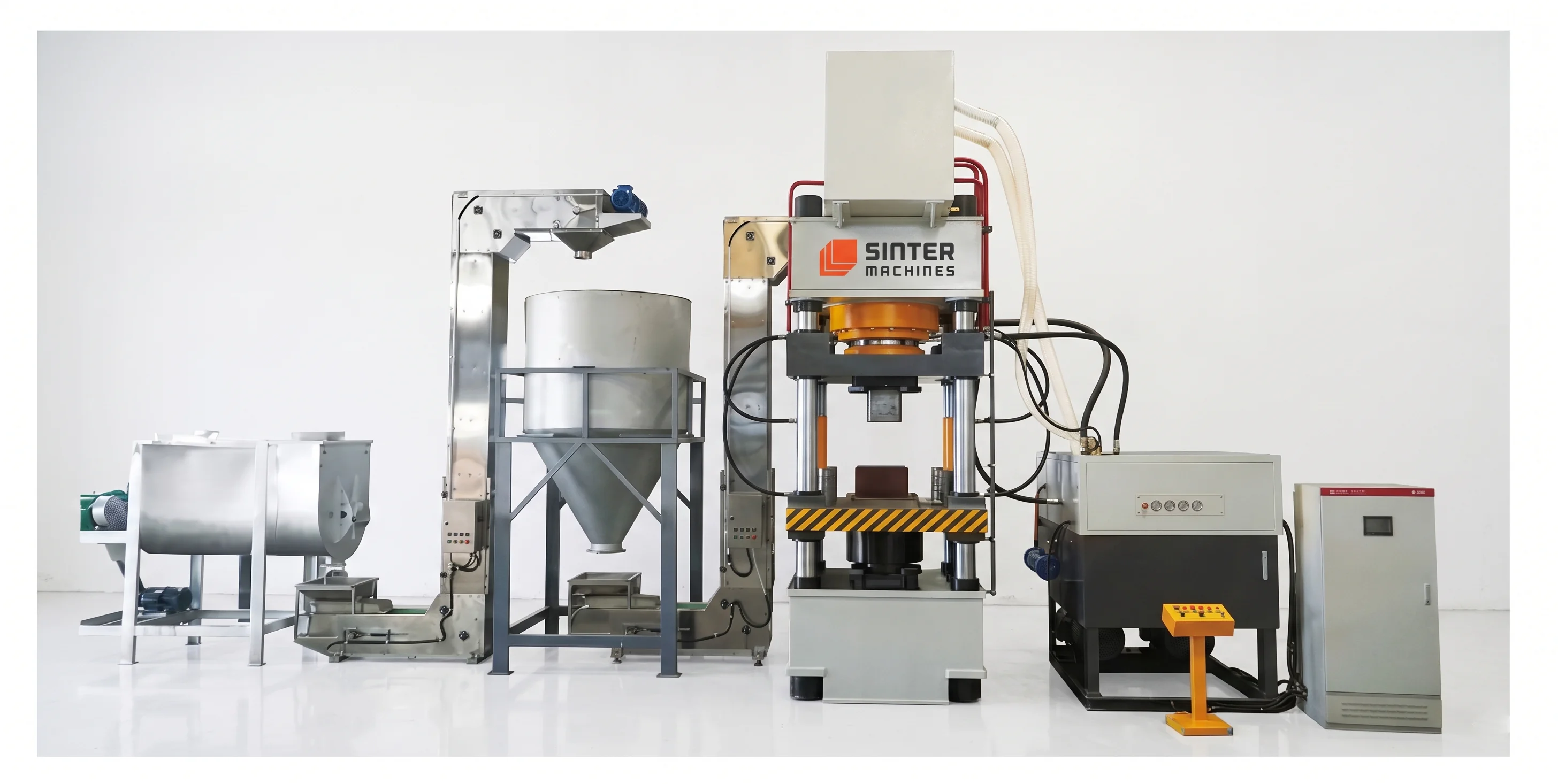
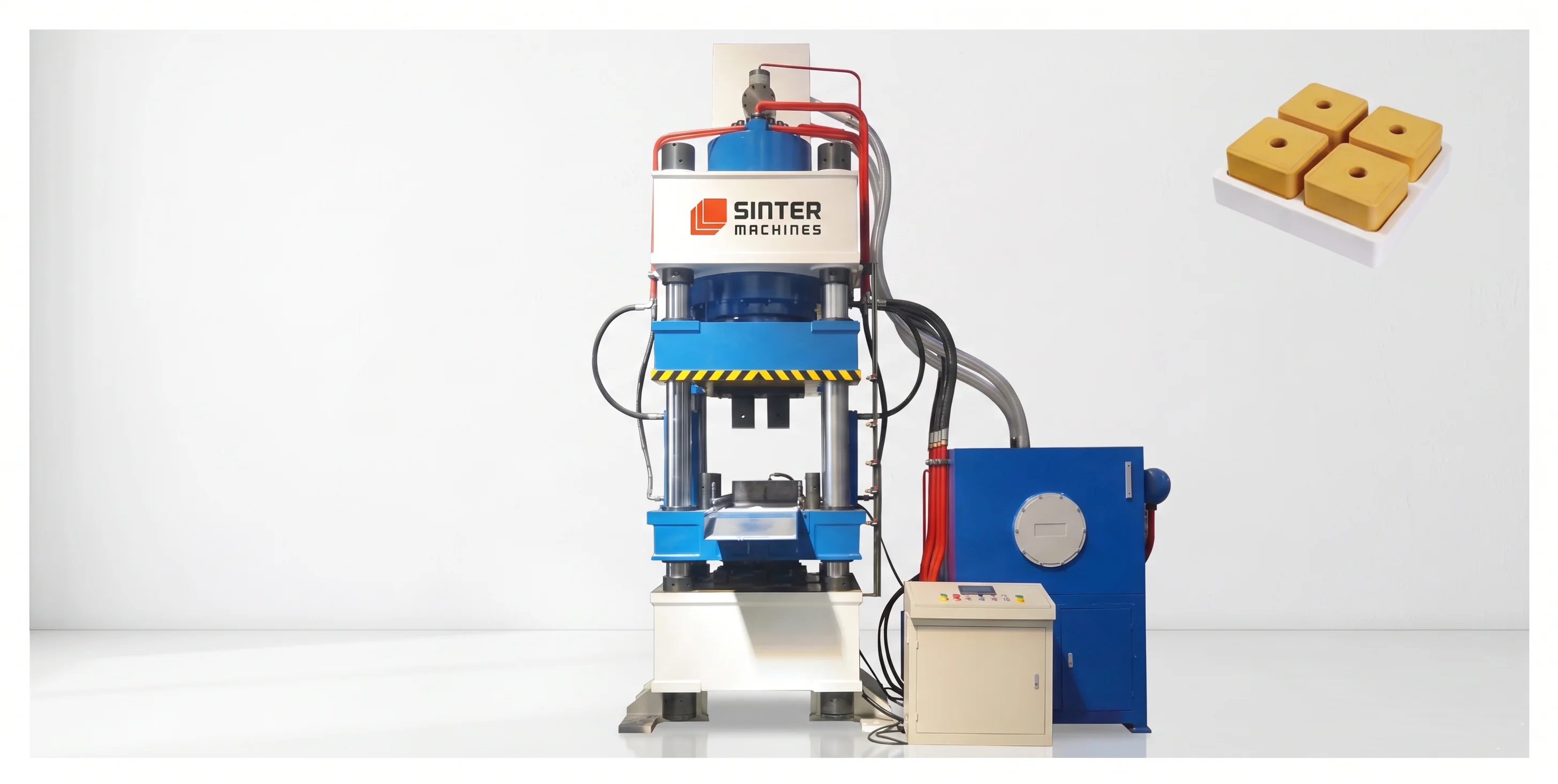
630 Ton Four Column Hydraulic Press Machine
Featuring a robust four-column structural frame, this hydraulic system ensures balanced pressure distribution, precise alignment, and uniform compaction across continuous production cycles.
Use Case
Designed for agricultural feed manufacturing, it automates the compression of weather-resistant salt and mineral lick blocks tailored for cattle nutrition and health.
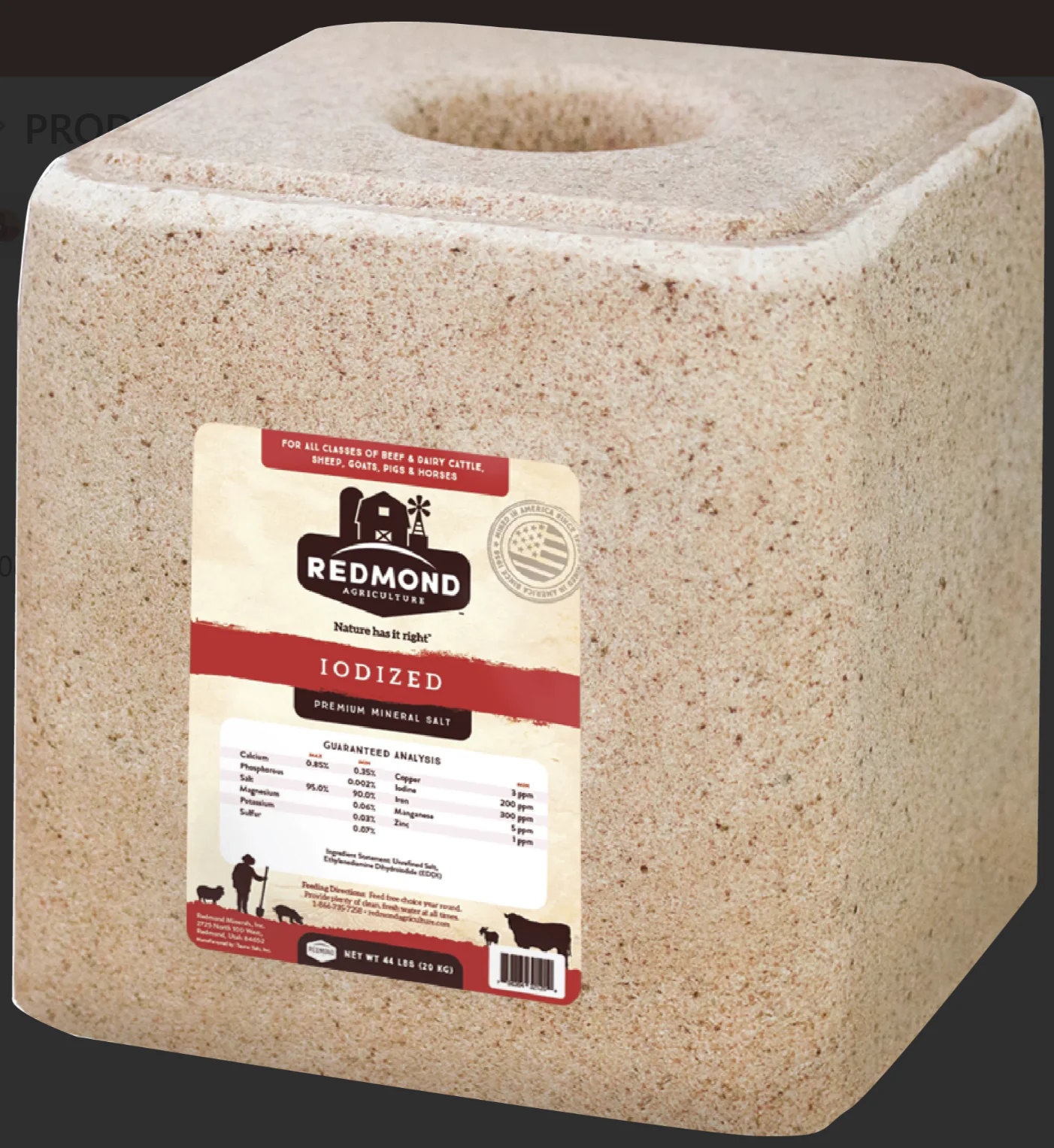
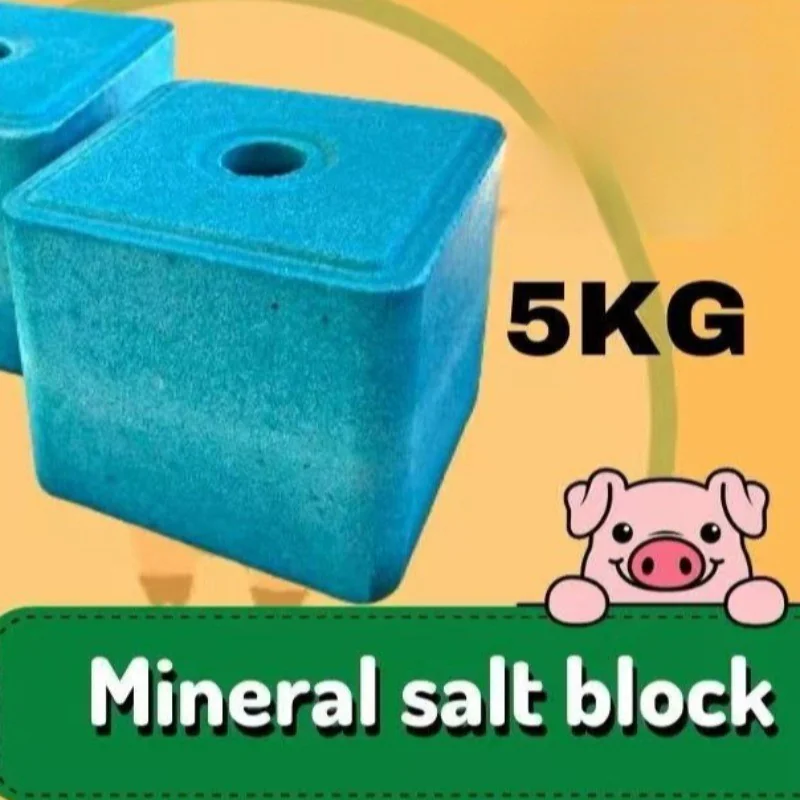
- Core Applications Serves livestock feed manufacturers and agricultural producers by fabricating high-density mineral lick blocks and nutritional supplement feeds. These blocks are formulated to withstand outdoor weather conditions while providing essential daily dietary nutrients to farm animals.
- Material Utilizes sodium chloride granules blended with essential minerals like calcium carbonate, magnesium oxide, and trace mineral premixes. These base powders are integrated with natural binders like molasses and starches to ensure structural integrity and palatability.
- Products Processed Produces compressed pure salt licks, multi-mineral livestock supplements, and high-energy urea feed blocks of uniform density. These finished blocks deliver balanced dietary minerals, supporting optimal digestion, growth, and overall livestock health.
- Why 630-Ton Hydraulic Press Delivers massive force necessary to achieve high density, preventing premature crumbling and ensuring slow, controlled lick rates. Its four-column layout maintains structural balance and precise dimensional accuracy during heavy-duty, high-volume production.
02 — Technical Specifications
SM 630 HP – HYDRAULIC PRESS MACHINE COMPLETE TECHNICAL DATA
SM 630 HP – 630 Ton Hydraulic Press Machine delivers high-efficiency compression molding for cattle salt block production with complete technical reliability. It ensures uniform compaction, high-density formation, and consistent quality for durable mineral blocks, enabling efficient large-scale livestock nutrition manufacturing.
Capacity & Structural Design
- Rated Capacity: 630 Tons (≈ 6180 kN)
- Type: Fourpillar hydraulic compression press
- Frame: Heavy-duty welded steel structure
- Safety factor: ≥ 1.35–1.40
- Parallelism accuracy: ≤ 0.05–0.08 mm
Hydraulic System
- Cylinder: Doubleacting
- Bore: 420–520 mm
- Stroke: 500–900 mm
- Working pressure: 28–32 MPa
- Control: Proportional / servo hydraulic system
Compression Molding Cycle
- Powder blend feeding into mold
- Mold closing (fast approach)
- Pre-compression (air removal)
- Full compression (high-pressure densification)
- Holding stage (binder bonding stabilization)
- Controlled decompression
- Mold opening
- Block ejection
Working Envelope
- Platen size:
- Standard: 800 × 800 mm
- Optional: 1000 × 1000 mm
- Daylight opening: 800–1200 mm
- Column diameter: 140–180 mm
Control System
- PLC: Siemens / Delta / Mitsubishi
- HMI: Recipe-based operation
- Controlled parameters:
- Pressure
- Compression time
- Moisture level (optional)
- Cycle time
- Features:
- Batch traceability
- Safety PLC + interlocks
SM 630 HP — Model Specifications
- Nominal Force: 6300 KN
- Maximum Hydraulic Pressure: 25 MPa
- Max Opening Height of the Slider: 1500 mm
- Max Stroke of the Slider: 900 mm
- Effective Bed Size: 1500 × 1500 mm
- Slider Down Speed: 150 mm/s
- Slider Pressing Speed: 9–18 mm/s
- Slider Return Speed: 200 mm/s
- Ejector Cylinder Nominal Force: 500 KN
- Stroke of the Ejection Cylinder: 300 mm
03 — Die / Mold System
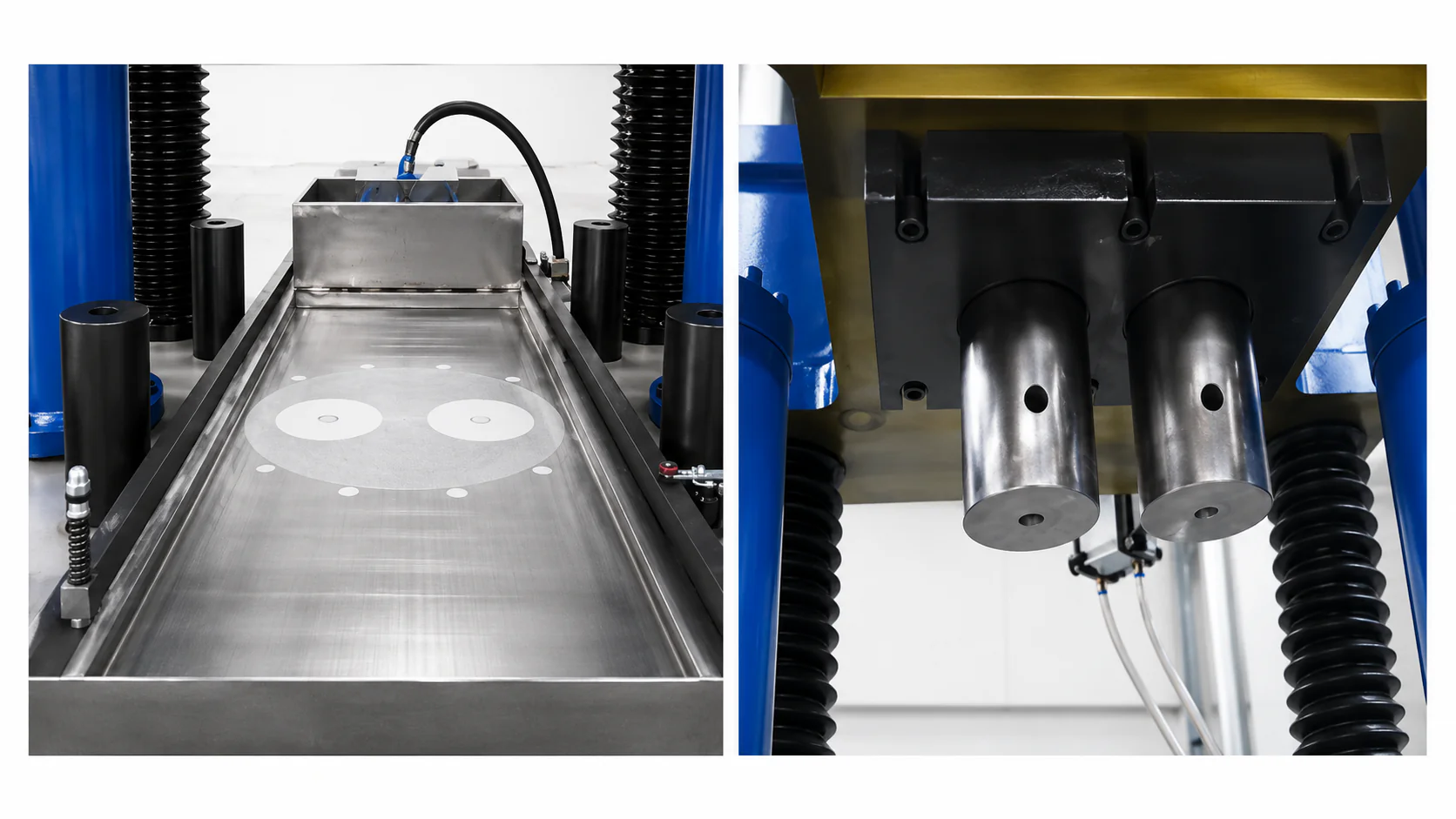
Precision Cattle Salt Blocks Die Mold Engineering
Precision Cattle Salt Blocks Die Engineering ensures accurate block dimensions, uniform density, and smooth surface formation. It enables consistent compaction of mineral mixtures, delivering high-strength, durable salt blocks with reliable performance in livestock environments.
Technical Specifications
Mold Type
- Heavy-duty compression mold
- Multi-cavity (for smaller blocks) or single cavity (large blocks)
Mold Materials
- Tool steel: P20 / H13 / wear-resistant alloy steel
- Surface treatment: Anti-corrosion coating (salt exposure protection)
Mold Construction
- Upper punch: Compression face
- Lower cavity: Block shaping cavity
- Guide pillars: Alignment accuracy ±0.02 mm
- Ejection system: Hydraulic or spring-assisted ejector
Wear & Corrosion Protection
Because salt is highly corrosive:
- Stainless inserts (optional)
- Nickel/chrome coating
- Anti-rust treatment coatings
Venting System
- Micro vent holes
- Air escape channels
Prevents:
- Air pockets
- Block cracks
- Density variation
Surface Finish
| Area | Finish |
| Block surface | Smooth / slightly textured |
| Edges | Reinforced sharp edges |
| Branding | Embossed logo/text |
Mold Life: 100,000 – 250,000 cycles (depends on salt abrasiveness)
Precision Cattle Salt Blocks Die Mold
04 — Product Application
Where Cattle Salt Blocks Are Used
Cattle salt blocks are widely used in livestock and dairy farming for providing essential minerals and nutrients to animals. They are placed in grazing areas, farms, and dairy units to support animal health, growth, and productivity. These blocks ensure balanced nutrition, improved digestion, and long-lasting supplementation in field conditions.
Industry Applications
Livestock & Dairy Industry
Cattle salt blocks are widely used as mineral licks for livestock, supporting essential nutrition in cattle, dairy farms, and grazing environments. They are commonly used for buffalo, goats, and sheep as reliable mineral supplements. These blocks help improve animal health, digestion, and productivity with long-lasting nutrient delivery.
Agriculture Sector
In the agriculture sector, cattle salt blocks are widely used as mineral supplements in grazing fields and outdoor feeding systems. They provide essential nutrients to livestock in open environments, supporting animal health, growth, and productivity. These blocks are designed for durability, ensuring long-lasting use under outdoor conditions.
Animal Nutrition Industry
In the animal nutrition industry, cattle salt blocks are used as mineral supplements for horses and specialty livestock. They provide essential nutrients that support growth, health, and overall performance. These blocks are designed for durability and controlled consumption, ensuring long-lasting and effective nutritional support in various animal care applications.
Feed Manufacturing Industry
In the feed manufacturing industry, cattle salt blocks are produced as essential animal feed supplements for large-scale livestock nutrition programs. They ensure consistent quality, uniform mineral distribution, and efficient production for widespread agricultural use. These blocks support reliable and cost-effective nutrition solutions across commercial feed operations.
| Industry | Scenario |
|---|---|
| Dairy Farms | Mineral lick blocks for cattle |
| Livestock | Outdoor feeding blocks |
| Agriculture | Grazing field supplementation |
| Feed Industry | Mass production of feed blocks |
| Animal Nutrition | Vitamin & mineral delivery |
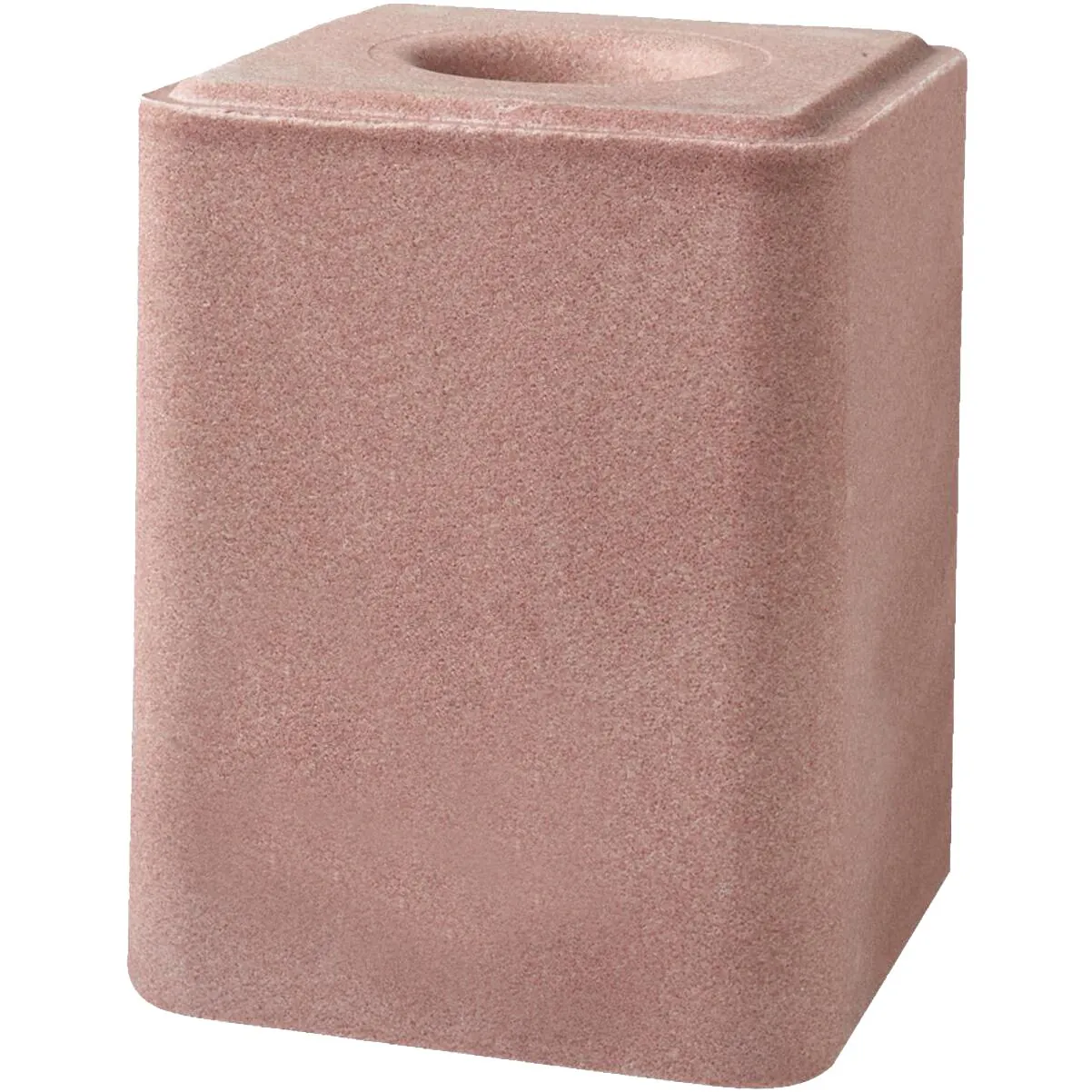
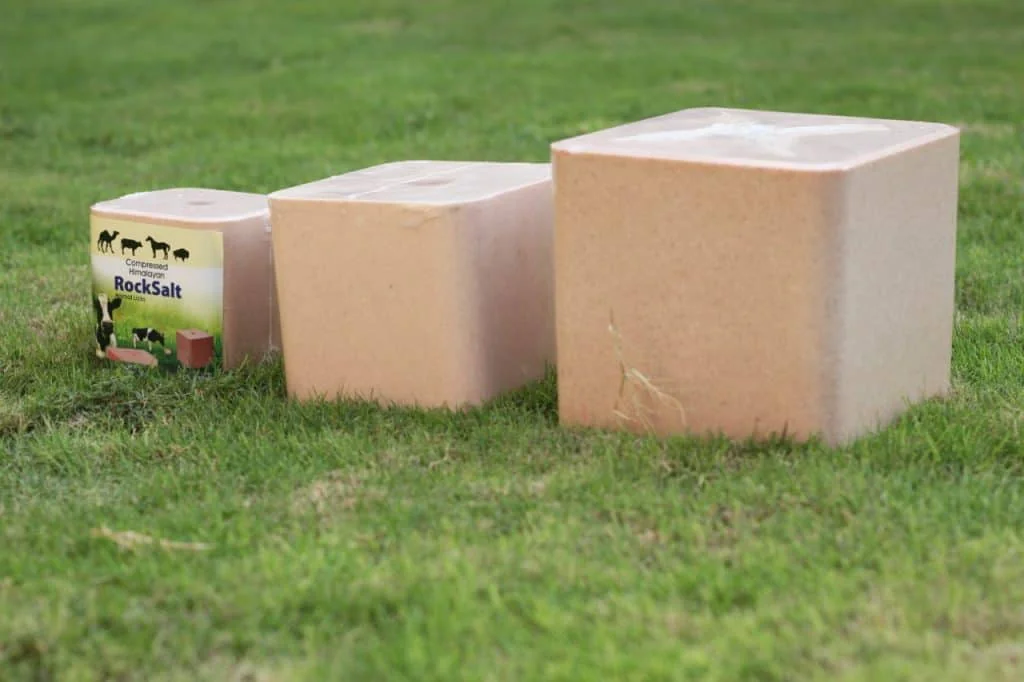
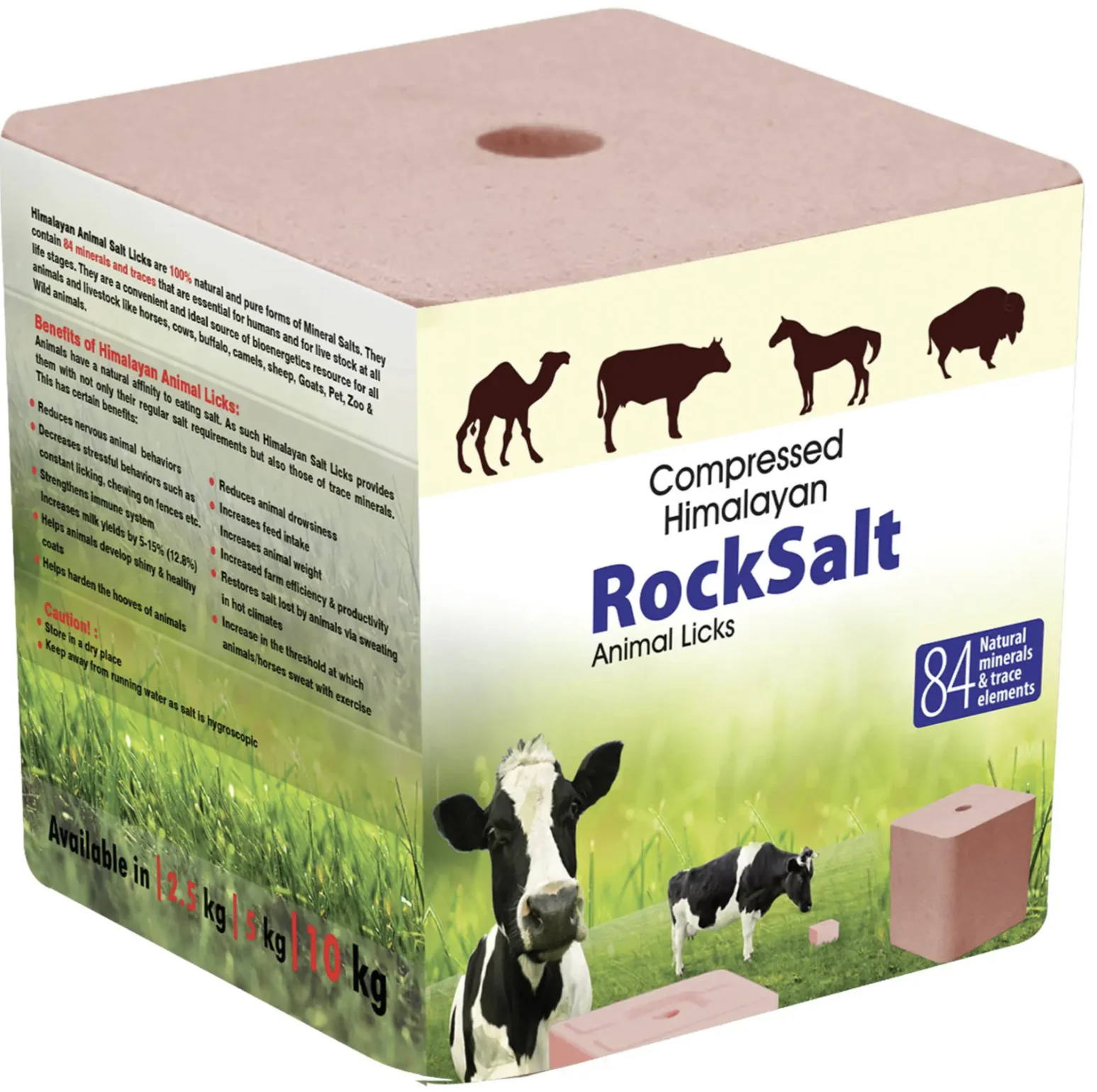
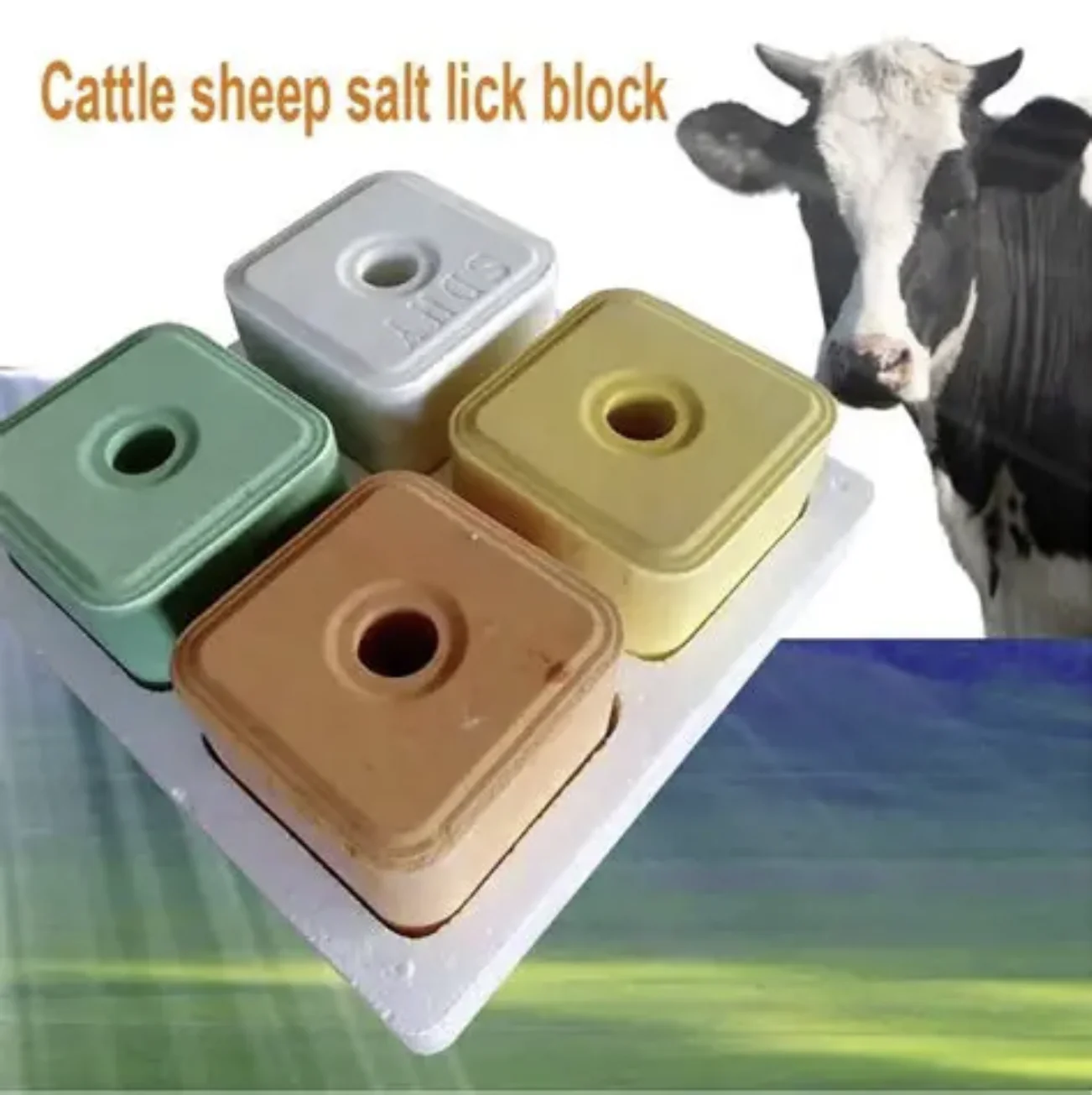
Finished Product Gallery
05 — Key Advantages
Why Choose the 630-Ton Sinter Hydraulic Press
The 630-Ton Sinter Hydraulic Press delivers high-pressure compaction for producing dense and durable cattle salt blocks. It ensures uniform compression, proper binder activation, and strong structural integrity for long-lasting field performance. Designed for efficiency, it supports high-output production with consistent quality in livestock nutrition manufacturing.
High-pressure compaction
High-pressure compaction in the 630-ton Sinter Hydraulics press ensures cattle salt blocks are formed with exceptional density and structural integrity. This results in stronger, more durable blocks that resist cracking and crumbling during handling and storage. The uniform compression also guarantees consistent mineral distribution, improving the quality and effectiveness of the final product.
High-density blocks
High-density blocks produced by the 630-ton Sinter Hydraulics press offer superior strength, making them highly resistant to wear, breakage, and environmental impact. This ensures longer-lasting cattle salt blocks with minimal wastage during handling and use. The enhanced density also supports consistent mineral intake for livestock, improving overall effectiveness and product reliability.
Long-lasting in outdoor environment
Cattle salt blocks made with the 630-ton Sinter Hydraulics press are highly durable and long-lasting in outdoor environments. Their dense structure resists moisture absorption, erosion, and weather damage, ensuring minimal degradation over time. This durability helps maintain block shape and effectiveness, reducing waste and ensuring consistent availability for livestock.
Uniform nutrient distribution
Uniform nutrient distribution is achieved through the high-pressure compaction of the 630-ton Sinter Hydraulics press, ensuring minerals are evenly spread throughout each salt block. This consistency guarantees that livestock receive balanced nutrition with every use. It enhances product quality and reliability while minimizing segregation and nutrient loss during handling.
High demand in dairy & livestock sectors
The 630-ton Sinter Hydraulics press meets the high demand in dairy and livestock sectors by enabling efficient, large-scale production of durable cattle salt blocks. Its high-pressure performance ensures consistent quality and faster output, making it suitable for mass manufacturing. This reliability supports continuous supply for farms, helping meet the growing nutritional needs of livestock.
Low production cost
The 630-ton Sinter Hydraulics press helps achieve low production costs through efficient high-pressure compaction and optimized energy use. Its robust design minimizes material waste and reduces the need for reprocessing. Faster cycle times also improve productivity, lowering per-unit manufacturing expenses while maintaining consistent quality.