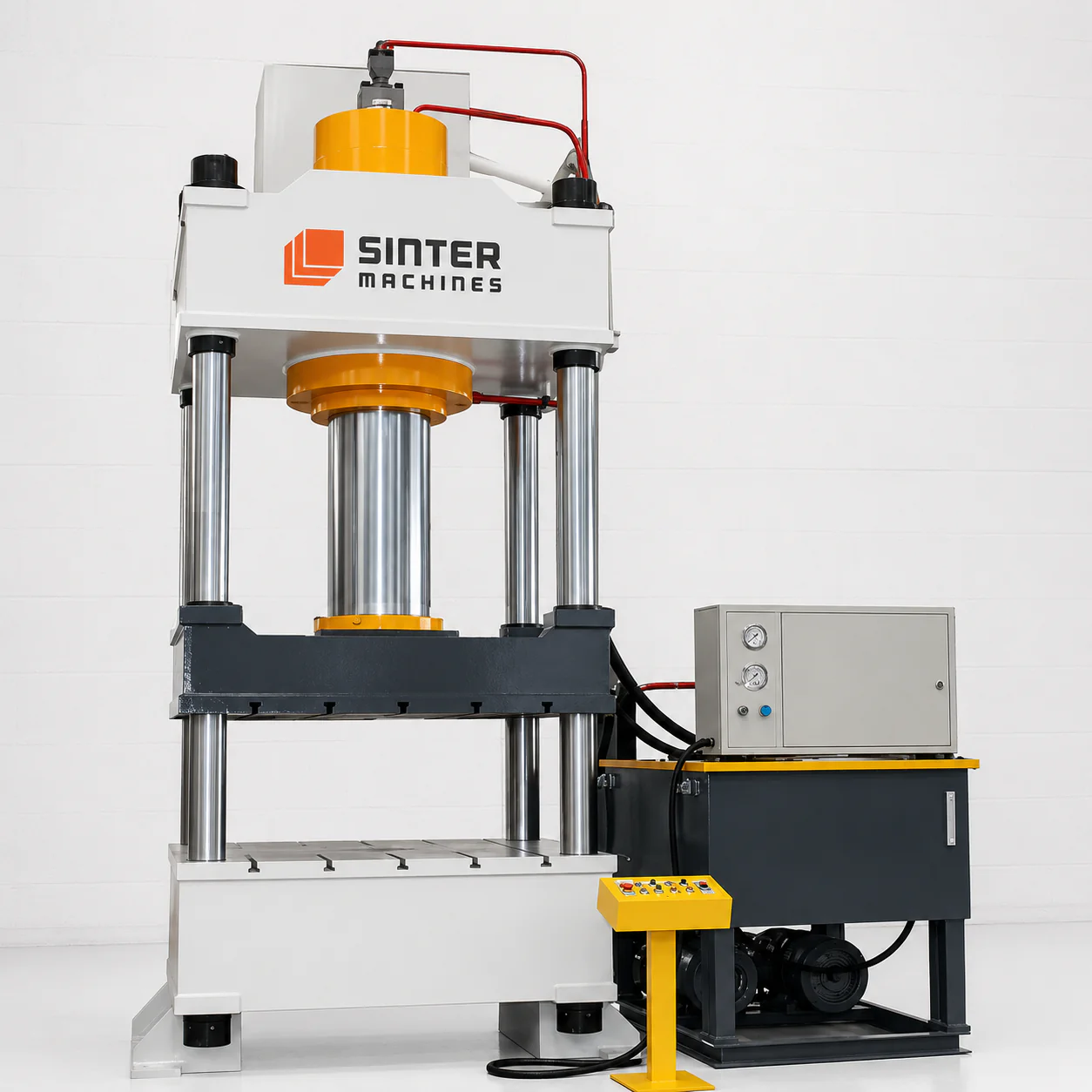
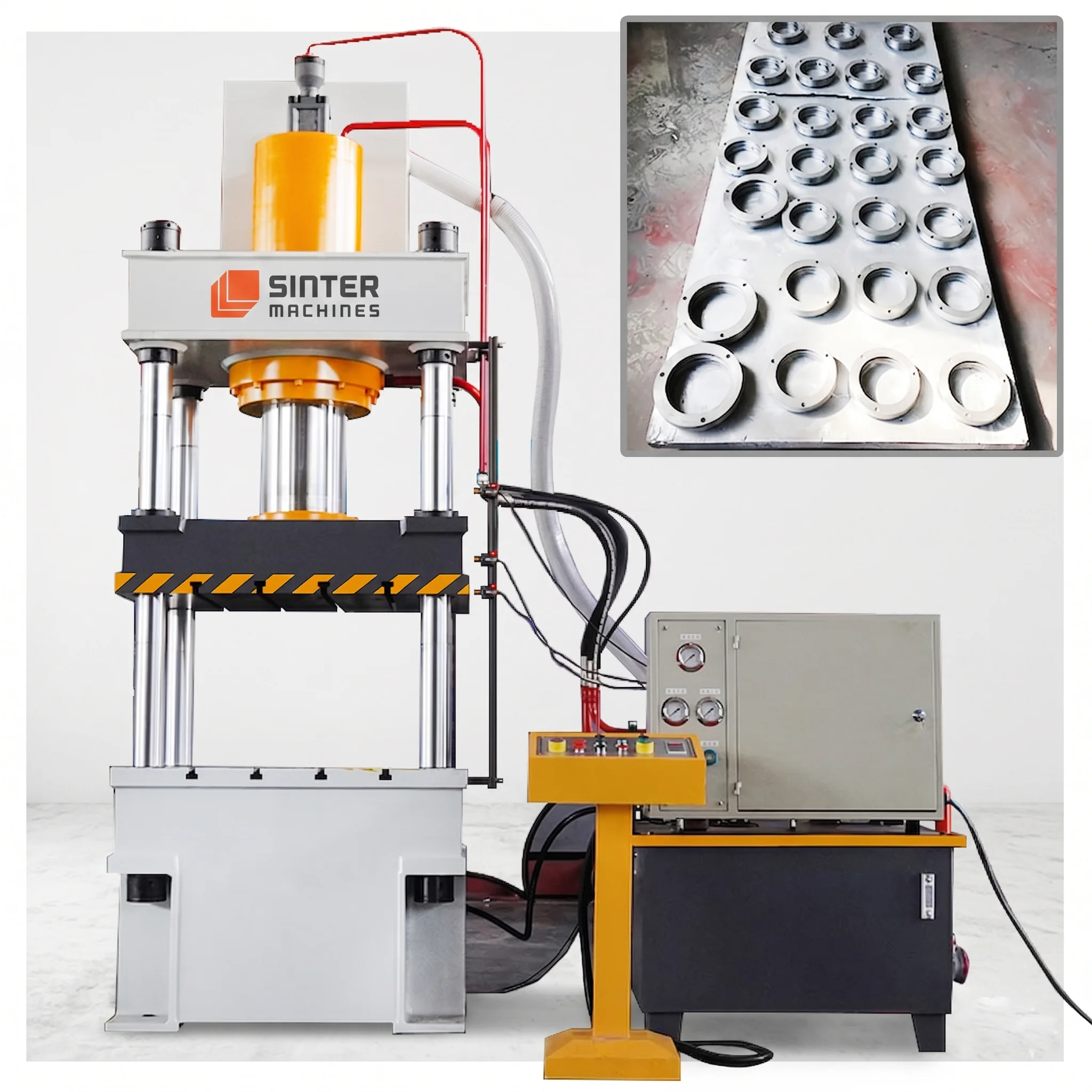
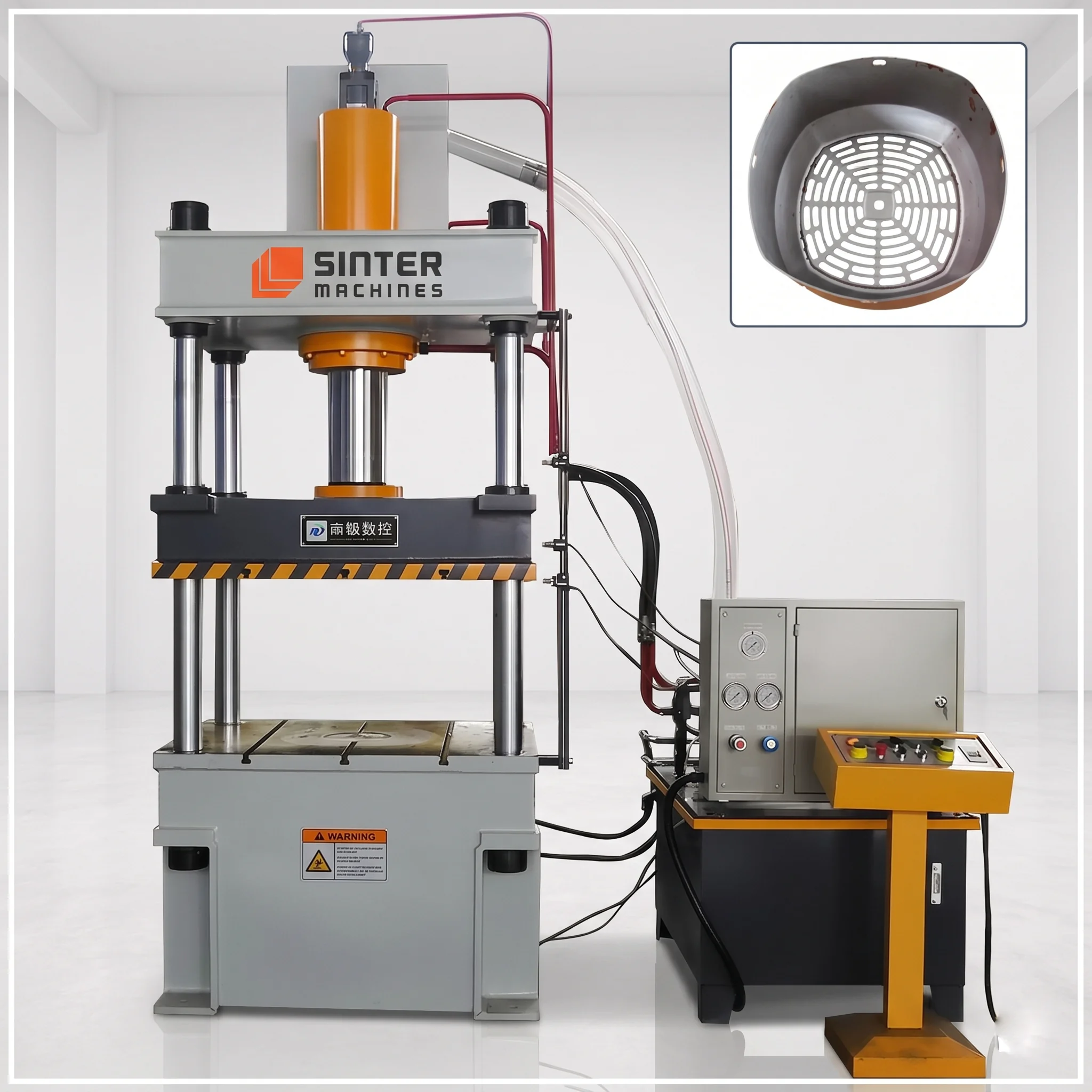
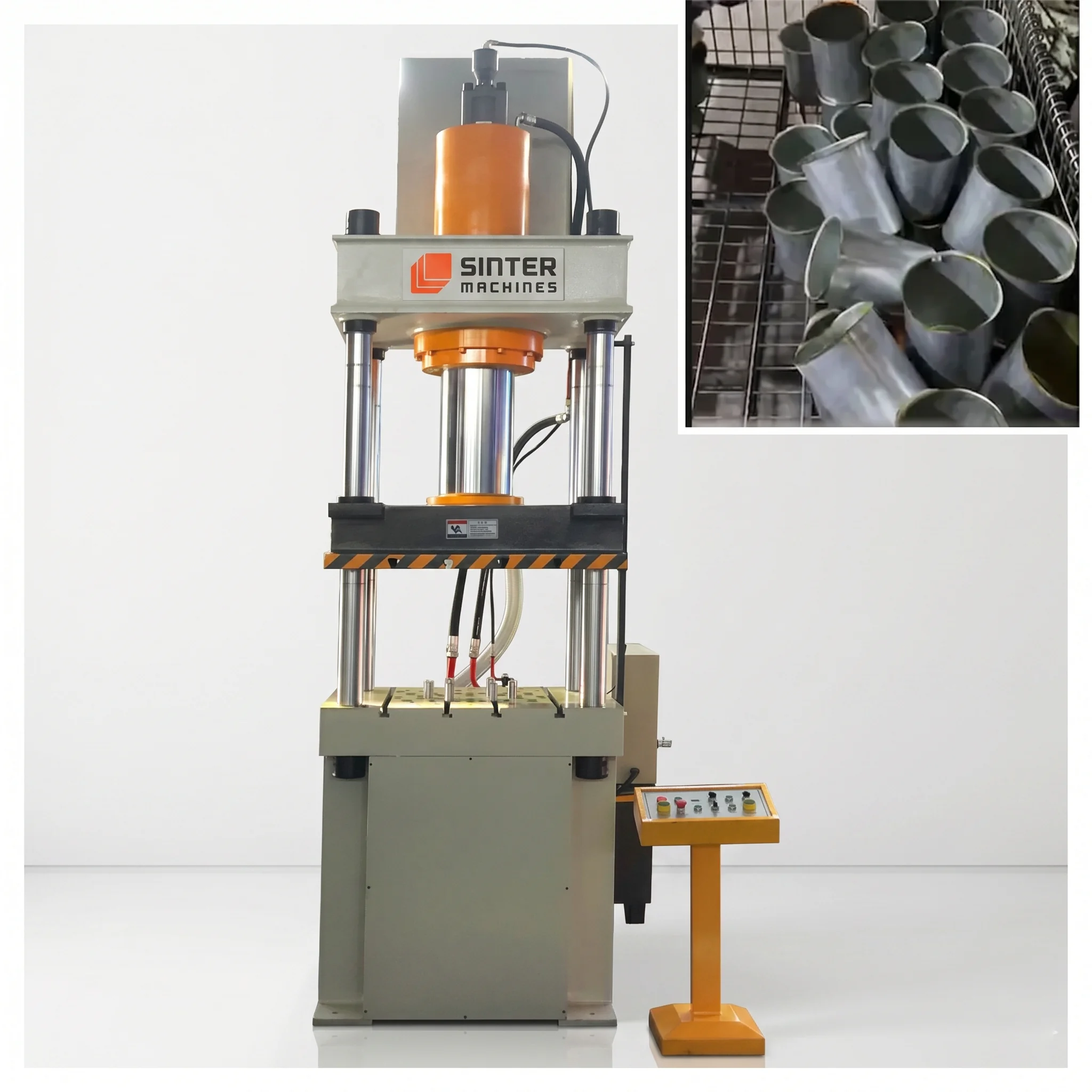
200T Automotive AC Components Press press view 1
Automotive AC Components · Hydraulic Press Machine

200 Ton Four Pillar Hydraulic Press for Stamped Small Automative AC Compressor Components

200T Rated Capacity
100 mm/s Slider Down Speed
7–18 mm/s Slider Pressing Speed
90 mm/s Slider Return Speed

01 — Press System

200 Ton Four Pillar Hydraulic Press Machine

200-ton fourpillar hydraulic press is ideal for smalltomedium stamped, formed, or shallowdrawn compressor parts, offering precise force control and consistent output for OEM and Tier1 automotive suppliers

Offering:

  • Precision and repeatability
  • Stable forming of aluminum and steel parts
  • Long die and machine life
  • Optimized productivity for automotive OEM volumes

Use Case

Automotive A/C compressor components operate under high internal pressure, continuous cyclic loading, elevated temperatures, and stringent NVH (Noise, Vibration, Harshness) requirements. The press provides the accuracy and compaction consistency necessary to produce reliable components with superior dimensional control and structural integrity.

Core Applications

  • Manufacturing of compressor valve plates, bearing carriers, thrust plates, retainer plates, end covers, pulley components, mounting brackets, and precision compressor housings.
  • Suitable for high-volume production of compressor parts requiring tight tolerances, smooth surface finish, and reliable performance.

Material

  • Compatible with low-carbon steel, alloy steel, stainless steel, aluminum alloys, and copper-based materials used in automotive compressor applications.
  • Supports materials requiring precision forming, stamping, compaction, and shallow drawing operations.

Key Functions

  • Precision forming, stamping, pressing, sizing, and shallow drawing of automotive compressor components.
  • Ensures dimensional accuracy, uniform part quality, improved structural strength, and reduced component variation.

Why 200 Ton Hydraulic Press?

  • Provides the optimum force capacity for small to medium compressor parts without overloading tooling or materials.
  • Delivers accurate pressure control, high repeatability, improved tool life, and efficient production for OEM and Tier-1 automotive manufacturing requirements.

02 — Technical Specifications

SM 200 HP – HYDRAULIC PRESS MACHINE COMPLETE TECHNICAL DATA

The SM 200 HP – 200 Ton Hydraulic Press Machine is a high-precision four-pillar press engineered for manufacturing small to medium stamped, formed, and shallow-drawn automotive A/C compressor components, delivering accurate force control, excellent repeatability, and consistent production quality. Its rigid structure, programmable hydraulic system, and precision stroke control ensure tight dimensional tolerances and superior surface finish for critical compressor parts.

Capacity & Structural Design

  • Rated Press Capacity: 200 metric tons (≈ 1,960 kN)
  • Press Type: Fourpillar / fourcolumn hydraulic press
  • Frame Construction: Welded steel frame, stressrelieved
  • Design Duty: Continuous automotive production
  • Structural Safety Factor: ≥ 1.25
  • Deflection at Full Load: ≤ 0.05–0.06 mm
  • Load Distribution: Uniform across forming area

Hydraulic System

Main Hydraulic Cylinder

  • Type: Doubleacting
  • Bore Diameter: 250–300 mm
  • Stroke: 300–450 mm

Maximum Working Pressure: 25–30 MPa (250–300 bar)

Hydraulic Power Pack

  • Fixed or variabledisplacement pump
  • Proportional pressure control valve

Operating Modes

  • Constantpressure forming
  • Strokecontrolled forming
  • Pressure dwell (springback control)

Platen & Working Envelope

Upper / Lower Platen Size

  • Standard: 450 × 450 mm
  • Optional: up to 600 × 600 mm

Guide Columns

  • Quantity: 4
  • Diameter: 80–100 mm
  • Finish: Hardened, hardchromed & ground
  • Daylight Opening: 600–800 mm
  • Platen Parallelism Accuracy: ±0.02 mm / 300 mm

Controls & Safety

  • Control System: PLC + touchscreen HMI

Monitored Parameters

  • Forming force
  • Stroke position
  • Dwell time
  • Cycle counter

Safety Features

  • Twohand operation (manual)
  • Light curtain or safety guarding
  • Pressurerelief & overload protection
  • Emergency stop (automotive plant compliant)

SM 200 HP — Model Specifications

  • Nominal Force: 2000 KN
  • Maximum Hydraulic Pressure: 25 MPa
  • Max Opening Height of the Slider: 900 mm
  • Max Stroke of the Slider: 600 mm
  • Effective Bed Size: 800 × 800 mm
  • Slider Down Speed: 100 mm/s
  • Slider Pressing Speed: 7–18 mm/s
  • Slider Return Speed: 90 mm/s
  • Ejector Cylinder Nominal Force: 300 KN
  • Stroke of the Ejection Cylinder: 200 mm
Production Case Study

Stamped Small Shallow Drawn Automative AC Compressor Components Production Line

AL 6061 / AL 5052 / CRCA / DDQ SteelRaw Material
20 g to 180 gProduct Weight
Ø 60 to Ø 160 mmBlank Size
2 to 5 SecCycle Time
Excellent dimensional accuracy
Consistent thickness control
Superior surface quality
Controlled forming parameters minimized material deformation
Improved process consistency
Reduced manual intervention
Increased Component Durability

03 — Die / Mold System

Precision Stamped Small Shallow Drawn Automative AC Compressor Components Die Mold Engineering

Precision die mold systems are used for manufacturing small stamped and shallow-drawn automotive A/C compressor components such as valve plates, retainer plates, covers, bearing carriers, and mounting elements. These tools ensure high dimensional accuracy, consistent forming quality, and reliable component performance under demanding automotive operating conditions.

Technical Specifications (Tooling)

Die Type

  • Precision stamping dies, shallow drawing dies, compound dies, and progressive dies for automotive compressor components.
  • Suitable for high-speed production of small to medium precision-formed parts.

Die Materials

  • Manufactured from hardened tool steels such as D2, DC53, SKD11, and high-wear PM tool steels.
  • Selected for excellent wear resistance, dimensional stability, and long production life.

Tool Configuration & Construction

  • Modular die construction incorporating punches, die blocks, guide pillars, stripper plates, and precision inserts.
  • Engineered for easy maintenance, rapid setup, and consistent production performance.

Key Tooling Features

  • Precision blanking, forming, shallow drawing, piercing, and sizing capabilities within a single tooling platform.
  • Designed to minimize material deformation, wrinkling, and dimensional variation during forming.

Alignment Accuracy

  • Precision guide pillar systems maintain tooling alignment within ±0.01 mm.
  • Ensures accurate component geometry, reduced tool wear, and consistent product quality.

Materials Formed

  • Low-carbon steel, stainless steel, aluminum alloys, galvanized steel, and copper-based materials.
  • Suitable for automotive compressor components requiring strength, corrosion resistance, and excellent formability.

Surface Finish

  • Die working surfaces are precision polished to achieve smooth component finishes and reduced friction.
  • Supports high-quality parts with minimal surface defects and improved appearance.

Tool Life

  • Typical die life ranges from 500,000 to over 2 million production strokes depending on material and operating conditions.
  • Advanced coatings, precision maintenance, and optimized process parameters maximize tooling durability and performance.
Case Study (Die Performance)

Precision Stamped Small Shallow Drawn Automative AC Compressor Components Die Mold

H13 / D2 tool steelDie Materials
1–4 CavitiesTooling layout
54–60 HRCHardness
Excellent dimensional accuracy
Profile consistency, and surface quality
Stable die performance
Advanced die alignment and precision tooling significantly reduced defects
Consistent forming accuracy
High-wear-resistant tool materials
Improved operational efficiency and process stability.

04 — Product Application

Where Precision Stamped Small Shallow Drawn Automative AC Compressor Components Are Used

Precision stamped and shallow-drawn automotive A/C compressor components are widely used in vehicle air-conditioning systems where dimensional accuracy, structural integrity, and long-term reliability are critical. These components help ensure efficient refrigerant compression, smooth operation, low noise levels, and dependable performance under demanding automotive operating conditions.

Industry Applications

Automotive A/C Compressors

Used in compressor assemblies such as valve plates, retainer plates, thrust plates, and bearing carriers. These precision components support efficient refrigerant compression and long service life.

Passenger Vehicles

Integrated into air-conditioning systems for cars, SUVs, and light commercial vehicles. They contribute to reliable cooling performance, reduced vibration, and improved passenger comfort.

Commercial and Heavy-Duty Vehicles

Utilized in trucks, buses, construction equipment, and agricultural vehicles equipped with HVAC systems. Their robust construction ensures dependable operation under heavy workloads and harsh environments.

Electric and Hybrid Vehicles

Used in advanced electric compressor systems requiring lightweight, precise, and high-performance components. They support energy-efficient climate control while maintaining low noise and vibration levels.

Finished Product Gallery

05 — Key Advantages

Why Choose the 200-Ton Sinter Hydraulic Press

The 200-Ton Sinter Hydraulic Press is an ideal manufacturing solution for precision automotive A/C compressor components requiring tight dimensional tolerances, high structural integrity, and consistent production quality. Its precise force control and robust construction ensure reliable, high-volume production for OEM and Tier-1 automotive applications.

01

Precision Force Control

Delivers accurate and repeatable pressing force for small and shallow-drawn compressor components. Ensures consistent dimensions, reduced variation, and improved product quality.

02

Superior Dimensional Accuracy

Maintains tight tolerances essential for critical A/C compressor assemblies. Improves component fitment, assembly efficiency, and overall compressor performance.

03

Excellent Surface Quality

Produces components with smooth surfaces and minimal forming defects. Reduces secondary finishing requirements and enhances product appearance.

04

High Production Efficiency

Supports fast production cycles for large-volume automotive manufacturing. Increases throughput while maintaining stable and consistent quality standards.

05

Extended Tool Life

Controlled pressure application minimizes tooling stress and wear. Results in longer die life, lower maintenance costs, and reduced downtime.

06

Cost-Effective Manufacturing

Optimized material utilization reduces scrap generation and processing costs. Improves overall production economics while meeting stringent automotive quality requirements.