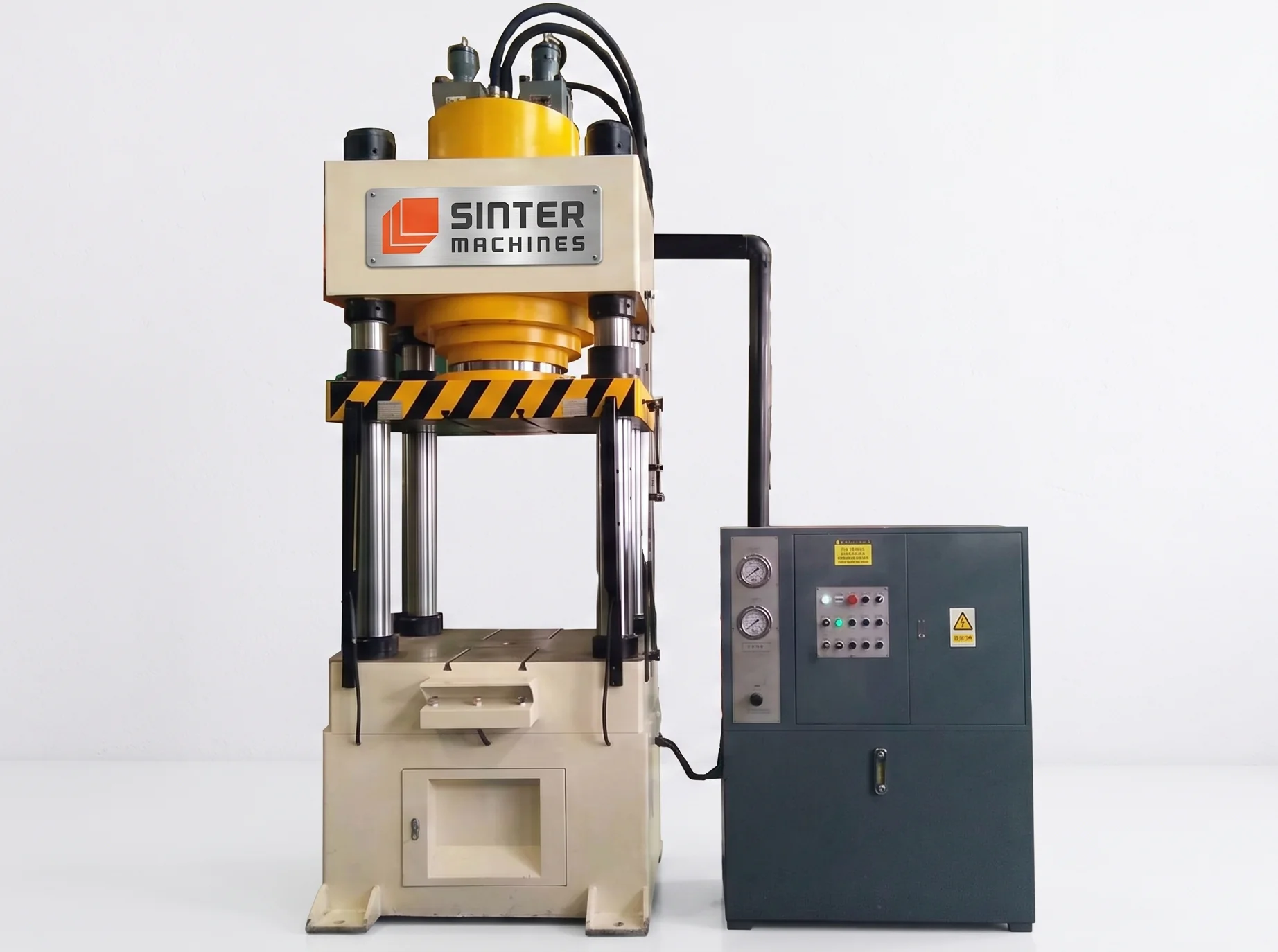
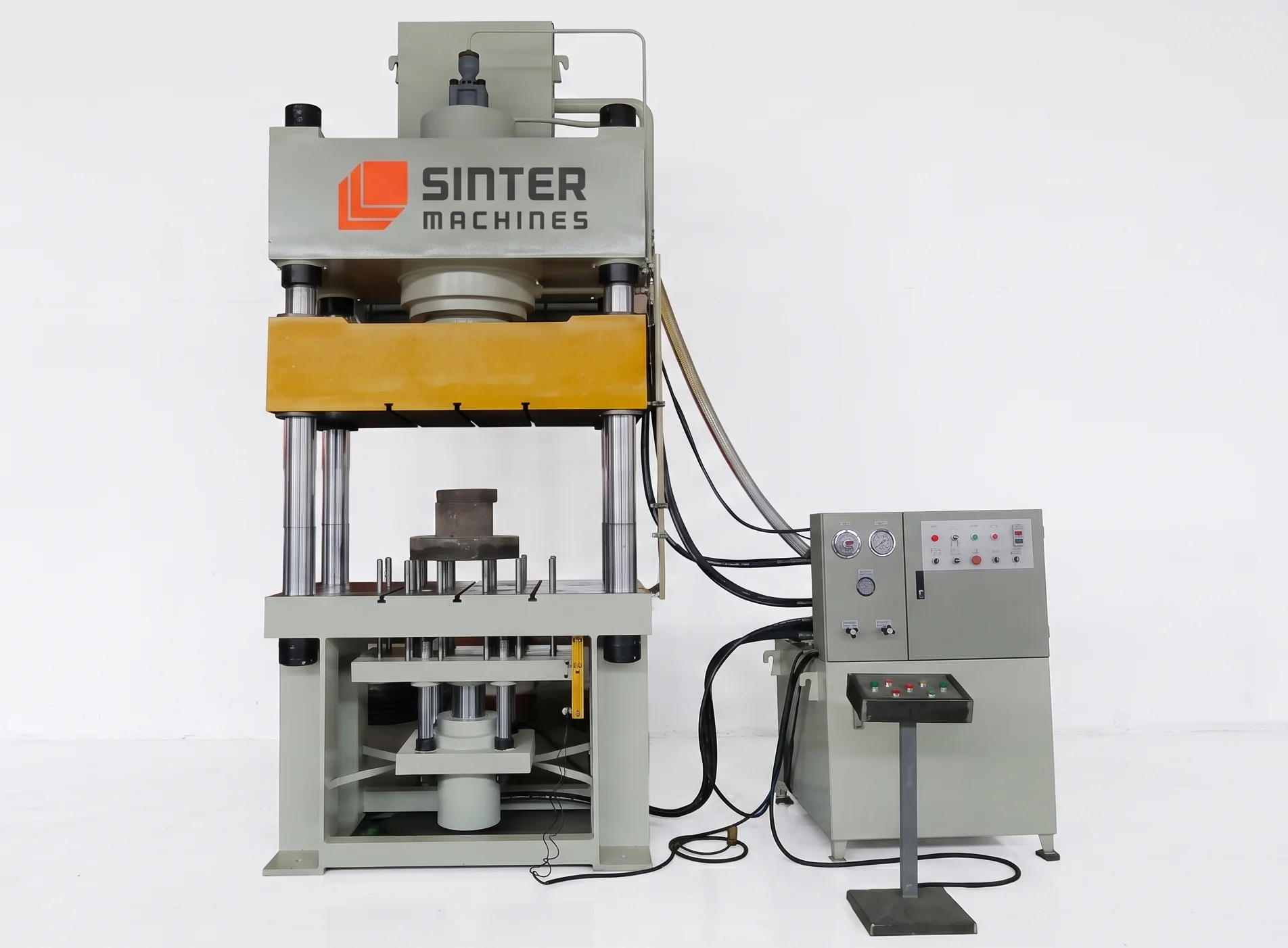
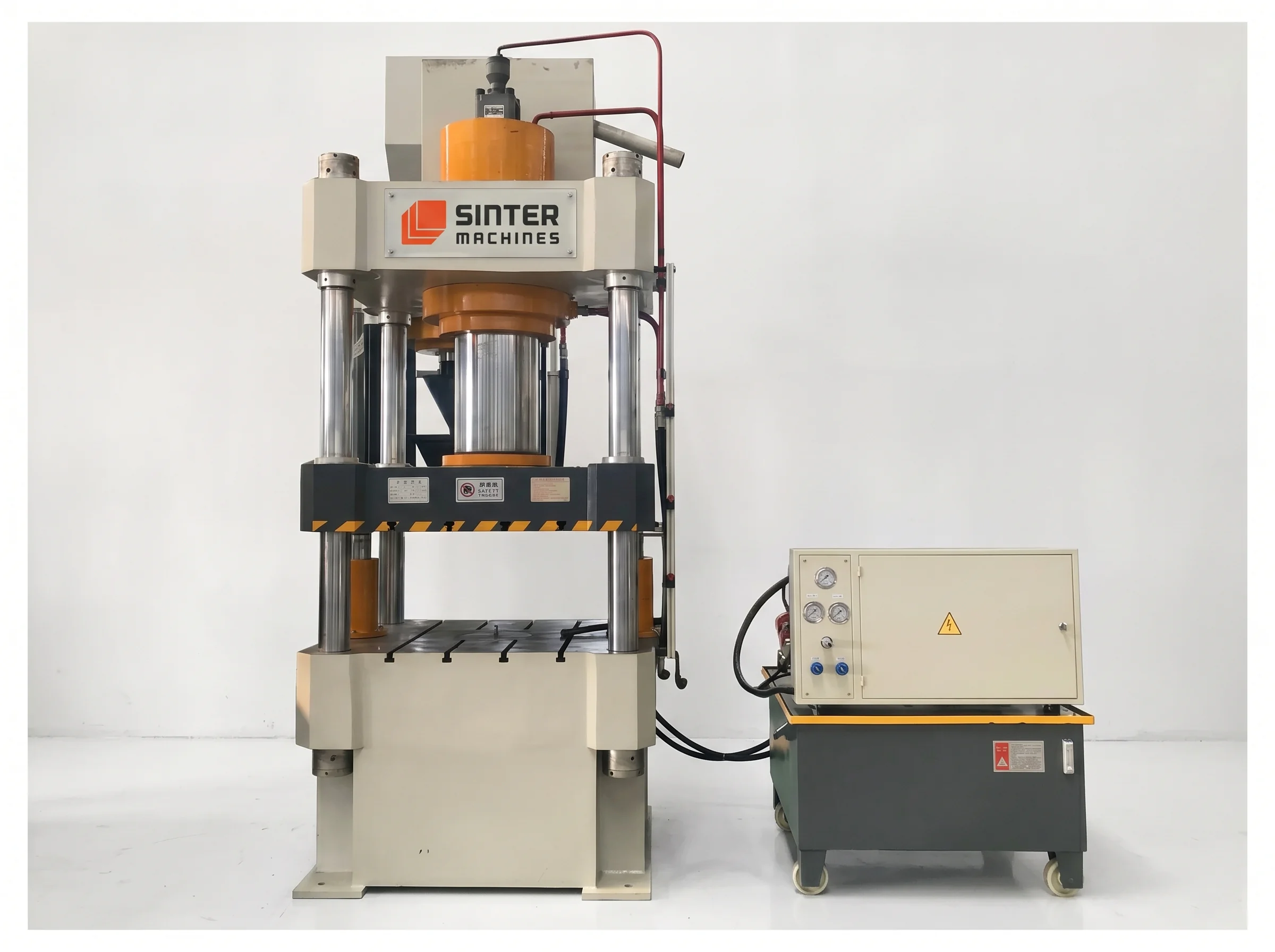
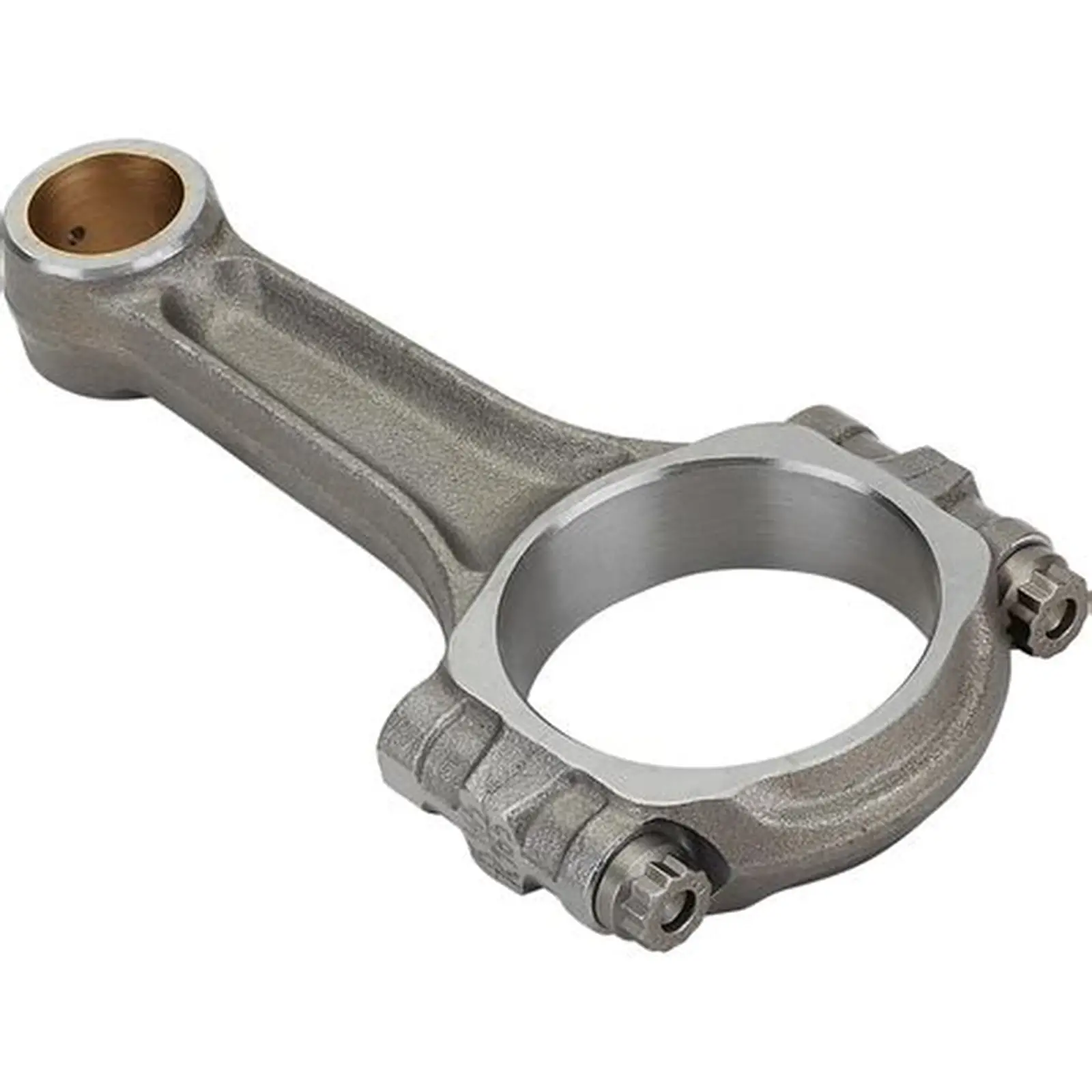
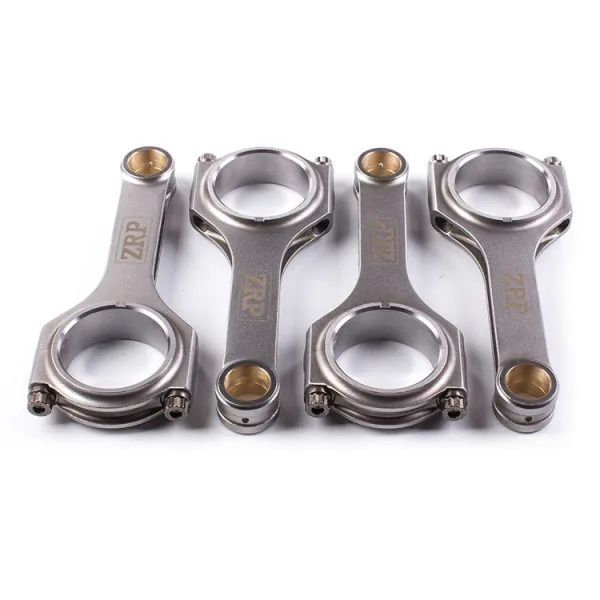
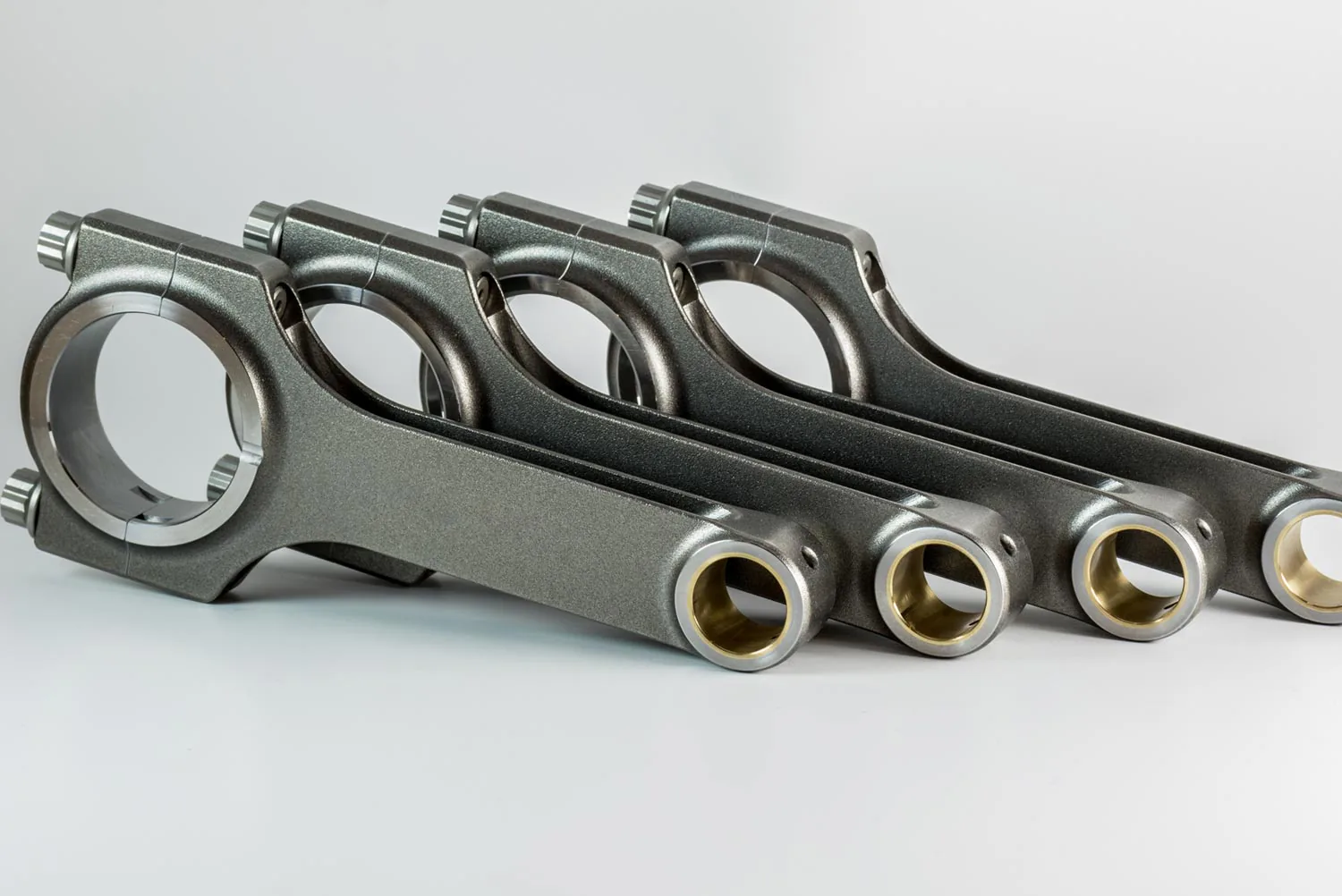
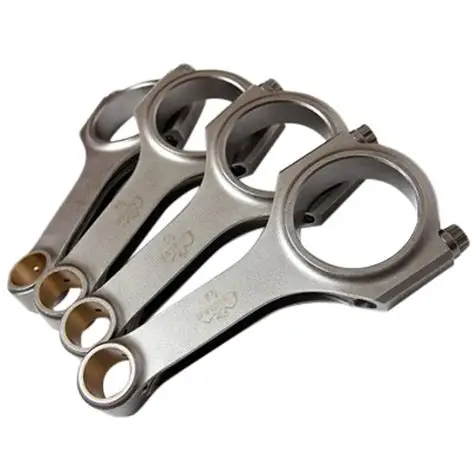
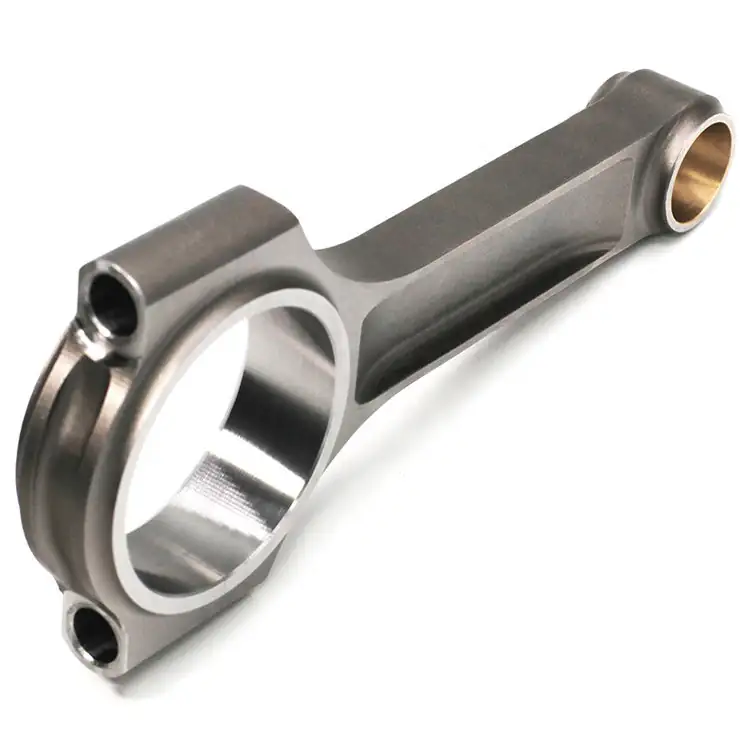
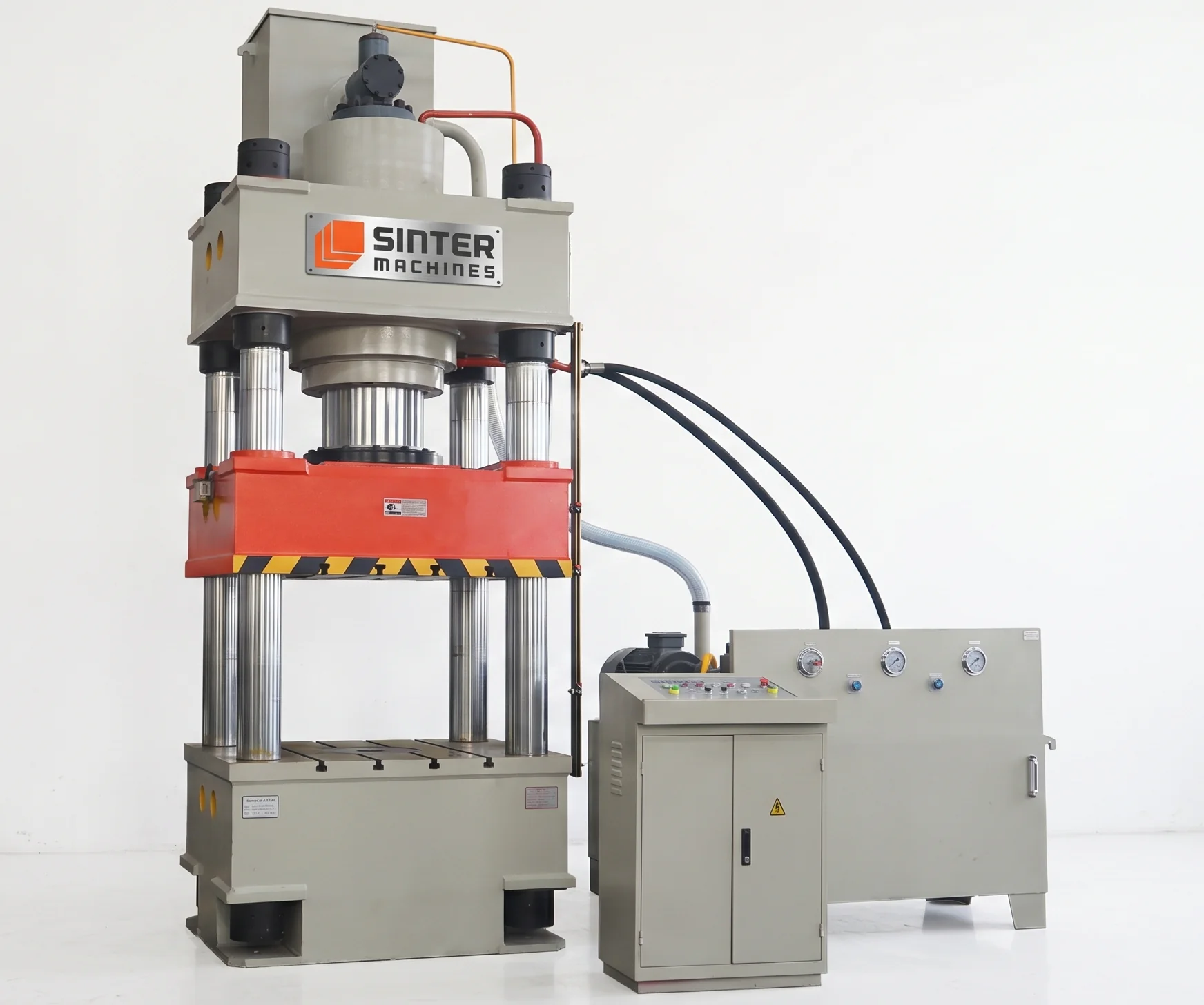
800T Automotive Connecting Rods Press press view 1
Automotive Connecting Rods · Hydraulic Press Machine

800 Ton Four Pillar Hydraulic Press for Automotive Connecting Rods

800T Rated Capacity
180 mm/s Slider Down Speed
9–18 mm Slider Pressing Speed
180 mm/s Slider Return Speed

01 — Press System

800T Four Pillar Hydraulic Press Machine

An 800-ton four-pillar hydraulic press designed to deliver precise, balanced force distribution during heavy-duty metal powder compaction. It ensures exact structural alignment and repeatability required for manufacturing high-density automotive components.

Use Case

Specifically engineered for high-volume production of automotive connecting rods using precision powder metallurgy techniques. The system optimizes cycle times while maintaining strict dimensional tolerances and material density integrity.

  • Core Applications: Automotive engine powertrains, heavy-duty mechanical drives, and structural structural components requiring superior fatigue strength. It is ideally suited for mass-producing high-stress parts that demand consistent density and precision.
  • Material: High-performance iron-based powders blended with graphite, copper additives, and specialized lubricants for enhanced tensile strength. Advanced options include stainless steel and bronze powder formulations tailored for specific wear and corrosion requirements.
  • Products Processed: High-strength automotive connecting rods, precision engine bushings, heavy-duty drive gears, and structural transmission components. These parts feature complex geometries and uniform density profiles post-compaction.
  • Why 800-Ton Hydraulic Press: Provides the immense tonnage needed to achieve high green density across the large surface areas typical of connecting rods. The rigid four-pillar design prevents deflection, ensuring parallel compaction and tight dimensional control across all production runs.

02 — Technical Specifications

SM 800 HP – HYDRAULIC PRESS MACHINE COMPLETE TECHNICAL DATA

The SM 800 HP – 800 Ton Hydraulic Press Machine is engineered for the production of powder metallurgy (PM) connecting rods, delivering the high compaction forces required for complex automotive structural components. Its advanced multi-level compaction technology ensures uniform density distribution across the connecting rod's big end, shank, and small end, resulting in superior mechanical strength and dimensional accuracy.

Capacity & Structural Design

  • Rated Capacity: 800 Tons (≈ 7850 kN)
  • Type: Fourpillar hydraulic PM compaction press
  • Frame: High-rigidity welded structure
  • Safety factor: ≥ 1.35–1.40
  • Parallelism accuracy: ≤ 0.02–0.05 mm

Hydraulic System

  • Cylinder type: Multi-action hydraulic system
  • Bore: 500–600 mm
  • Stroke: 500–900 mm
  • Working pressure: 30–32 MPa
  • Control: Servo-proportional precision control

Multi-Level Compaction

  • Independent upper punches
  • Independent lower punches
  • Floating die system
  • Multi-stage pressure control

Why Important?

Connecting rods have non-uniform cross-sections:

  • Big end (thicker)
  • Small end (thinner)
  • Central shank (variable density requirement)

Multi-action compaction ensures:

  • Uniform density
  • No cracks or weak zones
  • Structural integrity

Compaction Cycle

  1. Powder feeding into multi-level die
  2. Upper/lower punch synchronized movement
  3. Pre-compaction (air removal)
  4. Main compaction (high-pressure densification)
  5. Holding stage (stabilization)
  6. Decompression
  7. Ejection of green rod

Working Envelope

  • Platen size: 800 × 800 mm
  • Daylight: 800–1200 mm
  • Column diameter: 180–220 mm

Control System

  • PLC: Siemens / Beckhoff / Mitsubishi
  • HMI: Advanced multi-axis control

Controls:

  • Pressure staged profile
  • Punch displacement/position
  • Compaction speed
  • Density uniformity

Features:

  • Real-time monitoring
  • Data logging (automotive QA compliance)
  • Industry 4.0 integration
  • Safety PLC

SM 800 HP — Model Specifications

  • Nominal Force: 8000 KN
  • Maximum Hydraulic Pressure: 25 MPa
  • Max Opening Height of the Slider: 1500 mm
  • Max Stroke of the Slider: 900 mm
  • Effective Bed Size: 1600 × 1600 mm
  • Slider Down Speed: 180 mm/s
  • Slider Pressing Speed: 9–18 mm
  • Slider Return Speed: 180 mm/s
  • Ejector Cylinder Nominal Force: 600 KN
  • Stroke of the Ejection Cylinder: 300 mm
Production Case Study

Automotive Powder Metallurgy Connecting Rods Production Line

Fe-base, alloy powderRaw Material
400 g to 1,200 gProduct Weight
6.6 g/cm³ to 7.2 g/cm³Green Density
6 Sec to 12 SecCycle Time
High Fatigue Load Resistance
Uniform Core Density Control
High Dimensional Accuracy Maintenance
Complex Step Geometry Processing
Automated Mass Production Capability
High Fracture Split Reliability
Near Net Shape Output

03 — Die / Mold System

Precision Automotive Powder Metallurgy Connecting Rods Die Mold Engineering

Precision Automotive Powder Metallurgy (PM) Connecting Rods Die Mold Engineering focuses on the development of advanced tooling solutions for manufacturing high-strength, near-net-shape connecting rods with exceptional dimensional accuracy. Engineered to accommodate the complex geometry of the big end, shank, and small end, these dies enable multi-level compaction, ensuring uniform density distribution and superior mechanical properties.

Technical Specifications (Tooling)

Tool Type

  • Complex multi-level PM compaction tooling
  • Multi-piece die system

Tool Materials

  • Tool steels: H13 / D2 / PM tool steel
  • Carbide inserts (for wear zones)

Hardness: 60–64 HRC

Tool Construction

  • Upper punch segments:
    • Rod body shaping
    • Big-end geometry
  • Lower punch segments: Structural support & density control
  • Die cavity: External geometry
  • Core rods:
    • Big-end bore
    • Small-end bore

Multi-Level Tooling Design

  • Independent punch segments
  • Floating die capability
  • Multi-zone compaction

Critical Engineering Features

  • Bore alignment accuracy
  • Big-end thickness control
  • Symmetry control

Alignment Accuracy: ±0.01–0.02 mm

Surface Finish

AreaFinish
Bore (big/small)Precision polished
Rod bodySmooth
Functional zonesGround finish

Lubrication

  • Internal powder lubrication
  • Tool coating (TiN / DLC optional)

Tool Life: 150,000 – 400,000 cycles
Case Study (Die Performance)

Automotive Powder Metallurgy Connecting Rods Die Tooling

Tungsten Carbide, D2 steelDie Steel
62 to 66 HRCHardness
Vacuum HardeningHeat Treatment
High Compressive Load Resistance
Tight Sub Micron Tolerances
Superior Surface Finish Mirror
Extreme Wear Resistance Capability
Thermal Fatigue Resistance Performance
Extended Tooling Service Life
Reduced Die Galling Tendency

04 — Product Application

Where Automotive Powder Metallurgy Connecting Rods Are Used

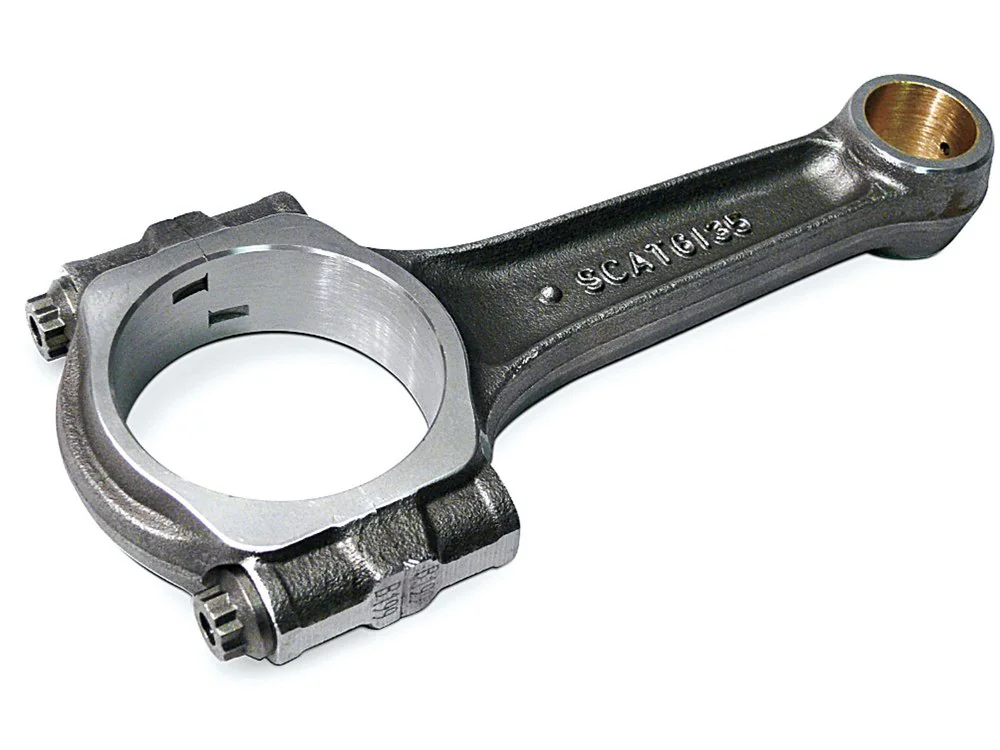
Automotive Powder Metallurgy (PM) Connecting Rods are widely used in high-performance engine applications where strength, precision, and weight optimization are critical. These components are commonly found in passenger cars, commercial vehicles, motorcycles, and hybrid powertrains, connecting the piston to the crankshaft and transmitting engine forces efficiently.

Industry Applications

Automotive Industry

Automotive powder metallurgy (PM) connecting rods are widely used in engines that demand high strength, precision, and long-term durability. These components are commonly found in passenger vehicle engines, two-wheeler engines, and light commercial vehicles, where they efficiently transfer power from the piston to the crankshaft.

Light Machinery

Automotive powder metallurgy (PM) connecting rods are also used in light machinery applications that require reliable power transmission, durability, and precision performance. These components are commonly found in compressors, pumps, and agricultural machinery, where they convert reciprocating motion efficiently while operating under continuous mechanical loads.

Energy & Equipment

Automotive powder metallurgy (PM) connecting rods are widely used in energy and equipment applications that require reliable motion transfer, high strength, and long service life. These components are commonly found in generator link rods and motor-driven systems, where they help convert and transmit mechanical forces efficiently under continuous operating conditions.

Mobility Sector

Automotive powder metallurgy (PM) connecting rods are extensively used in the mobility sector, where lightweight, durable, and cost-effective components are essential for efficient operation. These connecting rods are commonly found in small engine applications and portable equipment, where they provide reliable power transmission and smooth mechanical performance.

IndustryScenario
Automotive OEM Engine connecting rods
Light machinery Compressor link systems
Agriculture Pump & engine rods
Mobility Two-wheeler & small engines
Equipment Power generation systems

Finished Product Gallery

05 — Key Advantages

Why Choose the 800-Ton Sinter Hydraulic Press

The 800-Ton Sinter Hydraulic Press is specifically designed to manufacture high-strength PM connecting rods that require precise density control and exceptional dimensional accuracy. Its advanced multi-level compaction system ensures uniform density distribution across complex geometries, including the big end, small end, and shank sections of the connecting rod.

01

High-speed cycle (seconds per part)

High-Speed Cycle Capability enables the 800-Ton Sinter Hydraulic Press to produce automotive powder metallurgy (PM) connecting rods with exceptional efficiency and consistency. Its advanced hydraulic control system reduces cycle times while maintaining precise pressure application and uniform density distribution.

02

Reduced machining requirement

Reduced Machining Requirement is a key advantage of using the 800-Ton Sinter Hydraulic Press for automotive powder metallurgy (PM) connecting rods. The press produces components with near-net-shape accuracy, minimizing the need for extensive secondary machining operations.

03

High fatigue strength

High Fatigue Strength is essential for automotive powder metallurgy (PM) connecting rods, which are subjected to continuous cyclic loads and high engine stresses. The 800-Ton Sinter Hydraulic Press achieves superior compaction and uniform density distribution, resulting in enhanced structural integrity and resistance to fatigue failure.

04

Reduced production cost vs forging

Reduced Production Cost vs Forging is a significant advantage of automotive powder metallurgy (PM) connecting rods manufactured using the 800-Ton Sinter Hydraulic Press. PM technology produces near-net-shape components, minimizing raw material consumption, machining operations, and process waste compared to traditional forging methods.

05

Scalable automation

Scalable Automation enables the 800-Ton Sinter Hydraulic Press to seamlessly integrate with automated powder handling, robotic part transfer, and advanced production monitoring systems. This supports high-volume manufacturing of automotive powder metallurgy (PM) connecting rods with improved consistency, reduced labor dependency, and enhanced process efficiency.

06

High ROI for mass production

High ROI for Mass Production is achieved through the 800-Ton Sinter Hydraulic Press's ability to manufacture automotive powder metallurgy (PM) connecting rods with high speed, precision, and consistency. Its near-net-shape compaction process reduces material waste, machining costs, and production time, leading to significant cost savings over traditional manufacturing methods.