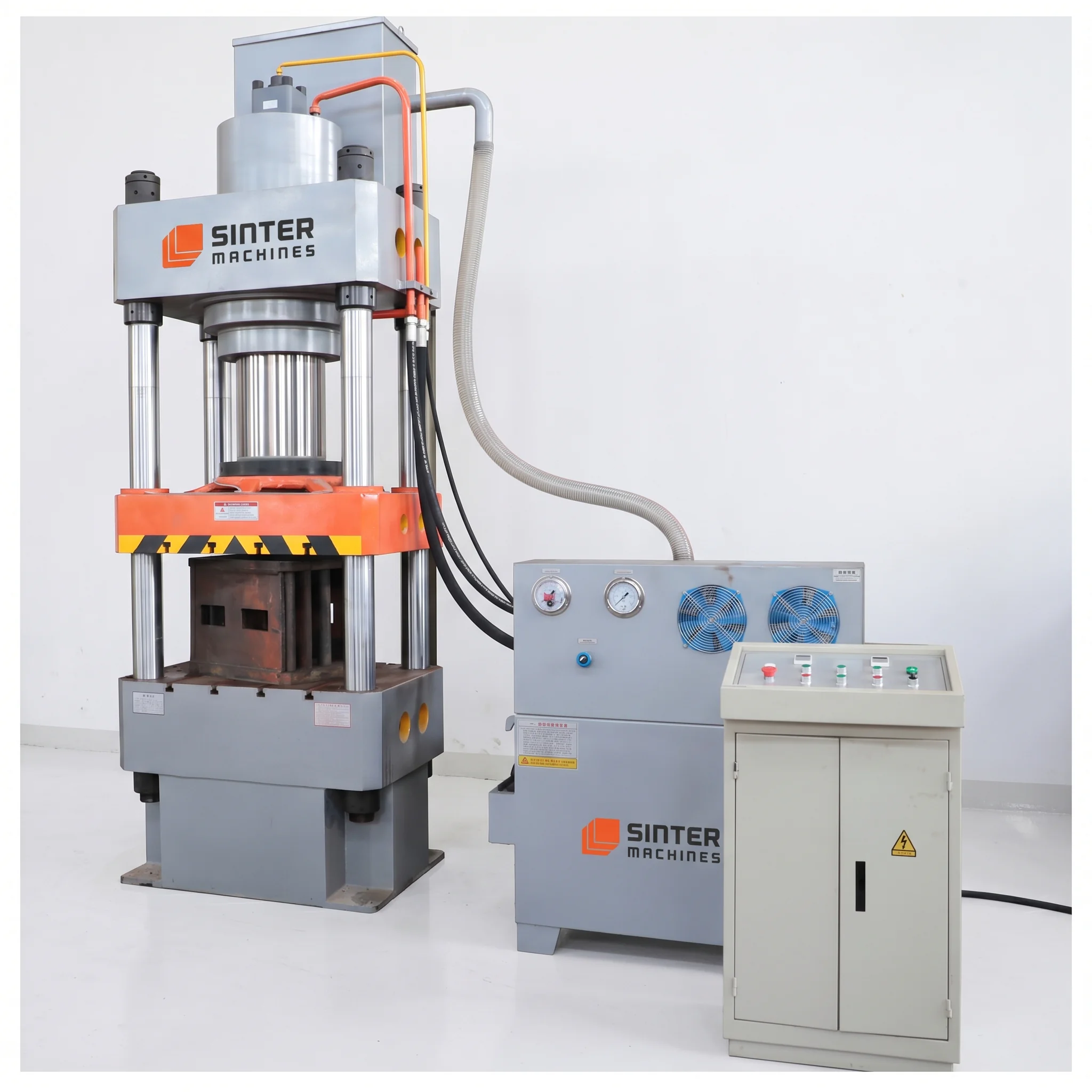
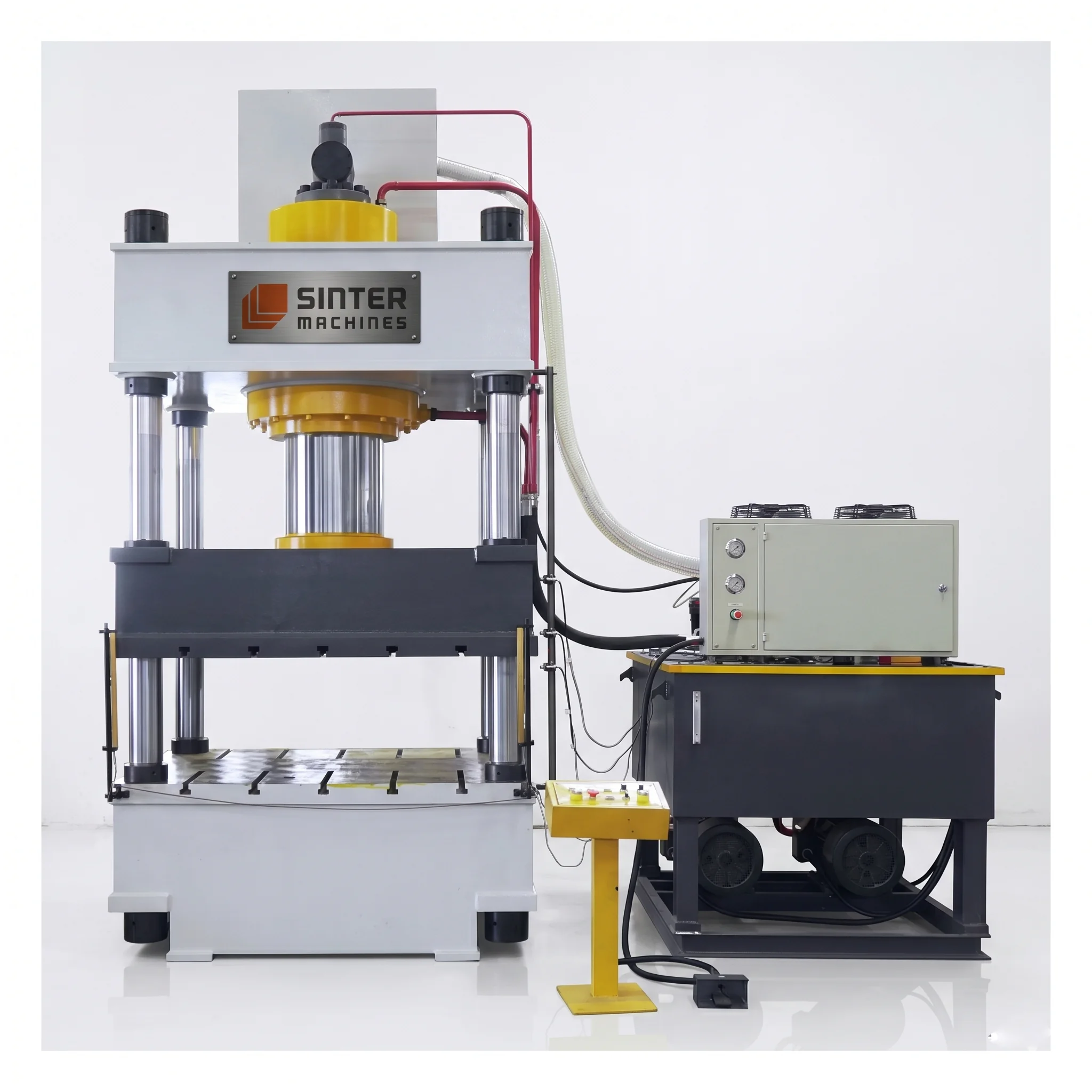
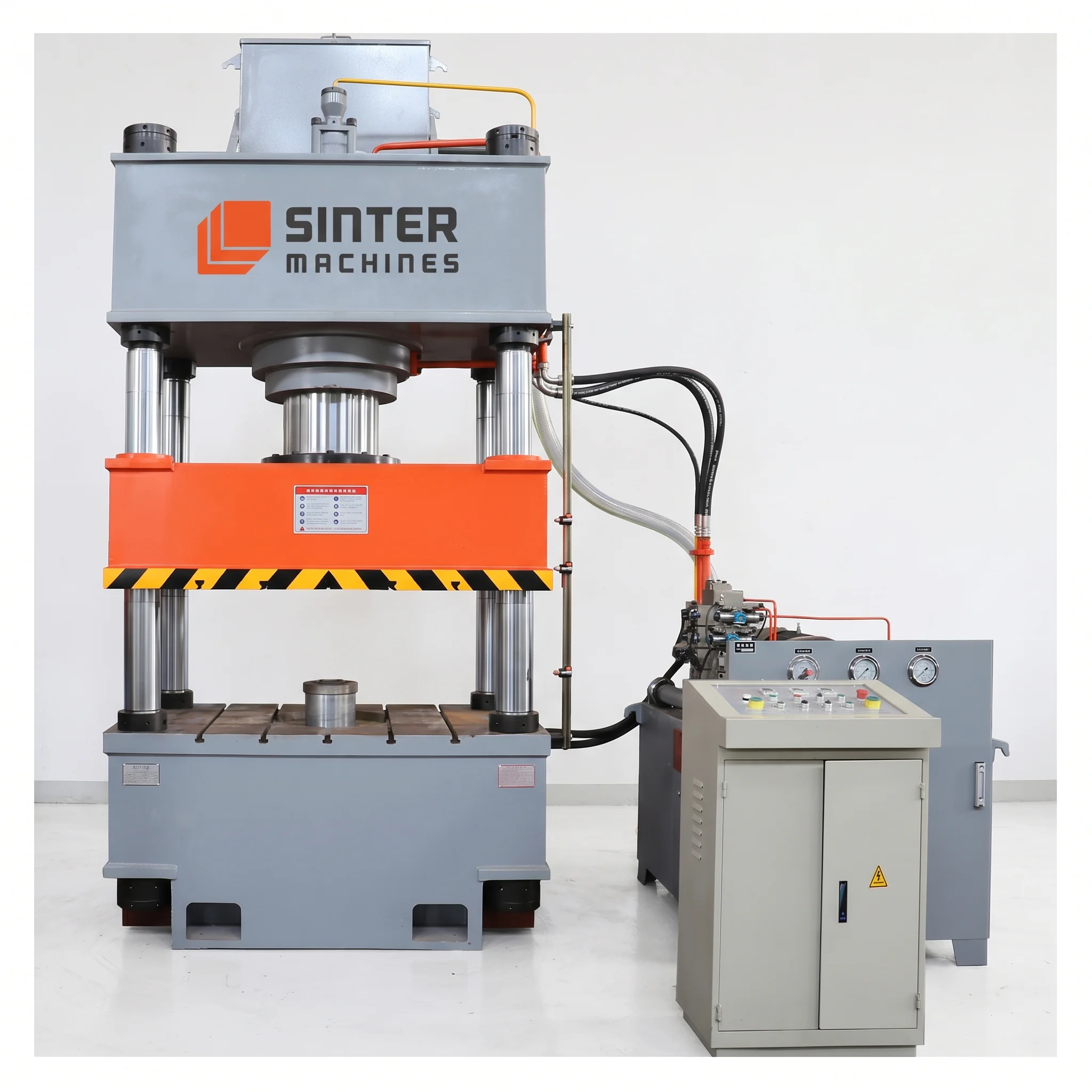
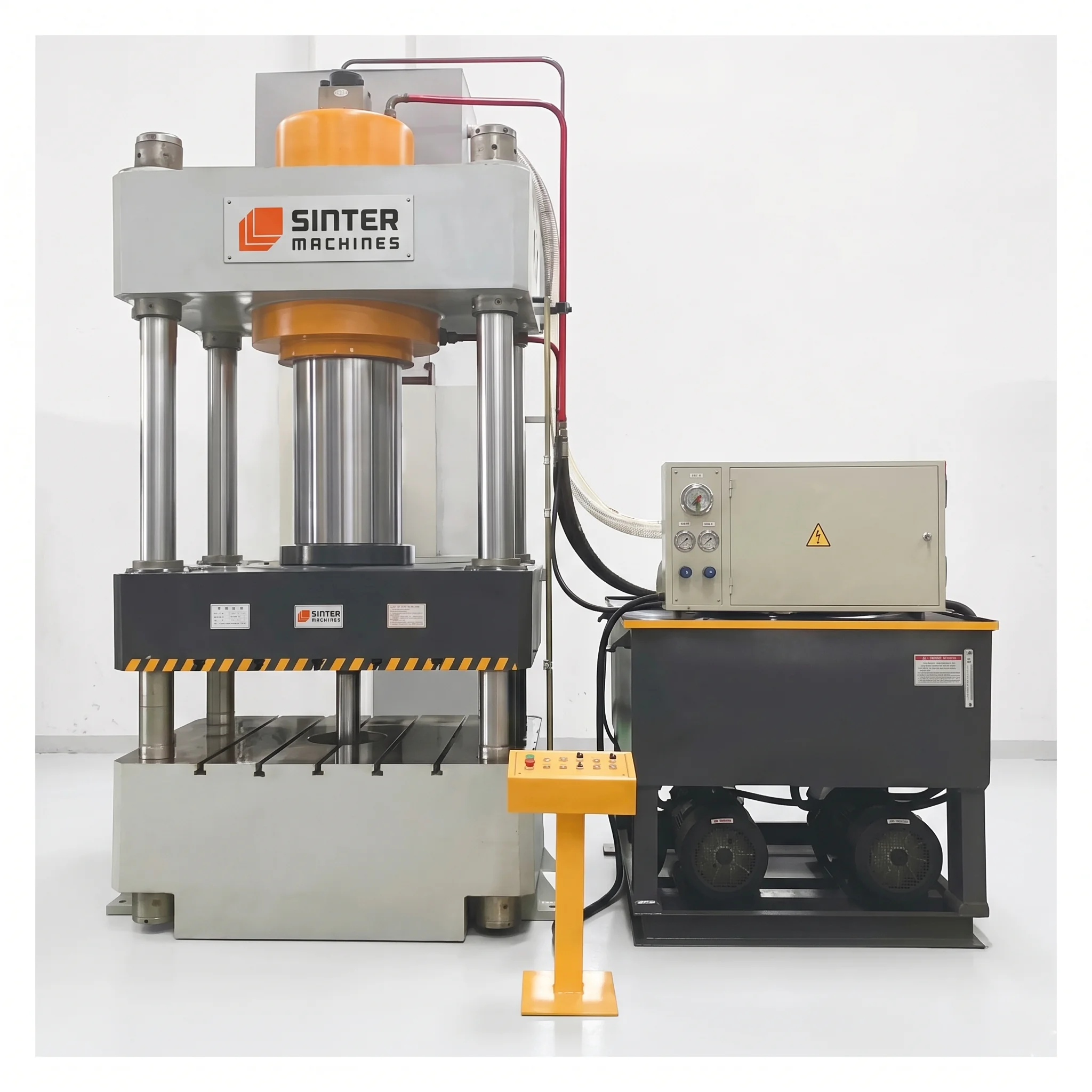
630T Automotive NVH Parts Press press view 1
Automotive NVH Parts · Hydraulic Press Machine

630 Ton Four Pillar Hydraulic Press for Automotive NVH Foam Parts

630T Rated Capacity
150 mm/s Slider Down Speed
9–18 mm/s Slider Pressing Speed
200 mm/s Slider Return Speed

01 — Press System

630 Ton Four Pillar Hydraulic Press Machine

Medium-tonnage 630-ton four-pillar hydraulic press engineered for high-precision compression and thermoforming of NVH foam products. Features dynamic platen parallelism and fine pressure modulation critical for sensitive cellular foam structures.

Use Case

Designed for processing multi-layer acoustic absorbers, thermal barriers, and vibration-damping automotive components. Efficiently laminates light-to-medium gauge foam sheets, foil barriers, and damping layers under controlled temperature cycles.

  • Core Applications: Automotive NVH acoustic insulation, engine compartment foam shields, and acoustic cabin dampening. Vibration damping sheet lamination and lightweight foam thermal absorber manufacturing.
  • Material: Expanded foam substrates including PU, PE/XLPE, EVA, melamine foam, and rubber-foam composites. Functional laminates including PET/PP nonwovens, aluminum heat-shield foils, and bitumen/EPDM damping sheets.
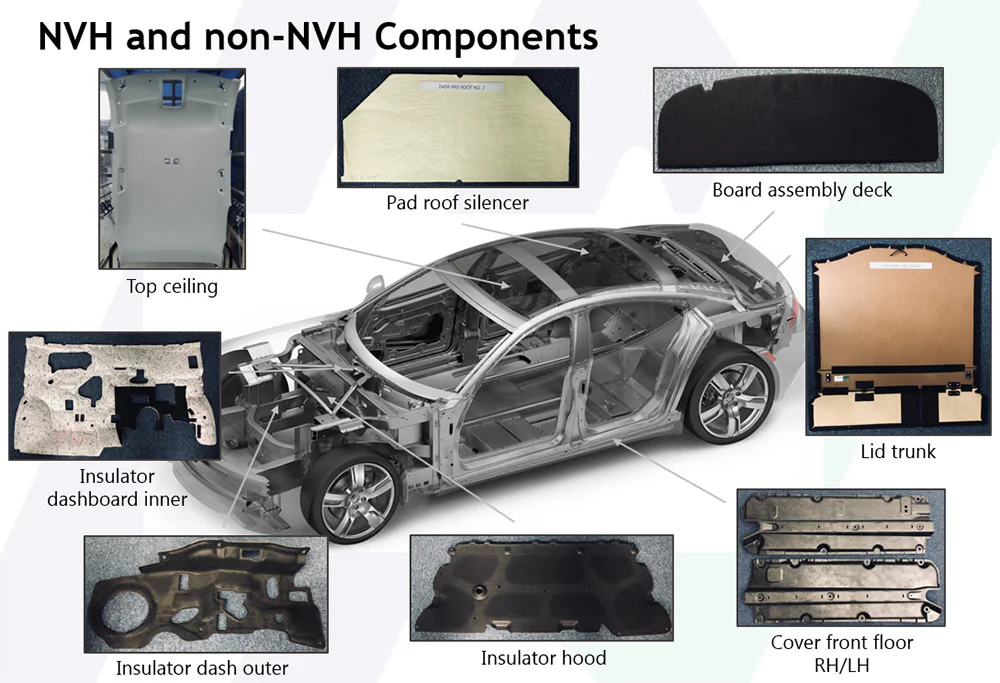
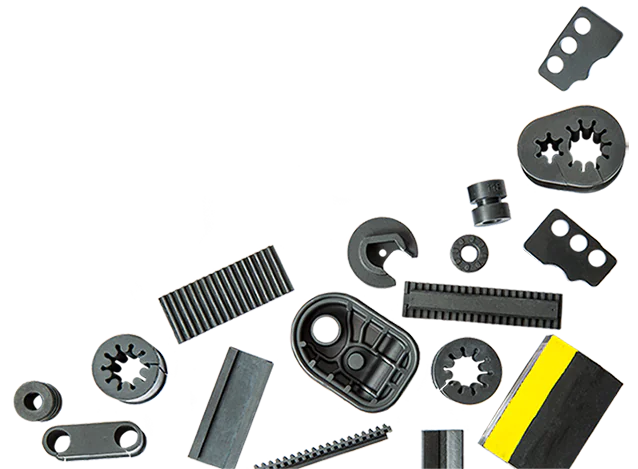
  • Products Processed: Engine cover foam insulators, door acoustic pads, pillar foam baffles, and floor damping mats. Transmission tunnel acoustic shields, trunk foam absorbers, and foil-backed heat barriers.
  • Why 630-Ton Hydraulic Press: Delivers calibrated compaction pressure to shape flexible foam matrices without collapsing closed-cell acoustic structures. Ensures uniform heat transfer and strong inter-layer adhesion across aluminum foils, damping mats, and foam sheets.

02 — Technical Specifications

SM 630 HP – HYDRAULIC PRESS MACHINE COMPLETE TECHNICAL DATA

SM 630 HP – 630 Ton Hydraulic Press Machine delivers high-performance thermoforming and compression molding for automotive foam insulators and NVH parts. It ensures uniform pressure, precise foam compression control, and consistent quality for advanced acoustic and thermal component production.

Capacity & Structural Design

  • Rated Capacity: 630 Tons (≈ 6180 kN)
  • Type: Fourpillar hydraulic hot press
  • Frame: Heavy-duty welded steel (stress relieved)
  • Safety factor: ≥ 1.35–1.40
  • Parallelism accuracy: ≤ 0.05–0.08 mm

Hydraulic System

  • Cylinder: Doubleacting
  • Bore: 420–520 mm
  • Stroke: 600–1000 mm
  • Working pressure: 28–32 MPa
  • Control: Servo-proportional hydraulic system

Thermoforming & Trimming Cycle

  1. Pre-heated foam / laminate loading
  2. Controlled mold closing (low-speed forming)
  3. Compression thermoforming
  4. Optional vacuum-assisted forming
  5. Cooling under pressure (critical for foam stabilization)
  6. Trimming and punching stage
  7. Mold opening
  8. Finished component removal

Heated Platen System

  • Heating type:
    • Electric platen heating
    • Thermal oil system
  • Temperature range: 120–200°C (foam + laminate dependent)
  • Accuracy: ±2–3°C
  • Multi-zone heating system

Cooling System

  • Integrated mold cooling channels
  • Closed-loop water/chiller system

Cooling profile: 180–200°C → 50–80°C

Benefits:

  • Foam dimensional stability
  • Prevents shrinkage
  • Reduces cycle time

Working Envelope

  • Platen size:
    • Standard: 1400 × 1200 mm
    • Optional: 1600 × 1400 mm
  • Daylight: 1200–1800 mm
  • Column diameter: 180–220 mm

Control System

  • PLC: Siemens / Mitsubishi / Beckhoff
  • HMI: Recipe-based control interface
  • Monitored parameters:
    • Pressure
    • Temperature
    • Time
    • Vacuum (if applicable)
  • Features:
    • Data logging (automotive QA traceability)
    • Industry 4.0 integration
    • Safety PLC + light curtains

SM 630 HP — Model Specifications

  • Nominal Force: 6300 KN
  • Maximum Hydraulic Pressure: 25 MPa
  • Max Opening Height of the Slider: 1500 mm
  • Max Stroke of the Slider: 900 mm
  • Effective Bed Size: 1500 × 1500 mm
  • Slider Down Speed: 150 mm/s
  • Slider Pressing Speed: 9–18 mm/s
  • Slider Return Speed: 200 mm/s
  • Ejector Cylinder Nominal Force: 500 KN
  • Stroke of the Ejection Cylinder: 300 mm
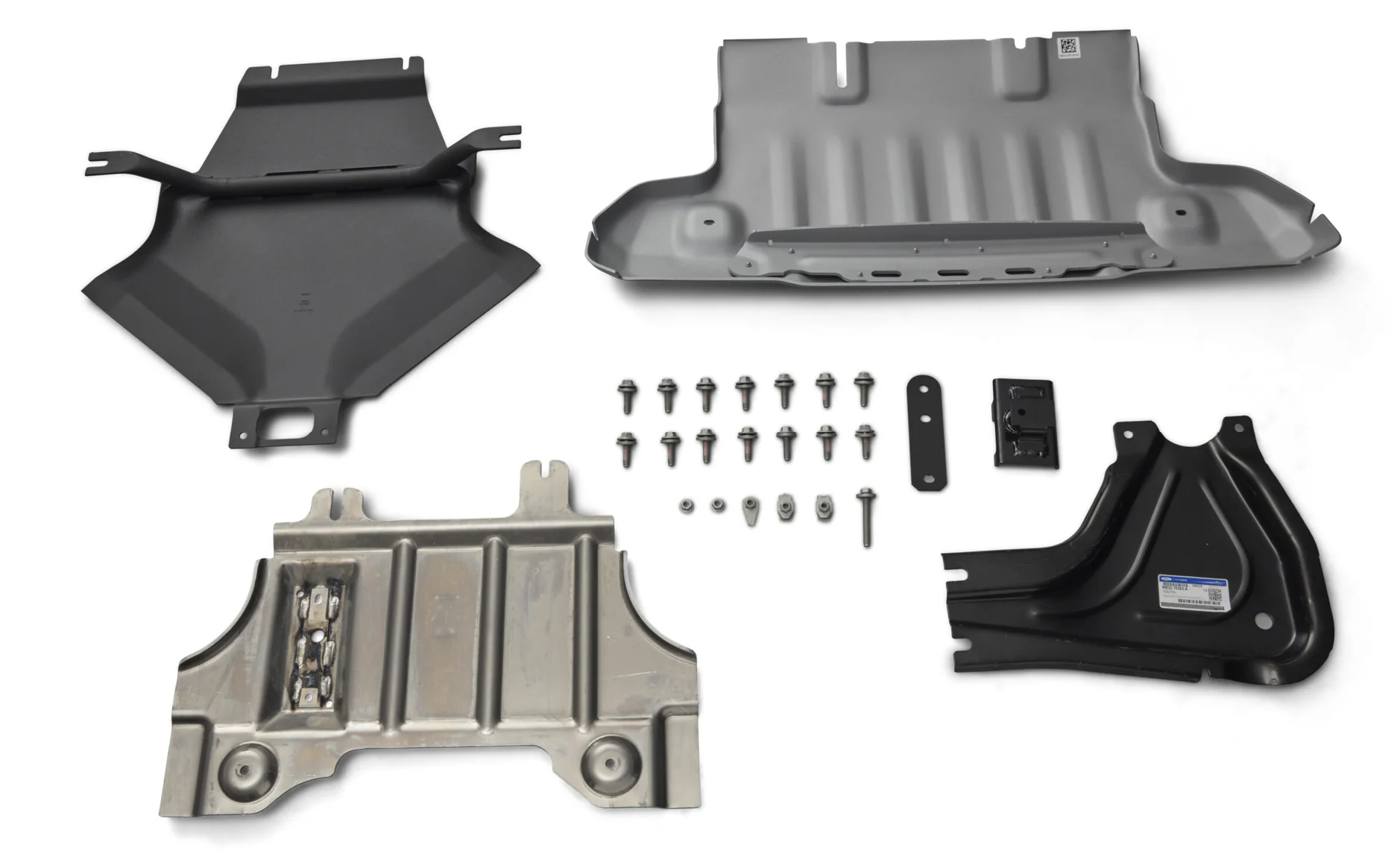
Production Case Study

Automotive NVH Foam Parts Production Line

PU/PE/EVA Foam CompositeRaw Material
1000 x 800 mm to 1600 x 1200 mmParts Size
30-60 SecCycle time
150–190°CTemperature
High noise attenuation
Precise density preservation
Rapid heating cycles
Seamless foil adhesion
Excellent vibration damping
Zero foam crushing
Consistent volumetric shape

03 — Die / Mold System

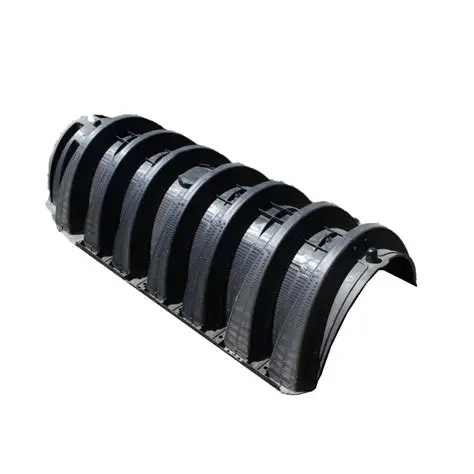
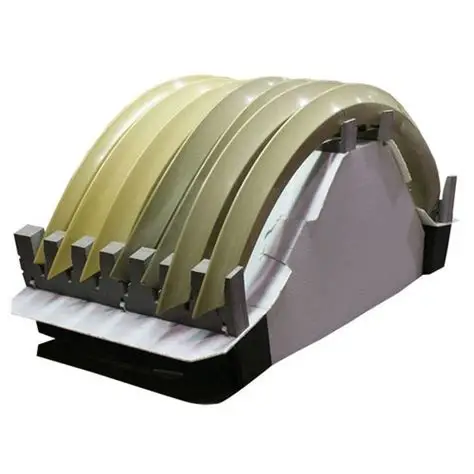
Precision Automotive Foam Insulators & NVH Parts Die Mold Engineering

Precision Automotive Foam Insulators & NVH Parts Die Engineering ensures accurate shaping, controlled foam compression, and uniform material distribution. It delivers consistent quality, optimized acoustic damping, and reliable thermal insulation performance for advanced automotive NVH applications.

Technical Specifications

Mold Type

  • Thermoforming + trimming integrated mold
  • Compression-assisted forming mold

Mold Materials

  • Aluminum alloy:
    • High thermal conductivity
    • Lightweight for large molds
  • Tool steel inserts: For trimming edges and wear zones

Mold Construction

  • Upper mold: Surface contour & compression profile
  • Lower mold:
    • Structural geometry
    • Reinforcement zones
  • Guide system: Alignment accuracy ±0.02 mm

Heating System

  • Multi-zone heating channels
  • Uniform temperature control

Cooling System

  • Integrated cooling channels
  • Controlled water flow

Benefits:

  • Prevents deformation
  • Improves cycle time

Vacuum & Venting

  • Vacuum ports
  • Micro vent channels

Prevents:

  • Air entrapment
  • Wrinkles
  • Foam collapse

Trimming System

  • Hardened steel trimming blades
  • CNC-machined cutting edges

Used for:

  • Edge trimming
  • Holes
  • Mounting slots
AreaFinish
Visible surfacesTextured / fabric finish
InternalFunctional insulation surface
EdgesClean-cut

Mold Life: Mold Life 150,000 – 300,000 cycles

Case Study (Die Performance)

Automotive Foam Insulators & NVH Parts Die Mold

1200 × 1000 mmPanel size
Matte / texturedPattern
150,000 – 300,000 cyclesDie Life
Rapid thermal transfer
Controlled foam compression
Superior edge sealing
Flawless foil bonding
Zero cellular collapse
Low material adhesion
Extended tool longevity

04 — Product Application

Where Automotive Foam Insulators & NVH Parts Are Used

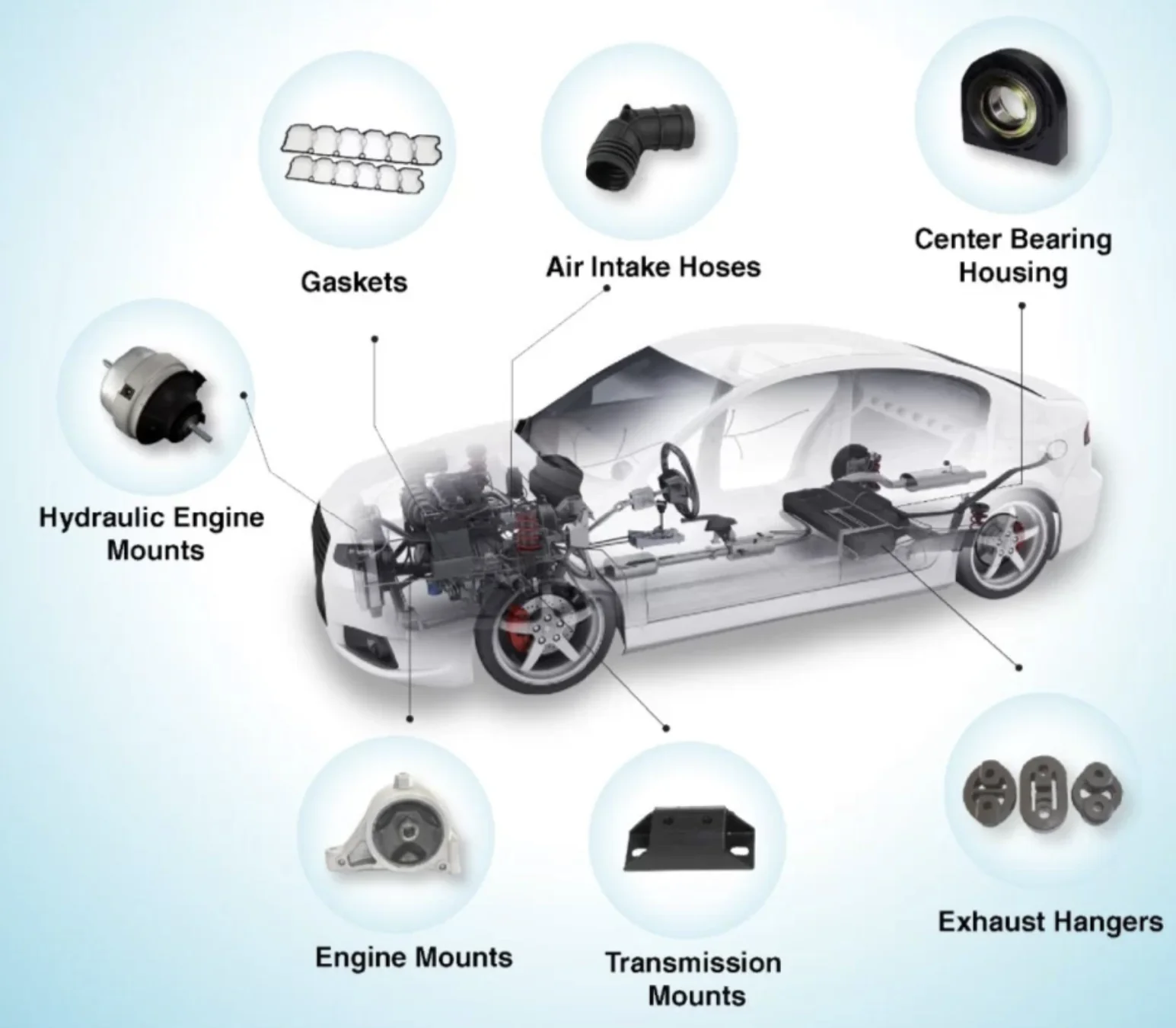
Automotive foam insulators and NVH parts are widely used in passenger vehicles, SUVs, and commercial vehicles to enhance cabin comfort and performance. They are applied in areas such as engine bays, floors, doors, and roof panels for effective noise, vibration, and heat insulation. These components play a critical role in improving ride quality, reducing noise, and ensuring thermal protection in modern automotive interiors.

Industry Applications

Automotive OEM

In the automotive OEM sector, automotive foam insulators and NVH parts are widely used in passenger vehicles, SUVs, and electric vehicles. They enhance cabin comfort by reducing noise and vibrations while providing effective thermal insulation. These components play a critical role in improving overall vehicle performance, driving experience, and energy efficiency.

NVH & Acoustic Systems

In NVH & acoustic systems, automotive foam insulators and NVH parts are used in engine bay insulation, floor acoustic panels, and cabin noise reduction components. They effectively minimize noise and vibrations while enhancing thermal insulation, improving overall passenger comfort and driving experience.

Electric Vehicle (EV) Sector

In the electric vehicle (EV) sector, automotive foam insulators and NVH parts are used in battery insulation panels and thermal management components. They help regulate temperature, reduce noise, and enhance energy efficiency and safety in advanced EV systems.

Commercial Vehicles

In commercial vehicles, automotive foam insulators and NVH parts are used in truck cabin insulation and bus acoustic panels. They help reduce noise, minimize vibrations, and improve thermal comfort, ensuring a quieter and more comfortable driving environment in heavy-duty transport systems.

Transport & Mobility

In the transport and mobility sector, automotive foam insulators and NVH parts are used in rail acoustic panels and aerospace insulation systems. They provide advanced noise reduction, vibration control, and thermal insulation, ensuring enhanced passenger comfort and efficient performance in modern transportation systems.

IndustryScenario
Automotive OEM NVH component manufacturing
EV Industry Thermal insulation panels
Commercial Vehicles Cabin noise reduction
Transport Rail acoustic systems
Industrial Heat and sound insulation

Finished Product Gallery

05 — Key Advantages

Why Choose the 630-Ton Sinter Hydraulic Press

The 630-Ton Sinter Hydraulic Press offers precise control for foam compression and thermoforming, ensuring optimal density and uniform structure in NVH components. It delivers consistent multi-layer bonding, enhancing acoustic and thermal performance. Designed for automotive applications, it ensures high repeatability, quality, and efficiency in large-scale production.

01

Integrated forming + trimming

Enables simultaneous forming and trimming in a single cycle. It improves precision, reduces processing time, and enhances overall production efficiency for high-quality NVH components.

02

Controlled foam compression

Ensures precise control of pressure during foam forming, maintaining optimal density and structure. It delivers consistent acoustic performance, uniform thickness, and high-quality NVH components for automotive applications.

03

Lightweight components

Enables production of lightweight foam-based components with high strength and durability. It helps reduce overall vehicle weight while maintaining excellent acoustic and thermal performance.

04

Excellent acoustic performance

Produces NVH components with superior sound absorption and vibration damping properties. It ensures reduced cabin noise, enhanced passenger comfort, and improved overall driving experience.

05

Strong thermal insulation

Produces NVH components with excellent heat resistance and insulation properties. It ensures effective temperature control, protecting vehicle interiors from heat transfer and improving overall cabin comfort and performance.

06

Growing demand in NVH solutions

Supports the rising demand for advanced noise, vibration, and harshness (NVH) components in modern vehicles. It ensures efficient, high-quality production to meet increasing industry requirements for enhanced comfort and performance.