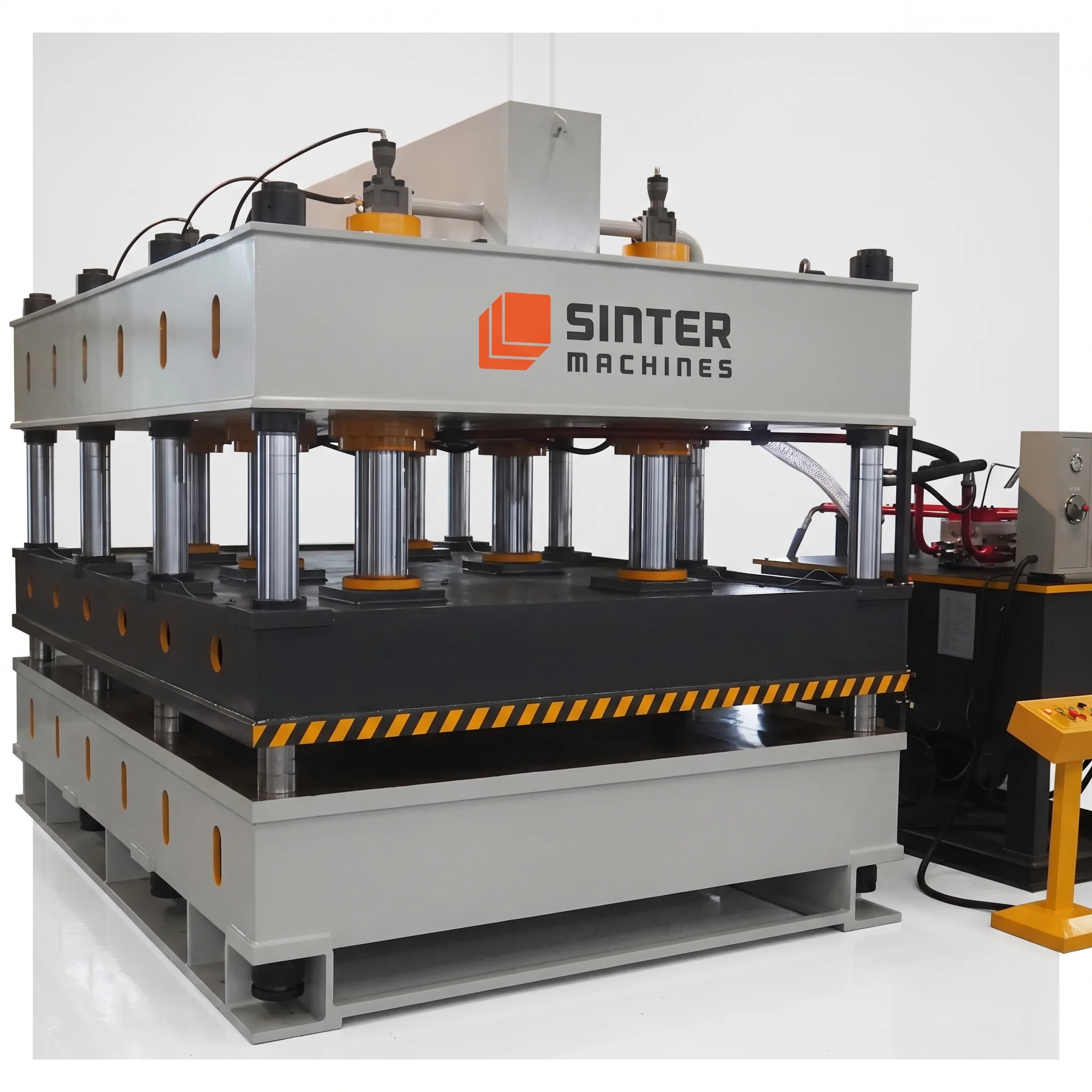
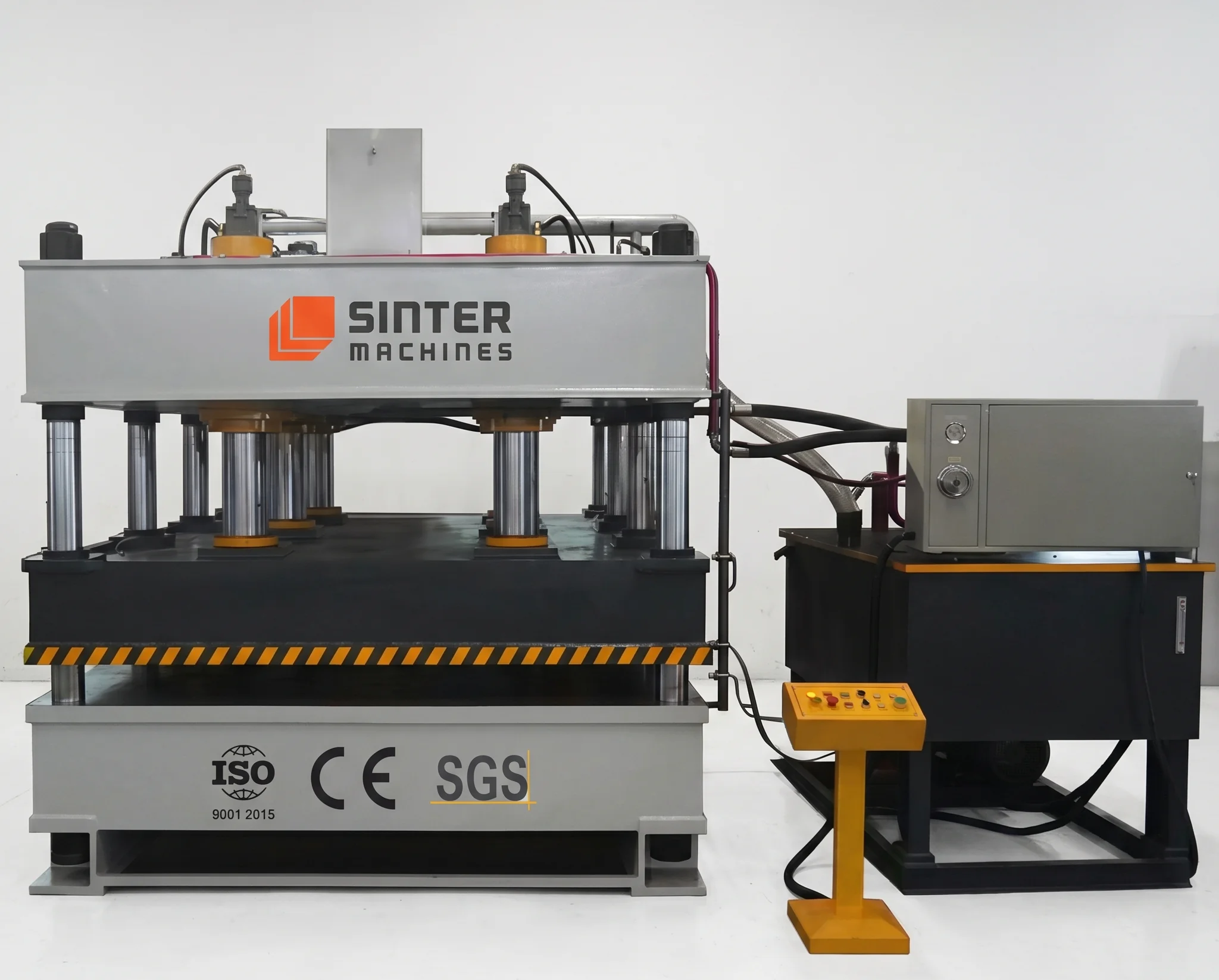
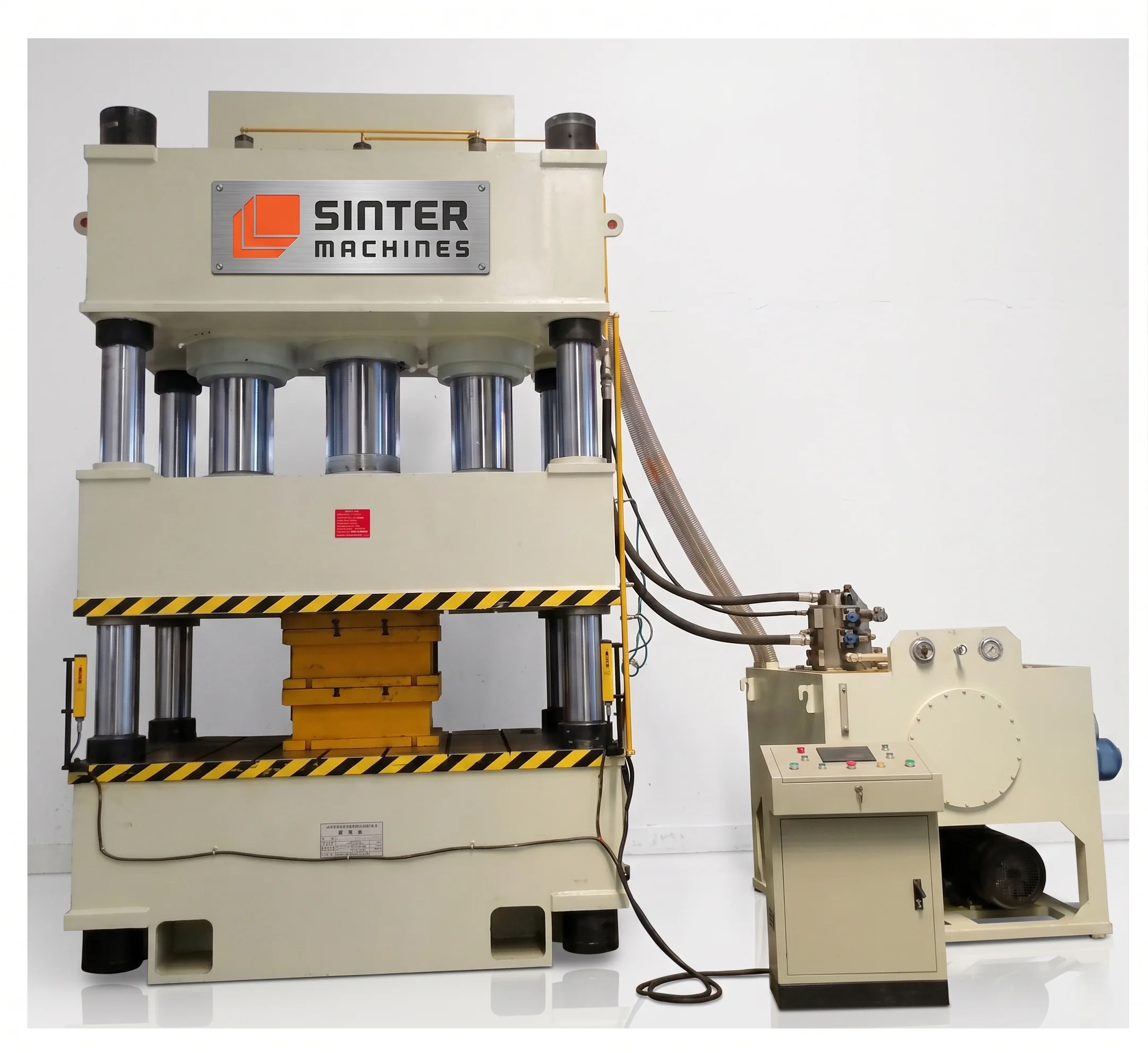
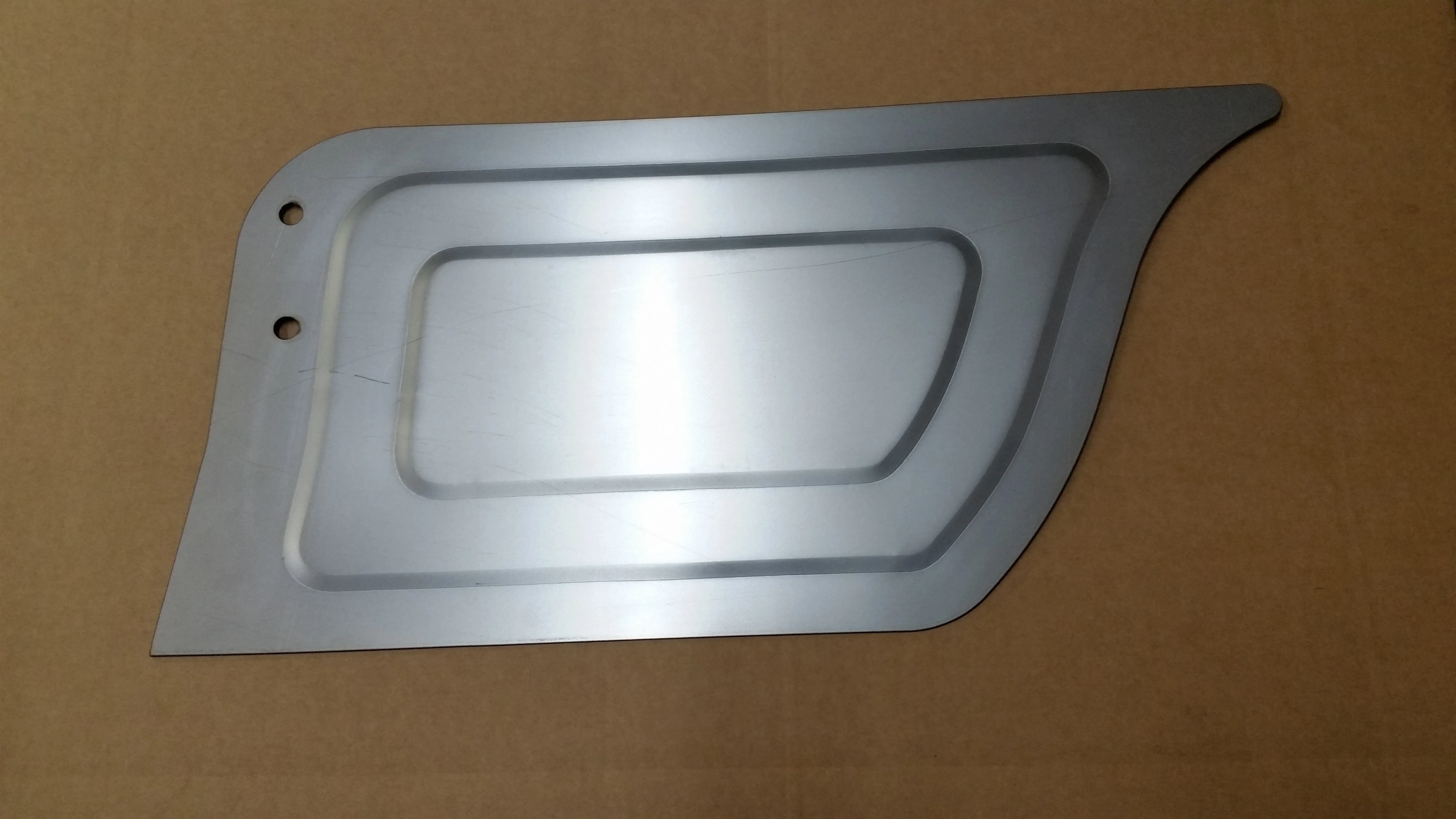
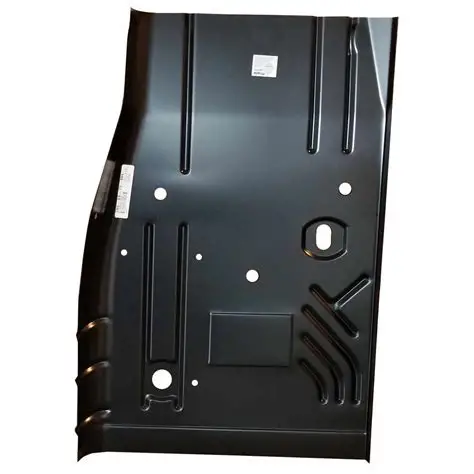
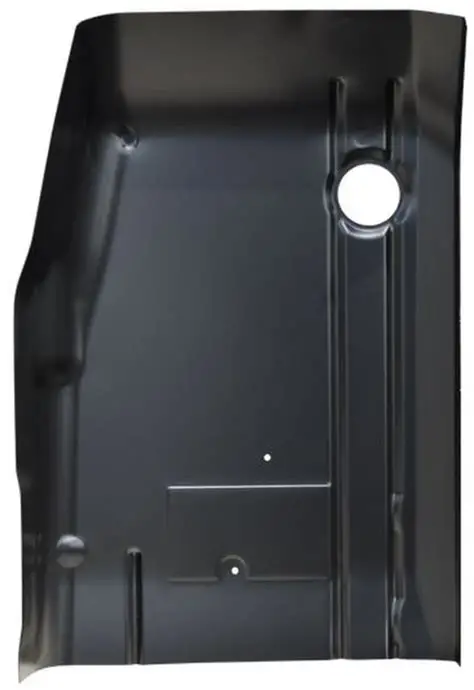
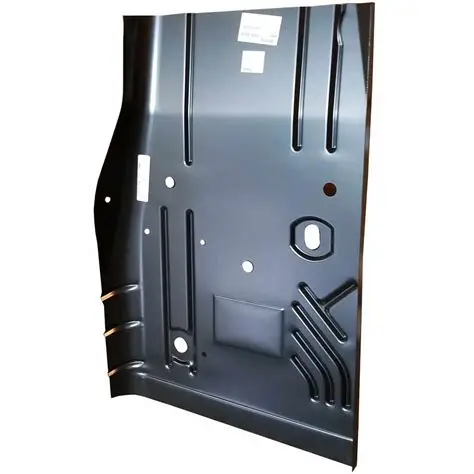
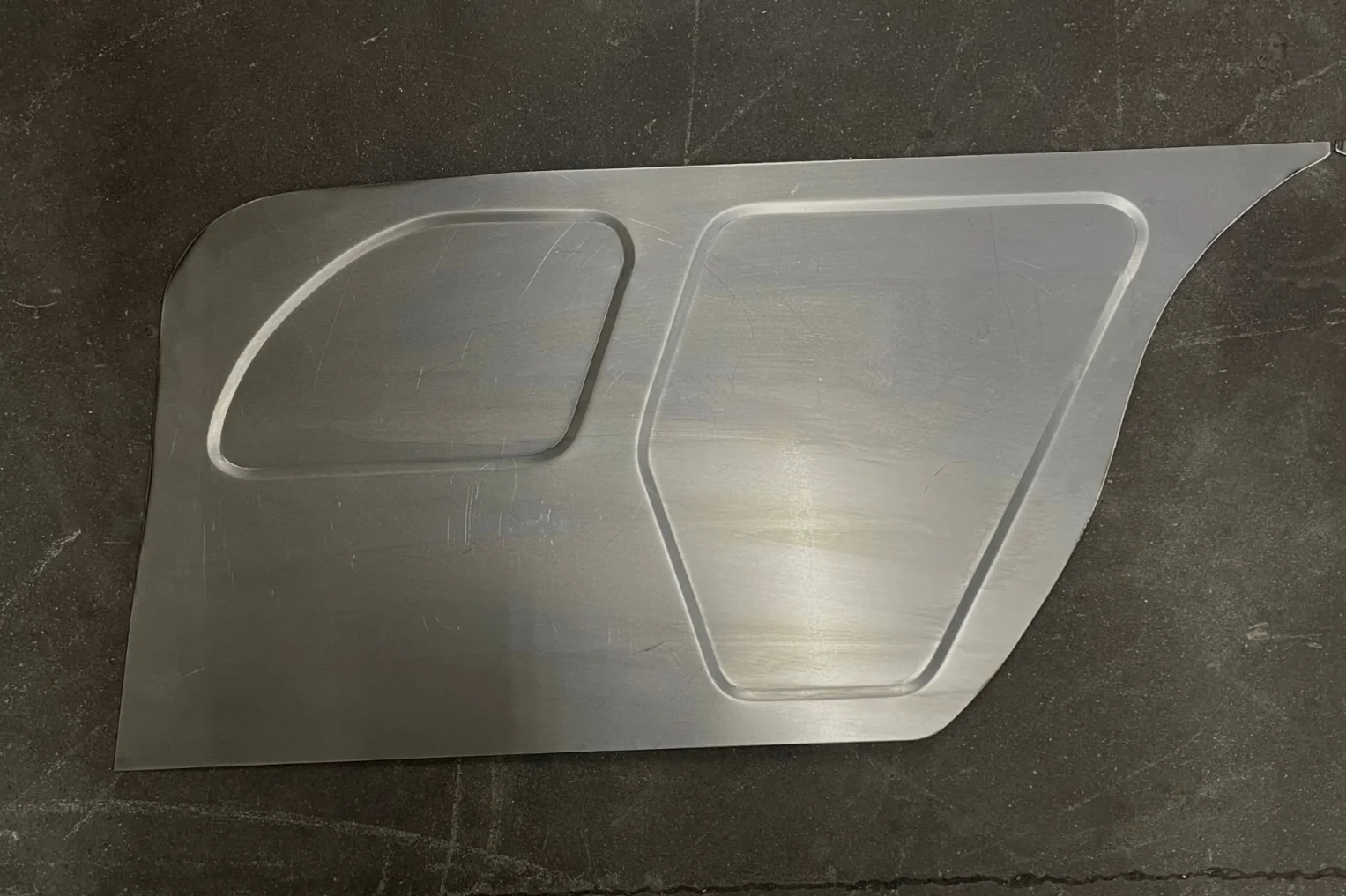
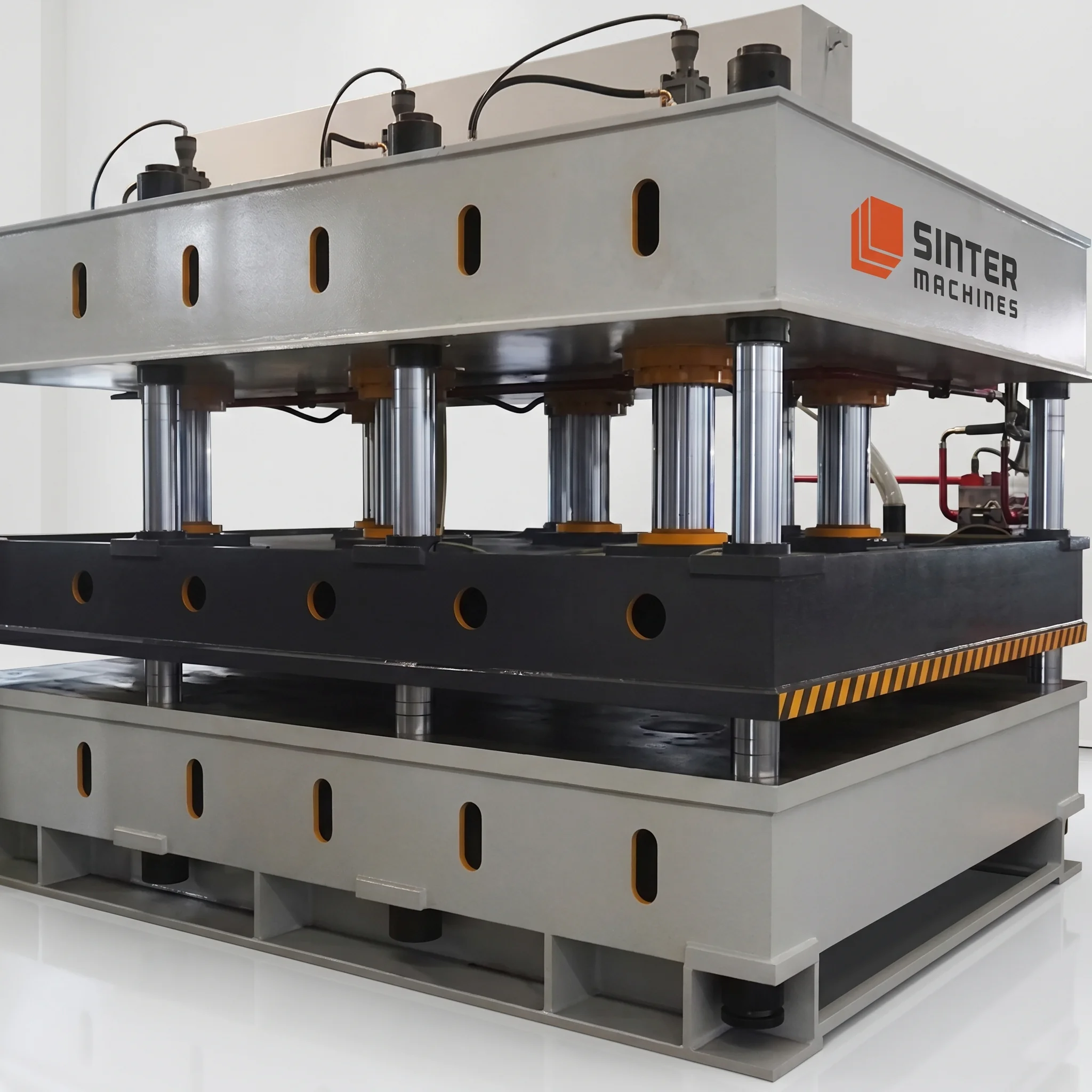
1250T Automotive Firewalls Press press view 1
Automotive Firewalls · Hydraulic Press Machine

1250 Ton Four Pillar Hydraulic Press for Automotive Firewalls

1250T Rated Capacity
180 mm/s Slider Down Speed
6–15 mm/s Slider Pressing Speed
200 mm/s Slider Return Speed

01 — Press System

1250 Ton Four Pillar Hydraulic Press Machine

High-capacity 1250-ton four-pillar hydraulic press designed for heavy-duty thermoforming and compression molding of automotive firewall barriers. Features ultra-rigid pillar guiding to ensure exceptional platen parallelism and precise tonnage delivery across deep-draw geometries.

Use Case

Engineered for manufacturing complex, multi-layered firewall acoustic and thermal barriers separating the engine compartment from the vehicle cabin. Handles dense fiber matrices, heavy-gauge plastics, and multi-laminate composites under high-pressure thermal cycle times.

  • Core Applications: Automotive firewall dash insulators and engine bulkhead thermal-acoustic shield compression molding. Deep-draw complex interior barrier panels requiring simultaneous high-density compaction and lamination.
  • Material: Surface finish layers including nonwoven polyester felts, needle-punched fabrics, and TPO/PVC skins. Structural substrates incorporating PP/PET composites, glass fibers, natural fiber matrices, and PU foam.
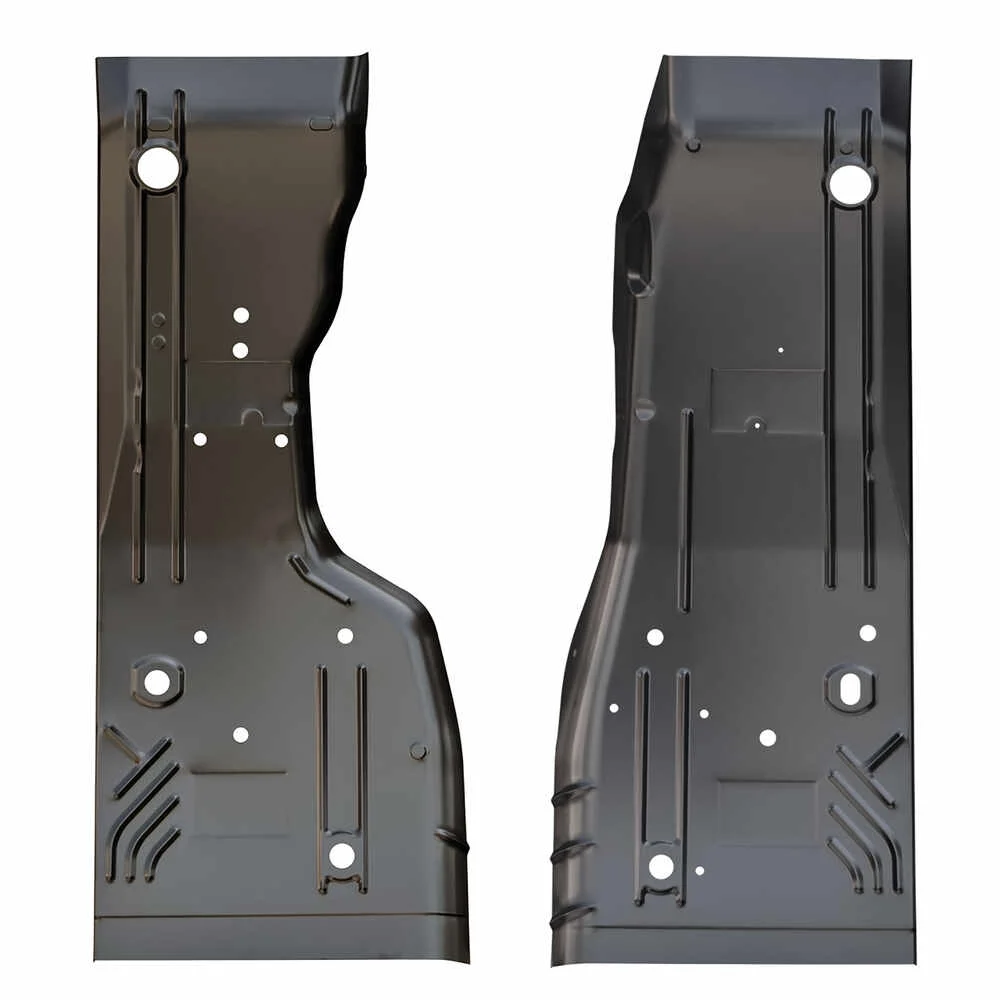
  • Products Processed: Engine side firewall barriers, interior dash insulators, lower bulkhead shields, and floor acoustic pads. Integrated thermal-acoustic engine compartment covers requiring deep-draw structural forming.
  • Why 1250-Ton Hydraulic Press: Provides massive tonnage to compress dense, thick multi-layer composite stacks into intricate deep-draw firewall contours. Ensures uniform material density and flash-free edge seals while preventing delamination of heavy thermal-acoustic layers.

02 — Technical Specifications

SM 1250 HP – HYDRAULIC PRESS MACHINE COMPLETE TECHNICAL DATA

SM 1250 HP – Hydraulic Press Machine delivers high-capacity thermoforming with precise pressure and temperature control for automotive rear deck covers and firewalls. It ensures uniform compression of thick multi-layer composites, excellent structural strength, and consistent OEM-grade quality for critical insulation and structural components.

Capacity & Structural Design

  • Rated Capacity: 1250 Tons (≈ 12,260 kN)
  • Type: Fourpillar hydraulic hot press
  • Frame: Heavy welded, stress-relieved structure
  • Safety factor: ≥ 1.35–1.40
  • Parallelism accuracy: ≤ 0.05–0.08 mm

Hydraulic System

  • Cylinder: Doubleacting heavy-duty
  • Bore: 600–700 mm
  • Stroke: 800–1300 mm
  • Working pressure: 30–32 MPa
  • Control: Servo-proportional system (smooth forming control)

Thermoforming & Trimming Cycle

  1. Preheated composite loading
  2. Controlled mold closing
  3. Compression thermoforming
  4. Optional vacuum-assisted forming
  5. Cooling under pressure
  6. Integrated trimming and punching stage
  7. Mold opening
  8. Finished panel removal

Heated Platen System

  • Heating options:
    • Electric heaters (fast response)
    • Thermal oil (high uniformity)
  • Temperature range: 140–220°C
  • Accuracy: ±2–3°C
  • Multi-zone heating control

Cooling System

  • Integrated mold cooling channels
  • Chiller system integration

Cooling profile: 200°C → 60–80°C

Benefits:

  • Dimensional stability
  • No warpage
  • Faster production

Working Envelope

  • Platen size:
    • Standard: 1800 × 1400 mm
    • Optional: 2000 × 1500 mm
  • Daylight: 1500–2200 mm
  • Column diameter: 200–260 mm

Control System

  • PLC: Siemens / Mitsubishi / Beckhoff
  • HMI: Advanced recipe programming
  • Monitoring:
    • Pressure
    • Temperature
    • Time
    • Vacuum
  • Features:
    • Data logging (automotive traceability)
    • Industry 4.0 compatibility
    • Safety PLC + interlocks

SM 1250 HP — Model Specifications

  • Nominal Force: 12500 KN
  • Maximum Hydraulic Pressure: 25 MPa
  • Max Opening Height of the Slider: 1500 mm
  • Max Stroke of the Slider: 900 mm
  • Effective Bed Size: 1600 × 1600 mm
  • Slider Down Speed: 180 mm/s
  • Slider Pressing Speed: 6–15 mm/s
  • Slider Return Speed: 200 mm/s
  • Ejector Cylinder Nominal Force: 600 KN
  • Stroke of the Ejection Cylinder: 300 mm
Production Case Study

Automotive Rear Deck Covers and Firewalls Production Line

PET/PP Nonwovens CompositeRaw Material
1600 x 1200 mm to 2200 x 1500 mmFirewalls Size
40-90 SecCycle Time
160–210°CTemperature
Maximum acoustic insulation
High structural rigidity
Precision deep-draw forming
Fast press actuation
Excellent thermal shielding
Reduced material scrap
Uniform density distribution

03 — Die / Mold System

Precision Automotive Rear Deck Covers and Firewalls Die Mold Engineering

Precision Automotive Rear Deck Covers & Firewalls Die Mold Engineering ensures accurate panel geometry, uniform thickness, and proper layering of multimaterial composites. It delivers consistent quality, strong structural integrity, and reliable thermal and acoustic insulation performance for critical automotive applications.

Technical Specifications

Mold Type

  • Thermoforming + trimming integrated mold
  • Compression-assisted forming system

Mold Materials

  • Aluminum (high thermal conductivity)
  • Steel inserts (cutting edges, wear areas)

Mold Construction

  • Upper mold: Surface shaping + contour
  • Lower mold:
    • Structural geometry
    • Reinforcement zones
  • Guide system: Alignment accuracy ±0.02 mm

Heating System

  • Multi-zone heating channels
  • Uniform temperature control

Cooling System

  • Integrated water cooling channels
  • Controlled cooling flow

Benefits:

  • Prevents deformation
  • Ensures stability

Vacuum & Venting

  • Vacuum ports (optional)
  • Micro vent channels

Prevents:

  • Air pockets
  • Wrinkling
  • Surface defects

Trimming System

  • Hardened steel trimming blades
  • CNC-machined cutting edges
  • Integrated punching for:
    • Holes
    • Slots
    • Assembly features

Surface Finish

ProductFinish
Rear deckFabric/textured finish
FirewallFunctional thermal finish
EdgesClean trimmed

Mold Life: 150,000 – 300,000 cycles

Case Study (Die Performance)

Automotive Rear Deck Covers and Firewalls Die Mold

P20 / H13 AlloyDie Steel
48–52 HRCHardness
Vacuum HardeningHeat Treatment
Exceptional deep-draw accuracy
High wear resistance
Optimum thermal conductivity
Flawless surface reproduction
Reduced cycle downtime
Zero flash formation
Long service lifespan

04 — Product Application

Where Automotive Rear Deck Covers and Firewalls Are Used

Automotive rear deck covers and firewalls are used in passenger vehicles, SUVs, and commercial vehicles for structural support and safety applications. They are typically installed behind seats and between the engine and cabin to provide thermal and acoustic insulation. These components help protect passengers from heat, reduce noise, and enhance overall vehicle durability and performance.

Industry Applications

Automotive OEM

In the automotive OEM sector, rear deck covers and firewalls are widely used in passenger cars, SUVs, and electric vehicles. They provide structural support, thermal insulation, and noise reduction, ensuring enhanced safety, comfort, and performance in modern vehicle designs.

Automotive Interiors &

In automotive interiors and engine compartments, rear deck covers and firewalls are used in rear parcel shelf systems, engine bay insulation panels, and trunk insulation panels. They provide structural support, thermal shielding, and noise reduction, enhancing cabin comfort, safety, and overall vehicle performance.

Commercial & Heavy Vehicles

In commercial and heavy vehicles, rear deck covers and firewalls are used in truck insulation systems and bus rear/firewall panels. They provide strong thermal insulation, noise reduction, and structural durability, ensuring reliable performance in demanding transport environments.

Transport Sector

In the transport sector, rear deck covers and firewalls are used in rail cabins for thermal and acoustic insulation as well as in aerospace interior insulation panels. They provide lightweight, high-performance solutions that enhance passenger comfort, reduce noise, and ensure thermal protection in advanced mobility systems.

IndustryScenario
Automotive OEM Rear deck covers production
EV Industry Lightweight thermal management panels
Commercial Vehicles Engine insulation panels
Transport Rail cabin insulation
Industrial Acoustic panels

Finished Product Gallery

05 — Key Advantages

Why Choose the 1250-Ton Sinter Hydraulic Press

The 1250-Ton Sinter Hydraulic Press offers high-capacity compression and precise thermoforming for large, multi-layer automotive panels. It ensures dense material consolidation, excellent thermal and acoustic insulation, and uniform pressure distribution. Designed for OEM applications, it delivers consistent, defect-free production with superior structural strength and durability.

01

Suitable for multi-layer composites

Optimized for molding complex multi-layer materials with uniform compression. It ensures proper bonding between layers, resulting in high structural strength, durability, and consistent performance in automotive insulation and structural panels.

02

Uniform forming of thick panels

Ensures even pressure distribution for consistent shaping of thick, multi-layer panels. It delivers uniform thickness, defect-free surfaces, and high structural integrity across large components.

03

Lightweight yet strong

Produces composite panels that combine reduced weight with high structural strength. This ensures improved vehicle efficiency while maintaining durability and performance in demanding automotive applications.

04

Excellent thermal insulation

Produces automotive panels with superior heat resistance and insulation properties. It ensures effective temperature control between engine and cabin, enhancing passenger safety, comfort, and overall vehicle performance.

05

Superior acoustic damping

Produces automotive panels with excellent noise absorption characteristics. It significantly reduces vibration and sound transmission, enhancing cabin comfort and overall driving experience.

06

Durable and corrosion-resistant

Produces composite panels with excellent resistance to corrosion, moisture, and environmental exposure. It ensures long-lasting durability and reliable performance in demanding automotive conditions.