01 — Press System
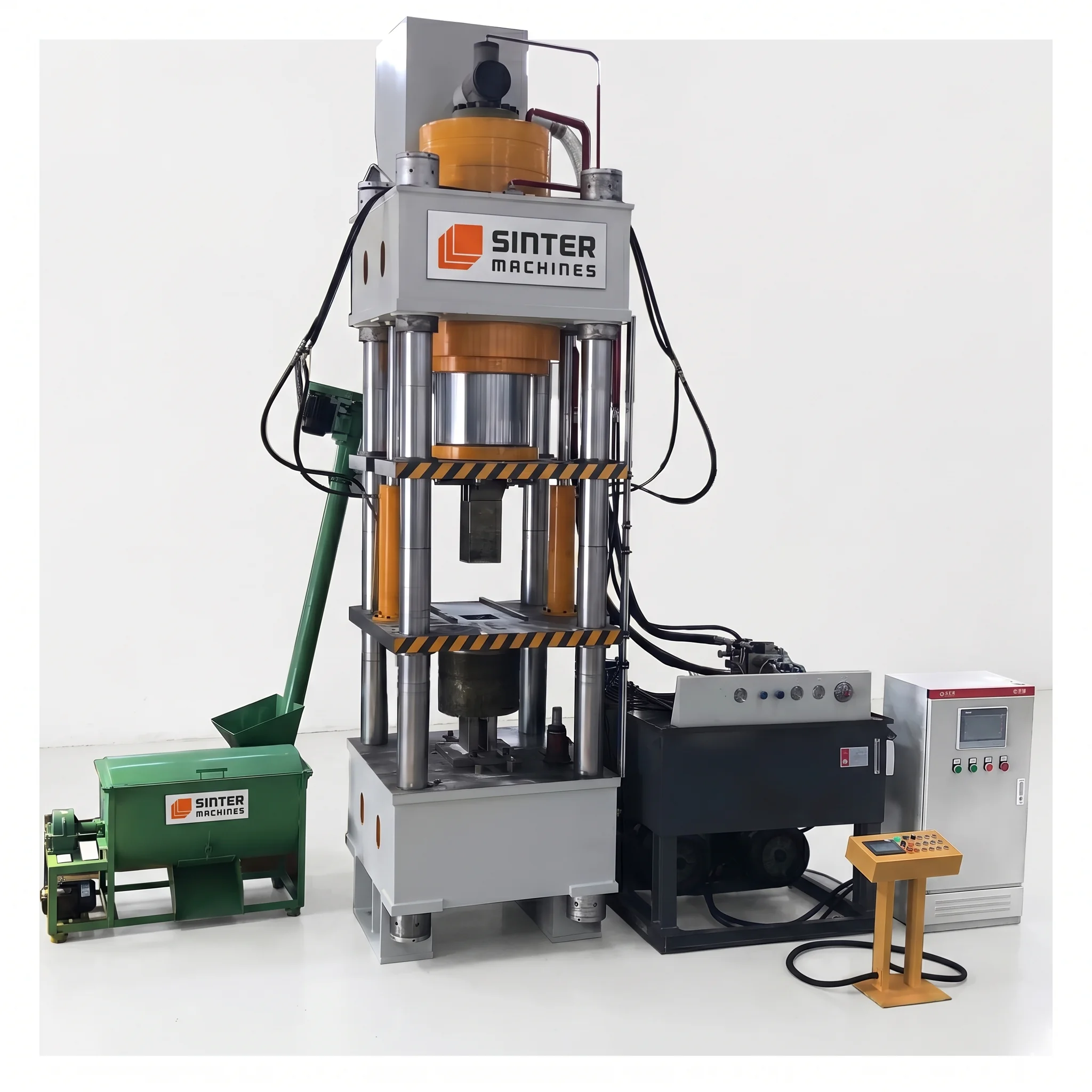
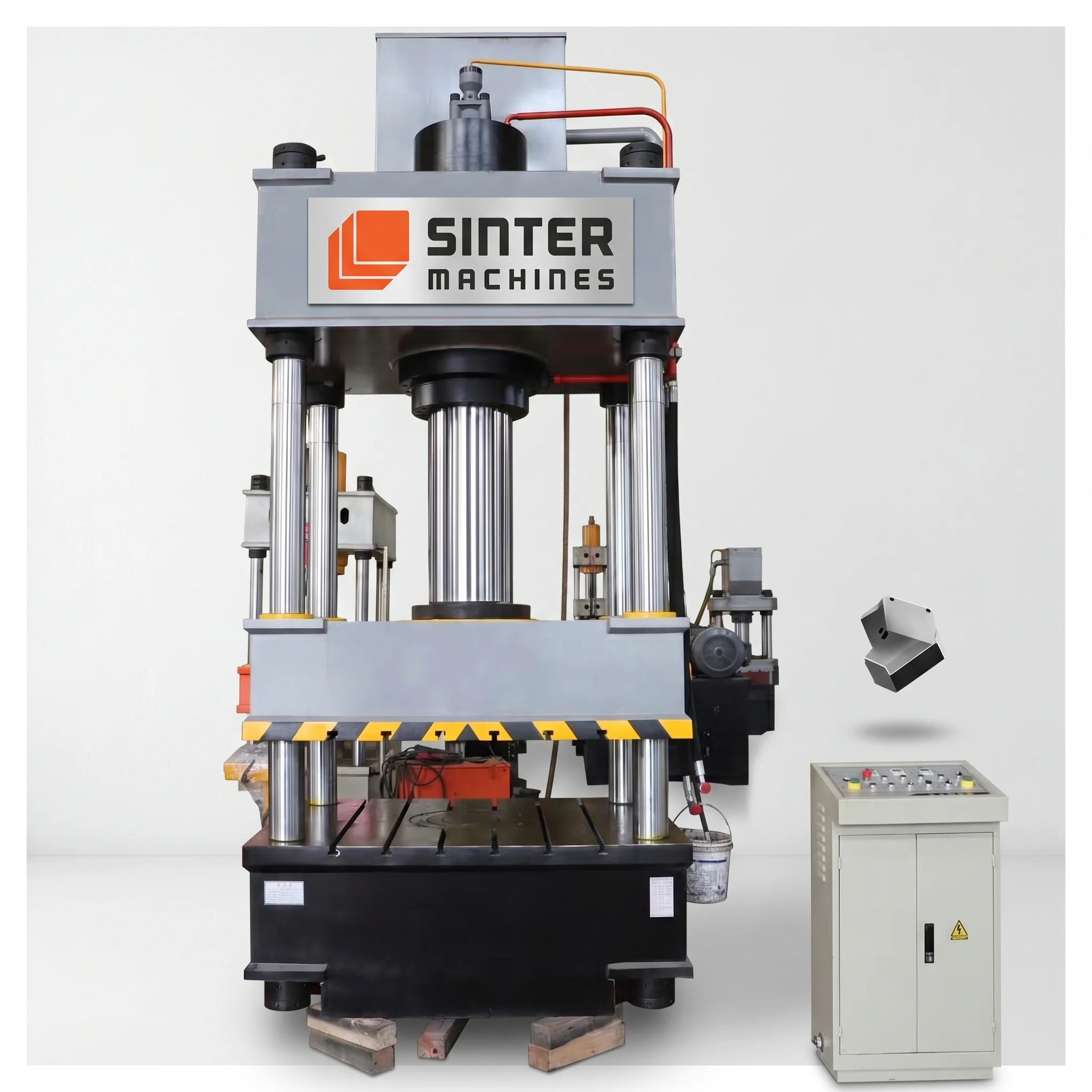
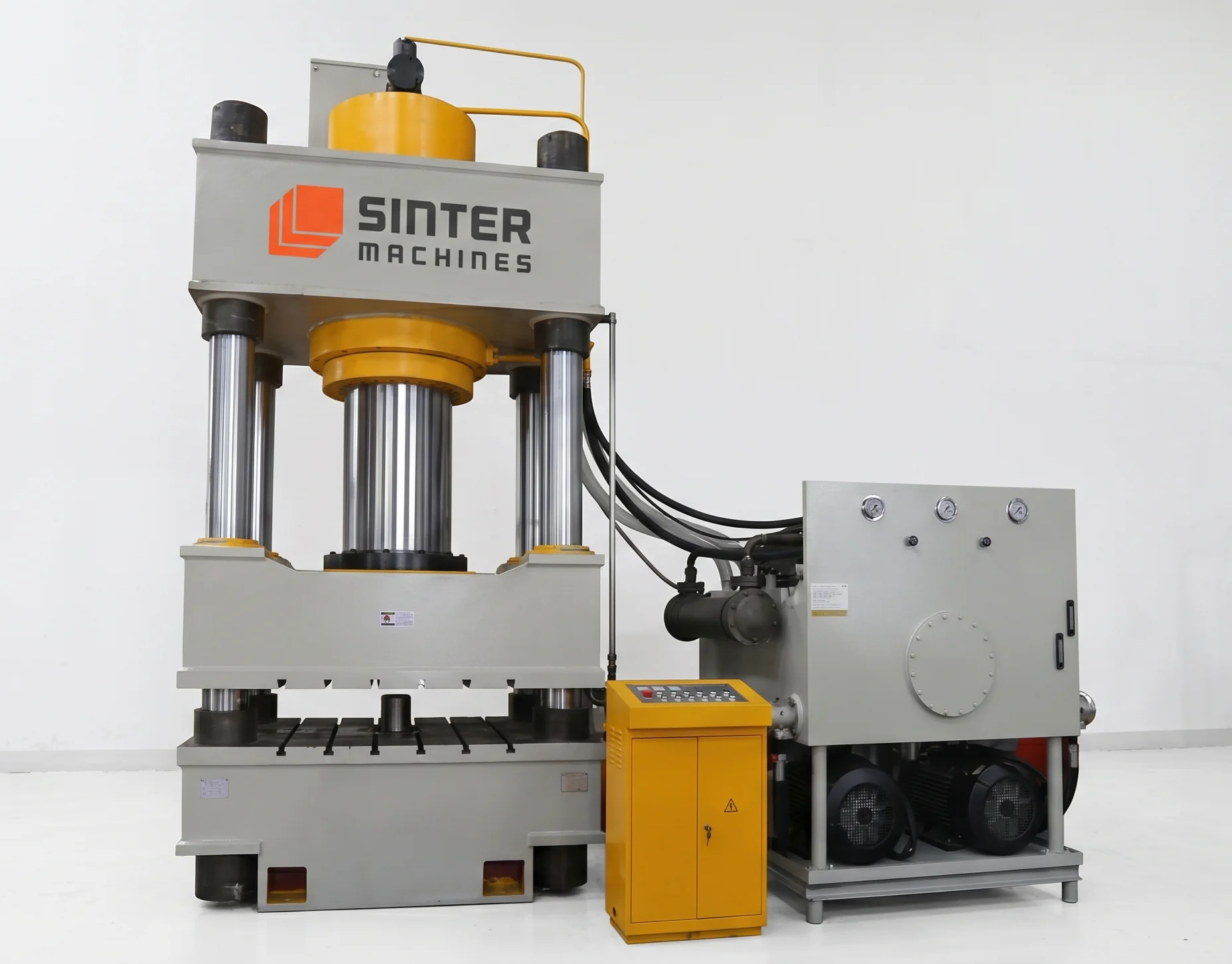
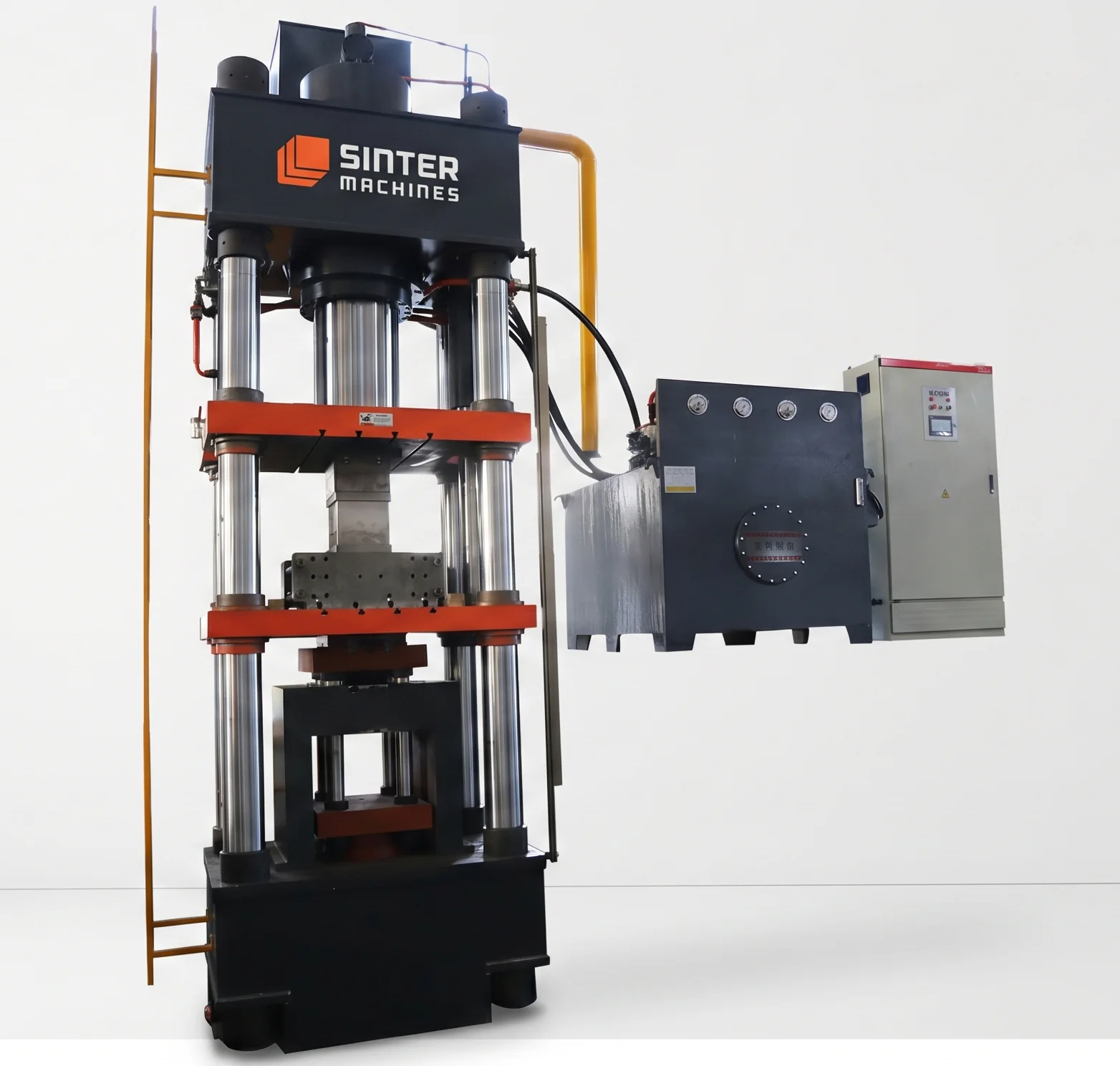
630 Ton Four Pillar Hydraulic Press Machine
The 630-ton four-pillar hydraulic press delivers high-tonnage multi-action compaction with precise force and position control. Its rigid four-column architecture minimizes frame deflection, ensuring ultra-tight dimensional accuracy across high-volume powder metallurgy operations.
Use Case
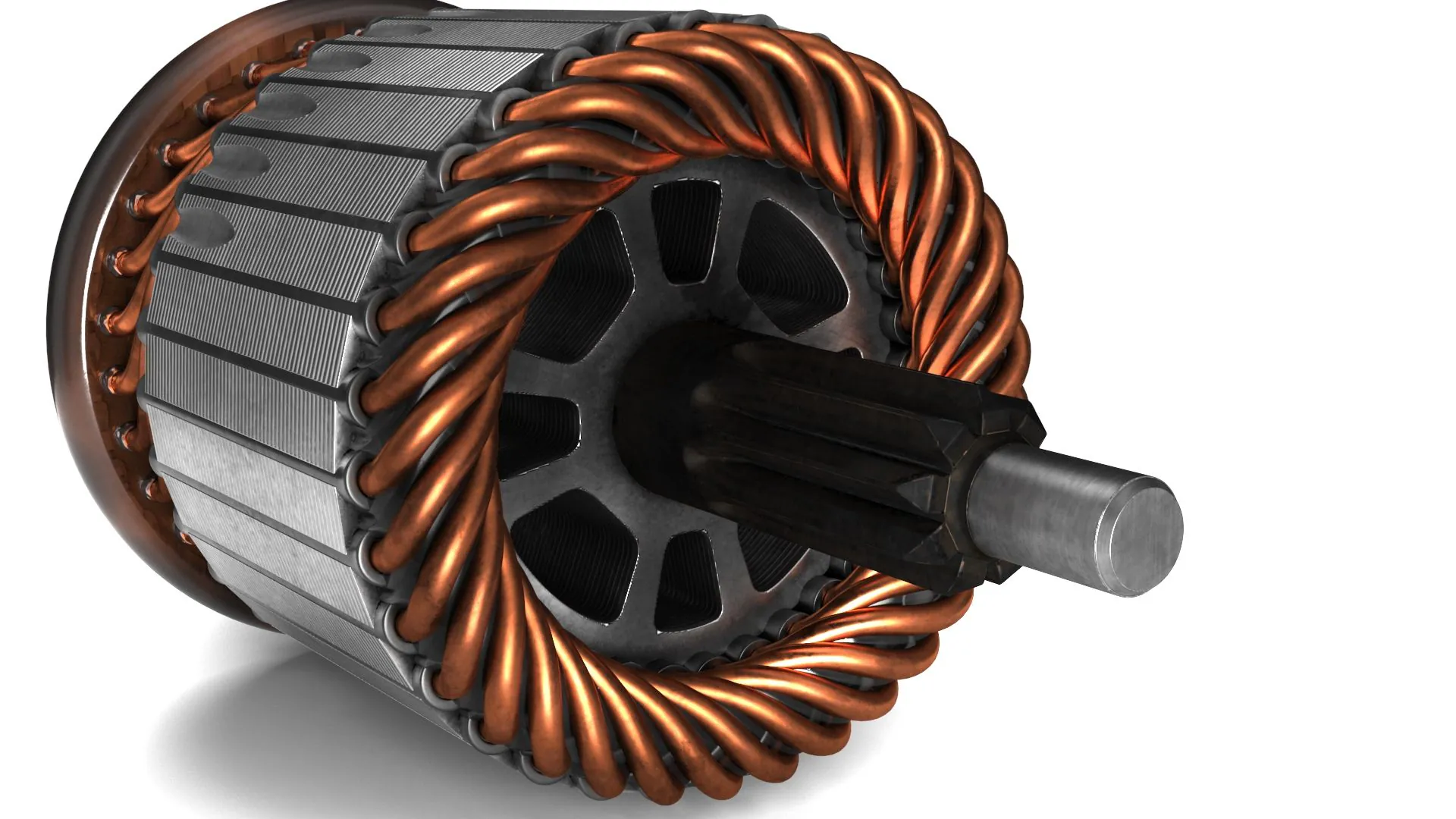
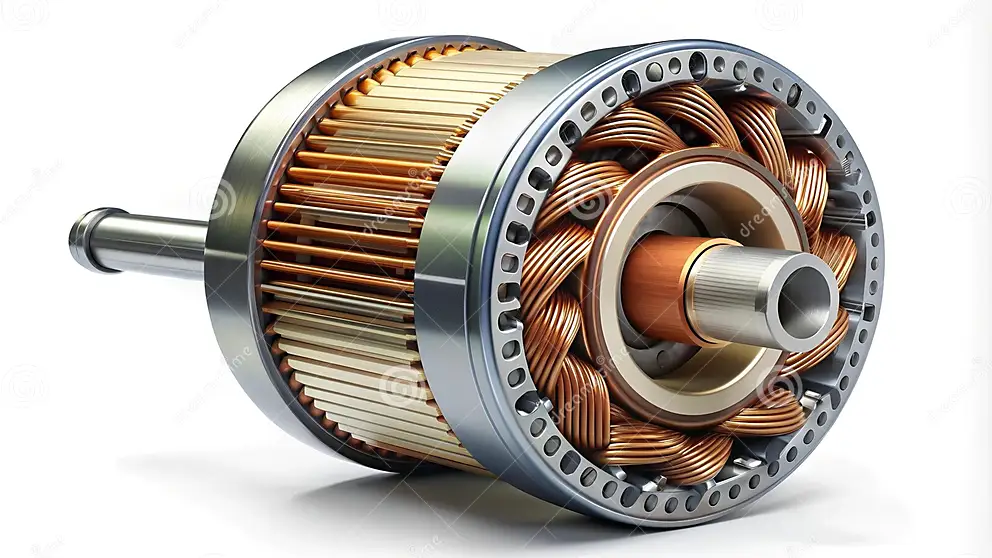
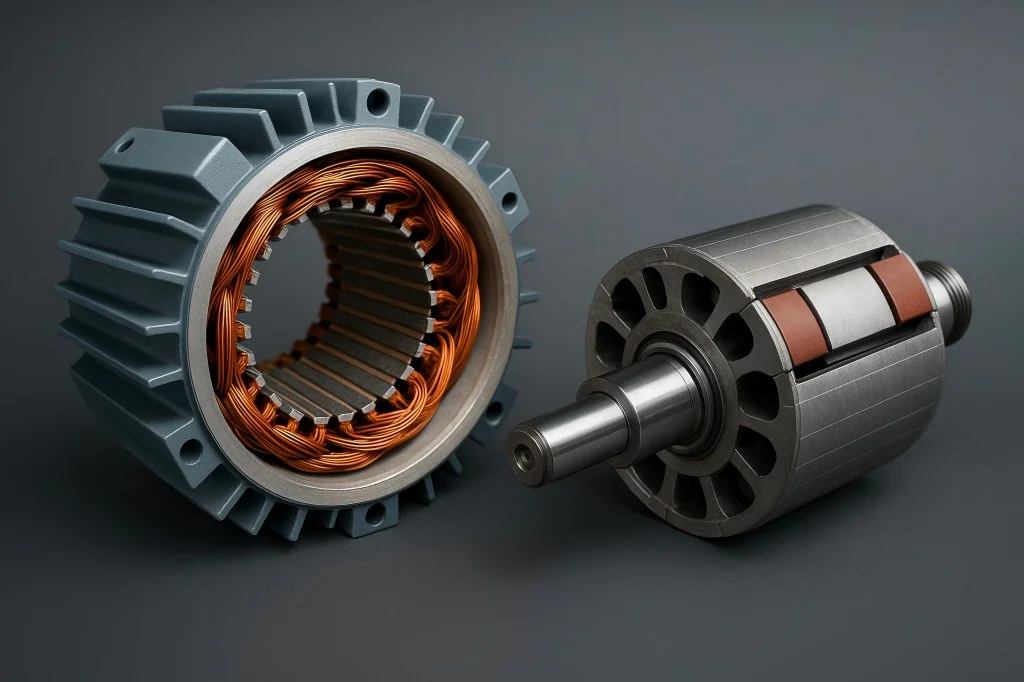
Engineered for high-density compaction of sintered soft magnetic components like small electric motor rotors and stators. It enables uniform density distribution across complex geometry profiles while maintaining high throughput for automotive and industrial applications.
- Core Applications: Provides high-precision compaction for automotive BLDC motors, industrial pumps, and power tool powertrains. It is ideal for producing high-efficiency magnetic cores and structural powder metallurgy parts requiring superior mechanical integrity.
- Material: Processes iron-based, iron-copper, bronze, and stainless steel metal powders blended with graphite and zinc stearate lubricants. This formulation optimizes magnetic permeability, structural density, and smooth mold ejection during the pressing cycle.
- Products Processed: Compacts small sintered rotors, stators, self-lubricating bronze bushings, and complex magnetic core assemblies. It consistently yields high green-strength components ready for continuous atmosphere sintering furnaces.
- Why 630-Ton Hydraulic Press: The heavy 630-ton capacity delivers the high compaction pressures needed to achieve targeted green densities above 7.0 g/cm³. Hydraulic force distribution guarantees balanced pressure along multi-level tooling for intricate geometric profiles.
02 — Technical Specifications
SM 630 HP – HYDRAULIC PRESS MACHINE COMPLETE TECHNICAL DATA
The SM 630 HP – 630 Ton Hydraulic Press Machine is a high-performance Powder Metallurgy (PM) compaction platform designed for manufacturing precision rotors and stators used in automotive oil pumps, fuel pumps, transmission pumps, hydraulic pumps, and industrial fluid-handling systems. Its robust four-pillar construction, 6,300 kN pressing force, and precise hydraulic control ensure uniform density distribution, excellent dimensional accuracy, and superior green strength.
Capacity & Structural Design
- Rated Press Capacity: 630 metric tons (≈ 6,180 kN)
- Press Configuration: Fourpillar / fourcolumn guided hydraulic press
- Frame Construction: Heavy welded steel structure, stressrelieved
- Design Duty: Continuous PM production (automotive & industrial)
- Structural Safety Factor: ≥ 1.25
- Elastic Deflection at Rated Load: ≤ 0.08–0.10 mm
- Load Distribution: Uniform across platen (critical for concentric PM parts)
Hydraulic System
Main Hydraulic Cylinder
- Type: Doubleacting
- Bore Diameter: 400–480 mm
- Stroke: 500–700 mm
Maximum Working Pressure: 28–32 MPa (280–320 bar)
Hydraulic Power Pack
- Variabledisplacement axialpiston pumps
- Proportional / servo valves for precise force control
- Closedloop pressure & position feedback
Pressing Modes
- Constantpressure compaction
- Positioncontrolled pressing
- Multistage pressure with dwell (important for thick rotors/stators)
Platen & Working Envelope
Upper / Lower Platen Size
- Standard: 900 × 900 mm
- Optional: 1,000 × 1,000 mm
Guide Columns
- Quantity: 4
- Diameter: 130–160 mm
- Finish: Hardened, hardchromed & precisionground
- Daylight Opening: 900–1,200 mm
- Platen Parallelism Accuracy: ±0.02–0.03 mm / 300 mm
Controls, Monitoring & Safety
- Control System: PLC + industrial HMI
Process Monitoring
- Force vs stroke curve
- Dwell pressure & time
- Fill depth & ejection position
- Repeatability & SPC data
Safety Systems
- Safety PLC
- Light curtains / area scanners
- Hydraulic overload protection
- Emergency stop (CE / ISO compliant)
SM 630 HP — Model Specifications
- Nominal Force: 6300 KN
- Maximum Hydraulic Pressure: 25 MPa
- Max Opening Height of the Slider: 1500 mm
- Max Stroke of the Slider: 900 mm
- Effective Bed Size: 1500 × 1500 mm
- Slider Down Speed: 150 mm/s
- Slider Pressing Speed: 9–18 mm/s
- Slider Return Speed: 200 mm/s
- Ejector Cylinder Nominal Force: 500 KN
- Stroke of the Ejection Cylinder: 300 mm
03 — Die / Mold System
Precision Powder Metallurgy (PM) Small Rotors & Stators Component Die Mold Engineering
Precision Powder Metallurgy (PM) Small Rotors & Stators Component Die Mold Engineering enables the production of intricate, near-net-shape components with exceptional dimensional accuracy and density consistency. Advanced die and mold designs ensure uniform powder filling, optimized compaction, and reliable ejection, resulting in high-quality rotors and stators for automotive and industrial pump applications.
Technical Specifications (Tooling)
Die Construction
- Die Type: PM ringtype / corerod compaction die
Die Materials
- H13 / D2 tool steel
- PM tool steels (ASP23, Vanadis series) for long die life
- Heat Treatment: Vacuum hardened & tempered
- Hardness: 58–62 HRC
Surface Coatings: TiN / CrN / AlCrN (wear and antigalling)
- Typical Die Life: 250,000 – 800,000 cycles
Tooling Configuration
- Upper punch (solid or segmented)
- Lower punch
- Die sleeve / ring die
- Central core rod (critical for rotors & stators)
- Optional floating die system
- Stripper or controlled ejection plate
Key Tooling Design Features
- Punchtodie clearance: 8–12 µm
- Core rod concentricity tolerance: ≤ 0.01–0.02 mm
- Polished working surfaces (Ra ≤ 0.2–0.3 µm)
- Optimized venting to prevent density gradients & lamination cracks
Powder Filling & Ejection
Powder Filling
- Servocontrolled or gravity shoe feeder
- Volumecontrolled fill for mass consistency
Ejection
- Hydraulic ejection with programmable speed
- Lowspeed ejection to protect thinwall sections
Lubrication
- Internal powder lubricant
- Optional diewall spray lubrication for tool life
Compatible PM Materials
Rotor Materials
- Ironbased PM steels (FeCuC)
- FeNiMo alloy steels
- Wearresistant PM grades
- Magnetic PM steels (where applicable)
Stator Materials
- Lowcarbon iron PM grades
- Alloyed PM steels for strength & wear
- Impregnationready PM materials for pump efficiency
Alignment Accuracy
- Punch-to-die concentricity: ≤ 0.005 mm
- Tool alignment repeatability: ±0.003 mm
- Precision guide pillar and bush system
- Minimal radial runout for miniature motor components
- High positional accuracy throughout production cycles
Surface Finish
- Punch working surfaces: Ra ≤ 0.1 µm
- Die bore surfaces: Ra ≤ 0.2 µm
- Mirror-polished compacting areas
- Low-friction contact surfaces
- Optimized finish to reduce powder adhesion and tool wear
Lubrication
- Centralized automatic lubrication system
- Lubricated guide pillars and moving assemblies
- Compatible with dry powder compaction processes
- Optional TiN, TiCN, or DLC surface coatings
- Reduced friction and extended tooling life
Tool Life
- Carbide Die Inserts: 1–5 million+ compaction cycles
- Core Rods: 0.5–2 million cycles
- Upper & Lower Punches: 0.3–1.5 million cycles
- Guide Components: 2 million+ cycles
- Tool life dependent on powder characteristics, compaction pressure, component geometry, and maintenance practices.
Powder Metallurgy (PM) Small Rotors & Stators Component Die Mold Tooling
04 — Product Application
Where Powder Metallurgy (PM) Small Rotors & Stators Components Are Used
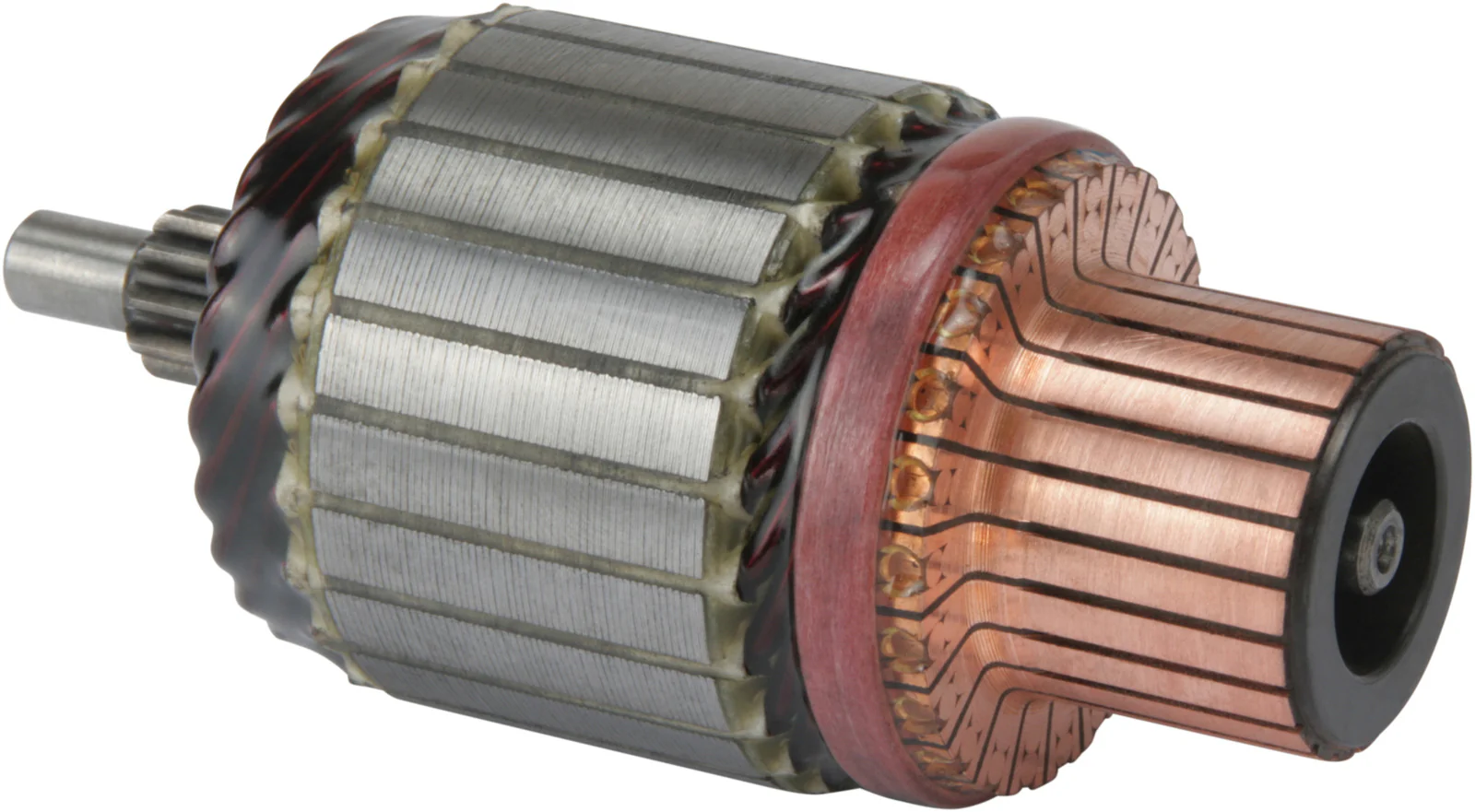
Powder Metallurgy (PM) small rotors and stators are widely used in automotive oil pumps, fuel pumps, transmission pumps, and hydraulic pump systems where precision, wear resistance, and dimensional accuracy are critical. They are also employed in industrial fluid-handling equipment, lubrication systems, power tools, and compact electric drive units.
Industry Applications
Automotive Components
Powder Metallurgy (PM) small rotors and stators are widely used in automotive applications such as Variable Valve Timing (VVT) phasers, where they precisely control camshaft timing to improve engine efficiency and performance. They are also commonly found in electric power steering systems, fuel pump motors, oil pump gerotor assemblies, electric water pumps, and other auxiliary motors due to their high dimensional accuracy, durability, and cost-effective mass production capabilities.
Electric Motors
Powder Metallurgy (PM) small rotors and stators are extensively used in BLDC, DC, stepper, and servo motors, as well as fractional-horsepower motors found in household appliances and industrial equipment. PM technology enables the cost-effective production of motor cores, pole pieces, rotors, stators, and other magnetic components with precise dimensions, excellent magnetic performance, and high production efficiency, making it ideal for compact, high-volume motor applications.
Home Appliances
Powder Metallurgy (PM) small rotors and stators are widely used in home appliance applications, including washing machine motors, refrigerator compressors, vacuum cleaners, cooling fans, blower motors, mixer grinders, and other small kitchen appliances. PM manufacturing enables the economical production of high-precision motor components with consistent quality, good magnetic properties, and excellent durability, making it ideal for the large-volume production requirements of the appliance industry.
Industrial Equipment
Powder Metallurgy (PM) small rotors and stators are commonly used in industrial equipment such as solenoids, actuators, small gear motors, industrial sensor actuators, and robotics and automation drives. PM technology enables the manufacture of complex magnetic and structural components with high dimensional accuracy, durability, and cost efficiency, supporting reliable performance in automated systems and precision motion-control applications
Electric Vehicles & Mobility
Powder Metallurgy (PM) small rotors and stators are increasingly used in electric vehicles and mobility applications, including EV traction motor magnetic components, e-bike motors, e-scooter drives, and auxiliary EV motors and pumps. Soft magnetic PM materials enable the production of complex motor geometries with reduced eddy current losses, improved magnetic efficiency, and lower weight, contributing to enhanced energy efficiency, performance, and range in electric mobility systems.
Pumps and Hydraulic Systems
Powder Metallurgy (PM) small rotors and stators are extensively used in pumps and hydraulic systems, including gerotor oil pumps, hydraulic pump rotor–stator assemblies, lubrication pumps, and fuel delivery pumps. PM manufacturing is particularly suited for these applications because it can produce complex rotor and stator geometries with excellent dimensional accuracy, wear resistance, and durability, ensuring efficient fluid transfer, reliable performance, and cost-effective high-volume production.
Finished Product Gallery
05 — Key Advantages
Why Choose the 630-Ton Sinter Hydraulic Press
The 630-ton Sinter Hydraulics press delivers high and uniform compaction force, enabling the production of small rotors and stators with superior density, dimensional accuracy, and consistent quality. Its ability to form complex geometries with minimal material waste enhances magnetic performance, mechanical strength, and durability while supporting cost-effective, high-volume manufacturing of precision PM components used in motors, pumps, and automotive applications
High Compaction Force for Superior Density
The 630-ton hydraulic press provides the high pressing force required to achieve uniform density in small rotor and stator components, resulting in improved mechanical strength, magnetic performance, and dimensional stability.
Excellent Dimensional Accuracy
Precise control of pressure, stroke, and tooling alignment ensures tight tolerances and consistent part geometry, which are critical for maintaining motor efficiency and minimizing air-gap variations.
Capability for Complex Shapes
Small rotors and stators often feature intricate tooth profiles, slots, and magnetic geometries. A 630-ton press can accurately form these complex shapes in a single operation, reducing secondary machining requirements.
Consistent Quality in High-Volume Production
The robust design and process repeatability of a hydraulic press support large-scale manufacturing with minimal variation, ensuring consistent quality across thousands or millions of parts.
Enhanced Magnetic and Mechanical Properties
Higher and more uniform compaction improves material density, reducing porosity and enhancing magnetic flux characteristics, wear resistance, and overall component durability.
Cost-Effective Manufacturing Solution
By enabling near-net-shape production, reducing material waste, minimizing machining operations, and supporting high production rates, the 630-ton Sinter Hydraulics press helps lower the overall manufacturing cost of PM rotor and stator components.