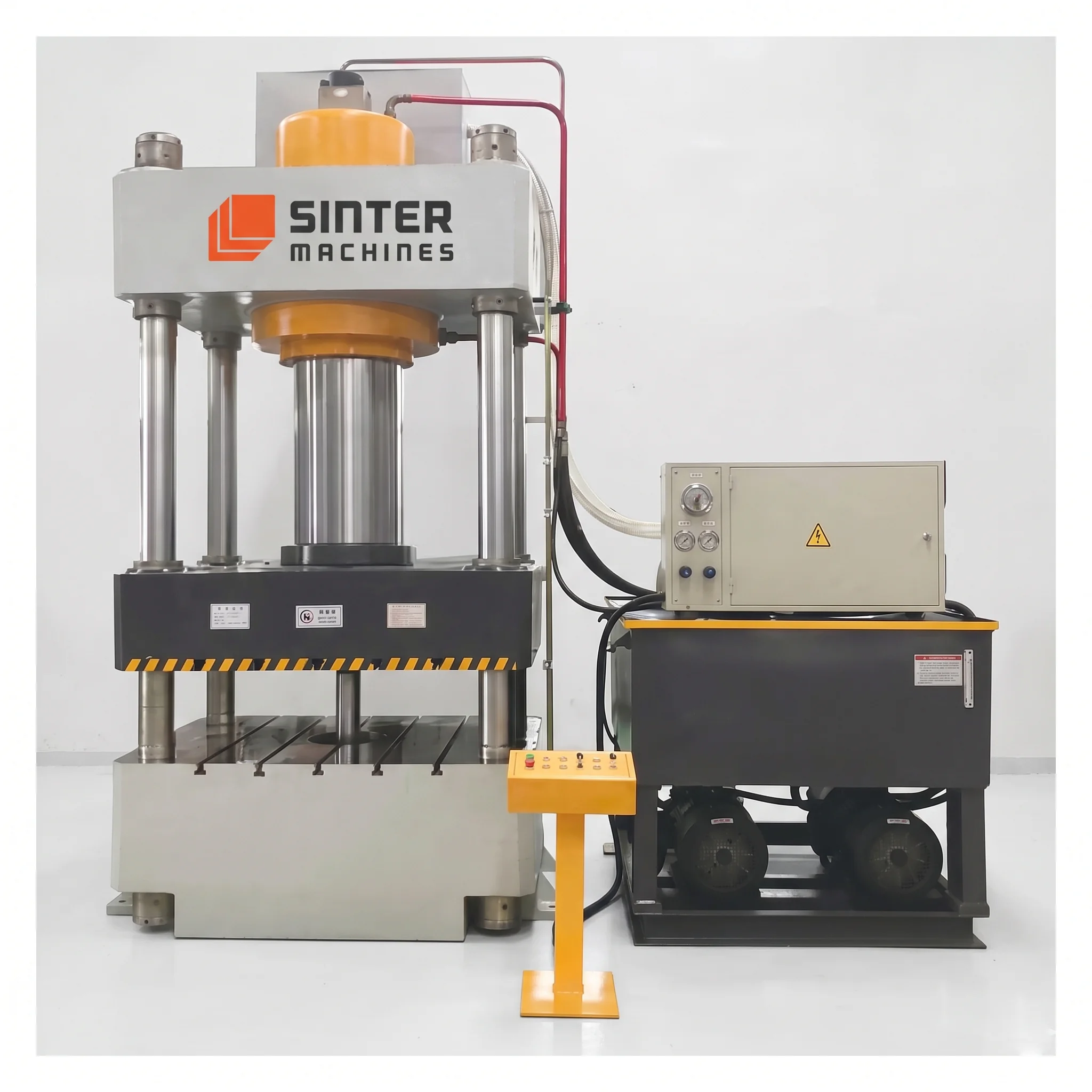
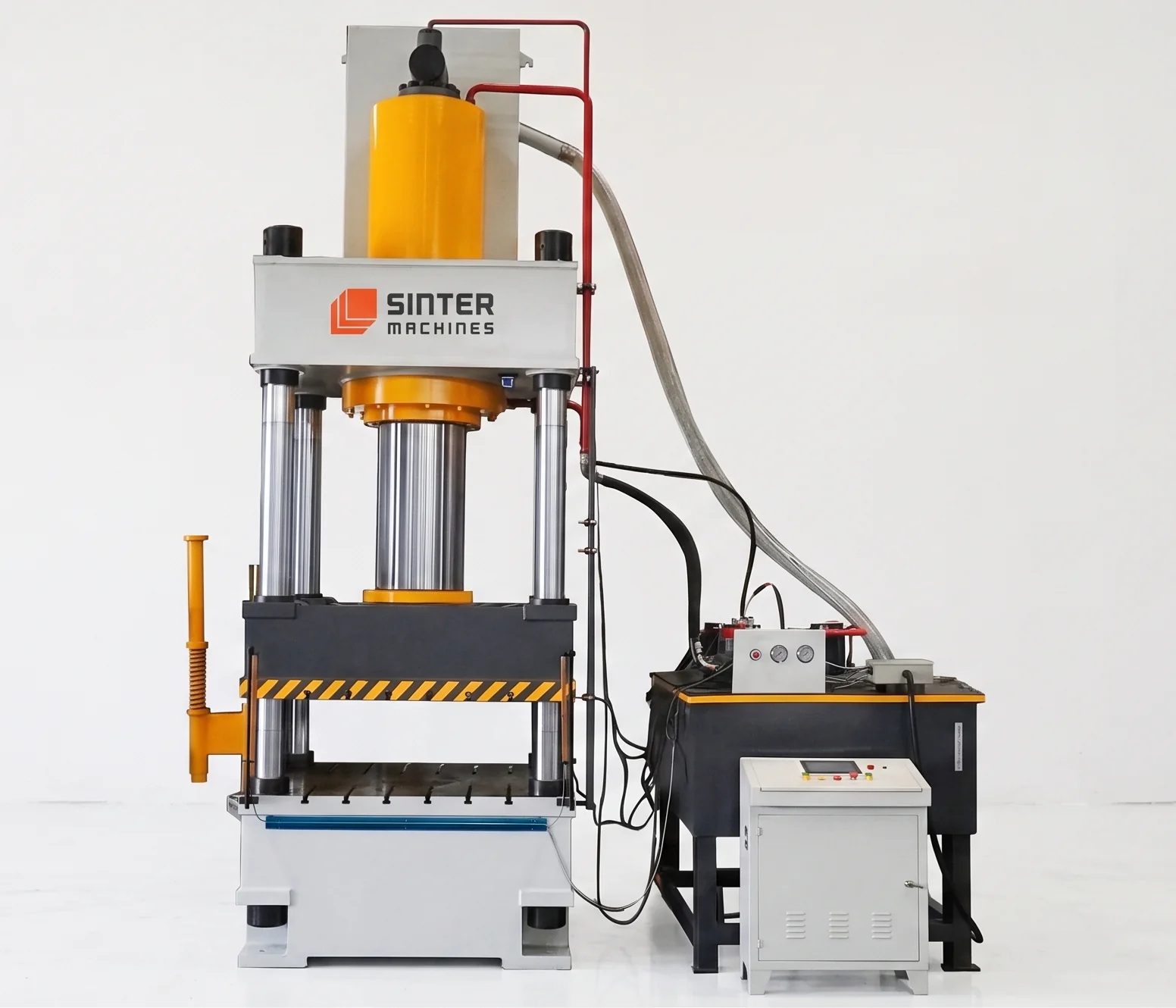
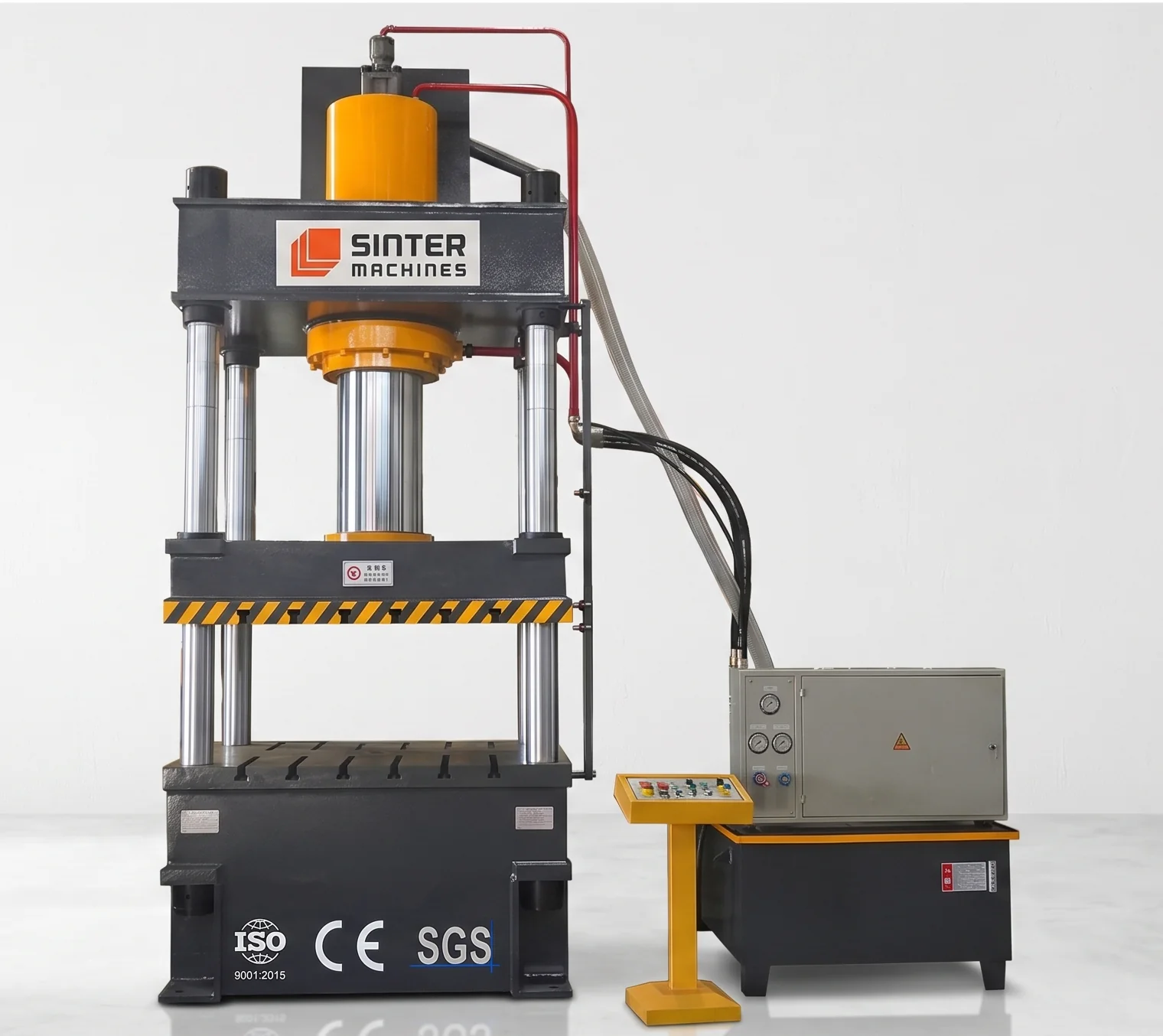
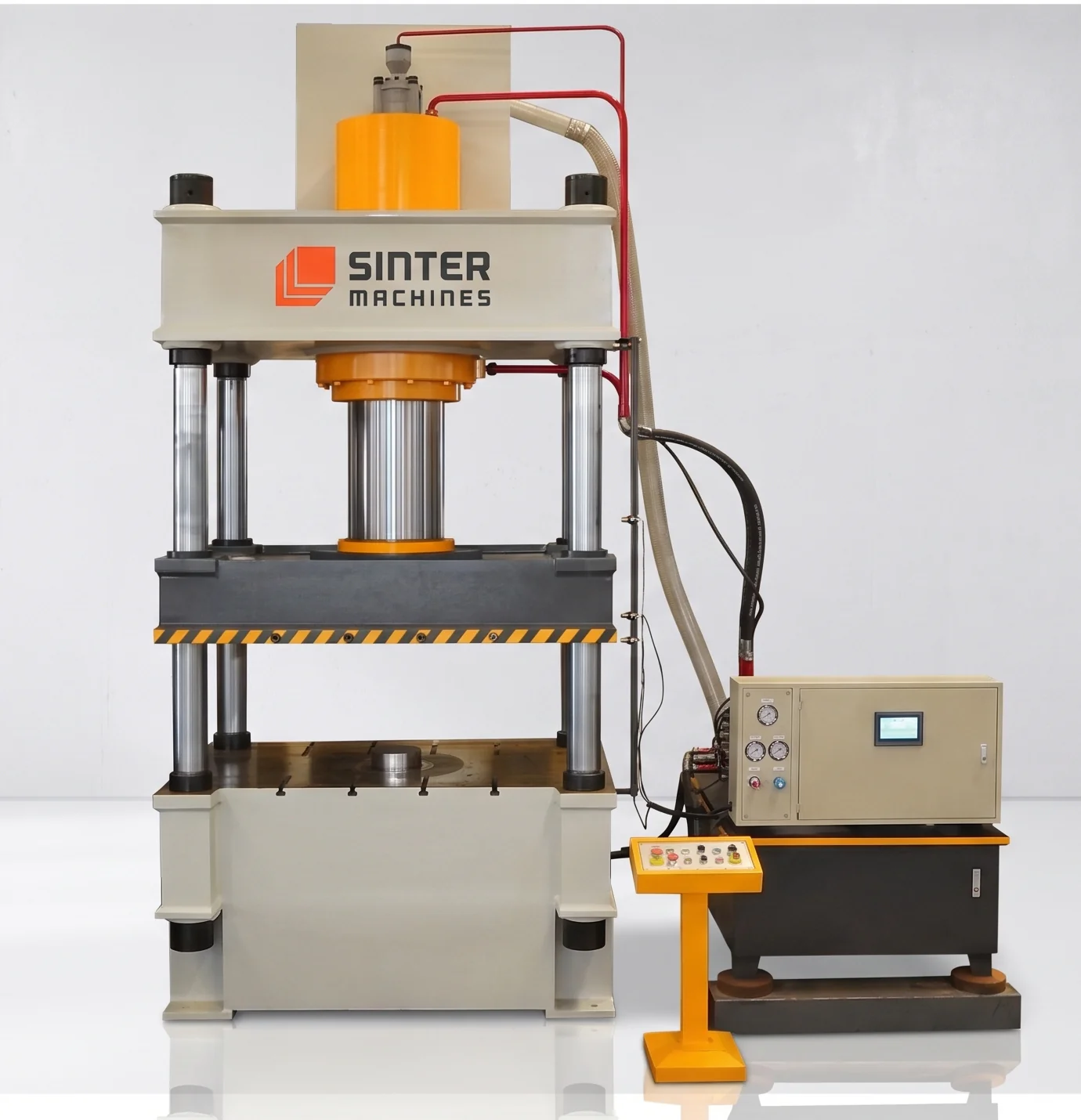
400T Magnetic Core Press press view 1
Magnetic Core · Hydraulic Press Machine

400 Ton Four Pillar Hydraulic Press for PM Magnetic Cores Components

400T Rated Capacity
100 mm/s Slider Down Speed
5–11 mm/s Slider Pressing Speed
100 mm/s Slider Return Speed

01 — Press System

400 Ton Four Pillar Hydraulic Press Machine

This 400-Ton Four-Pillar Hydraulic Press is specifically engineered for high-precision compaction of soft magnetic composite powders into complex core geometries. It delivers highly controllable pressing forces with exceptional parallelism to safeguard delicate electrical and magnetic characteristics.

Use Case

Tailored for the efficient mass production of electromagnetic cores, this press forms high-density preforms used in automotive and industrial electronics. It integrates multi-stage pressure control and precise powder feeding to minimize core losses and maximize permeability.

  • Core Applications: Supplies critical electromagnetic components for electric vehicle motors, power inductors, transformers, and industrial actuators. It enables reliable high-frequency magnetic performance across modern energy and power conversion systems.
  • Material: Compacts soft magnetic composite (SMC) powders, pure iron powders, and alloyed ferromagnetic compositions. Integrated organic or inorganic insulating binders and lubricants preserve particle insulation and ensure high green density.
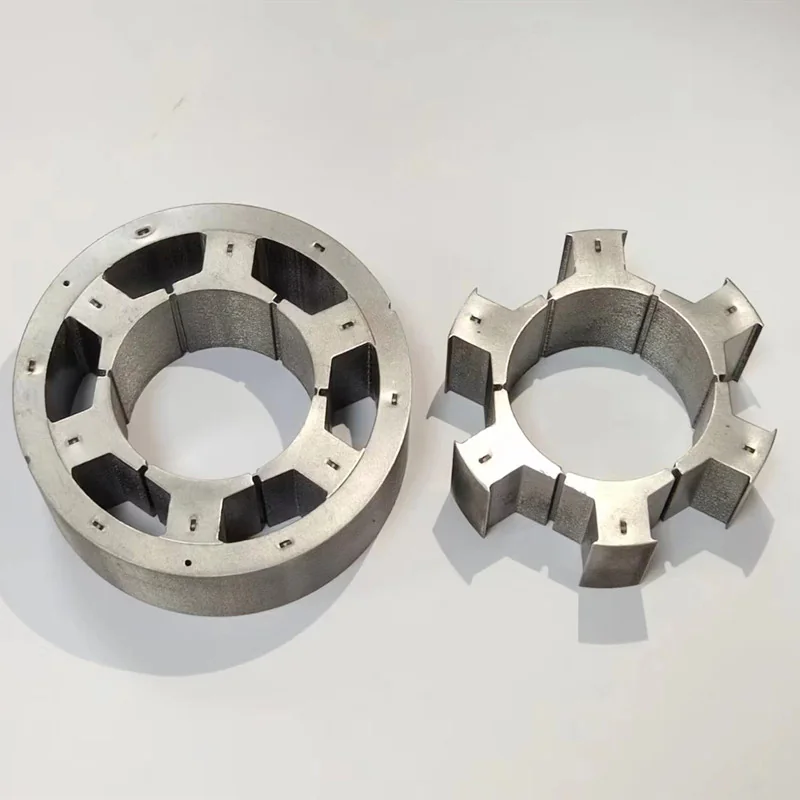
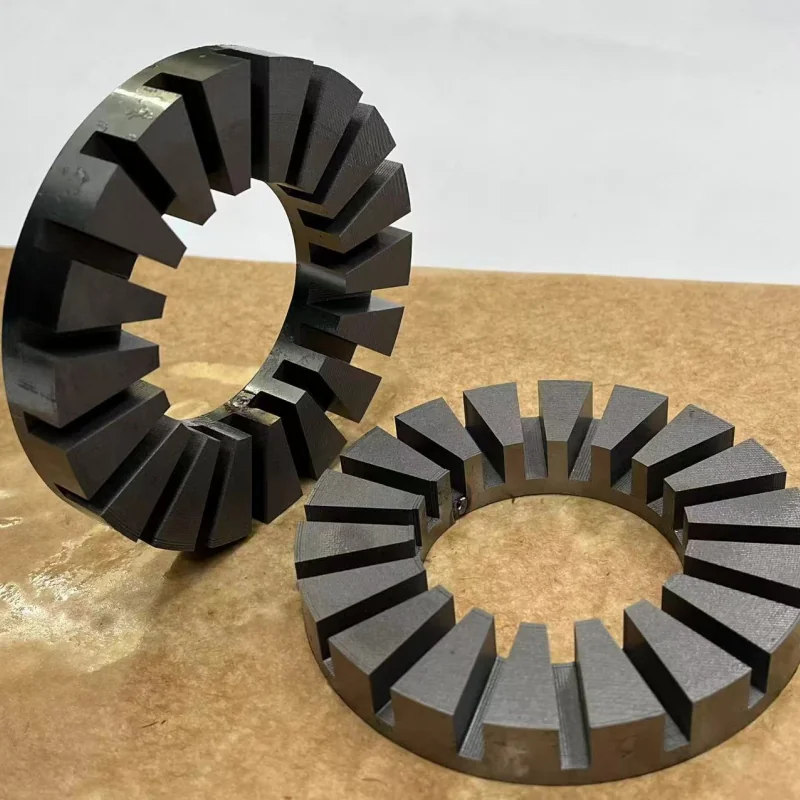
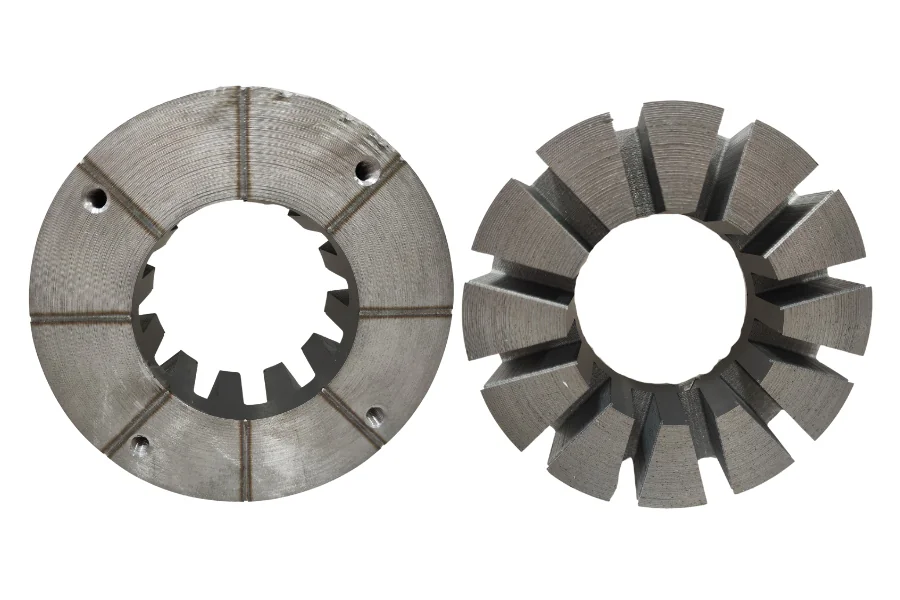
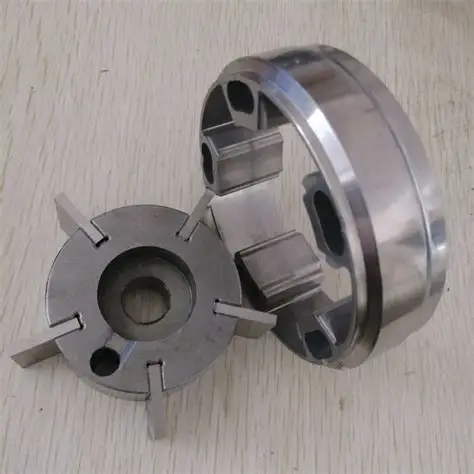
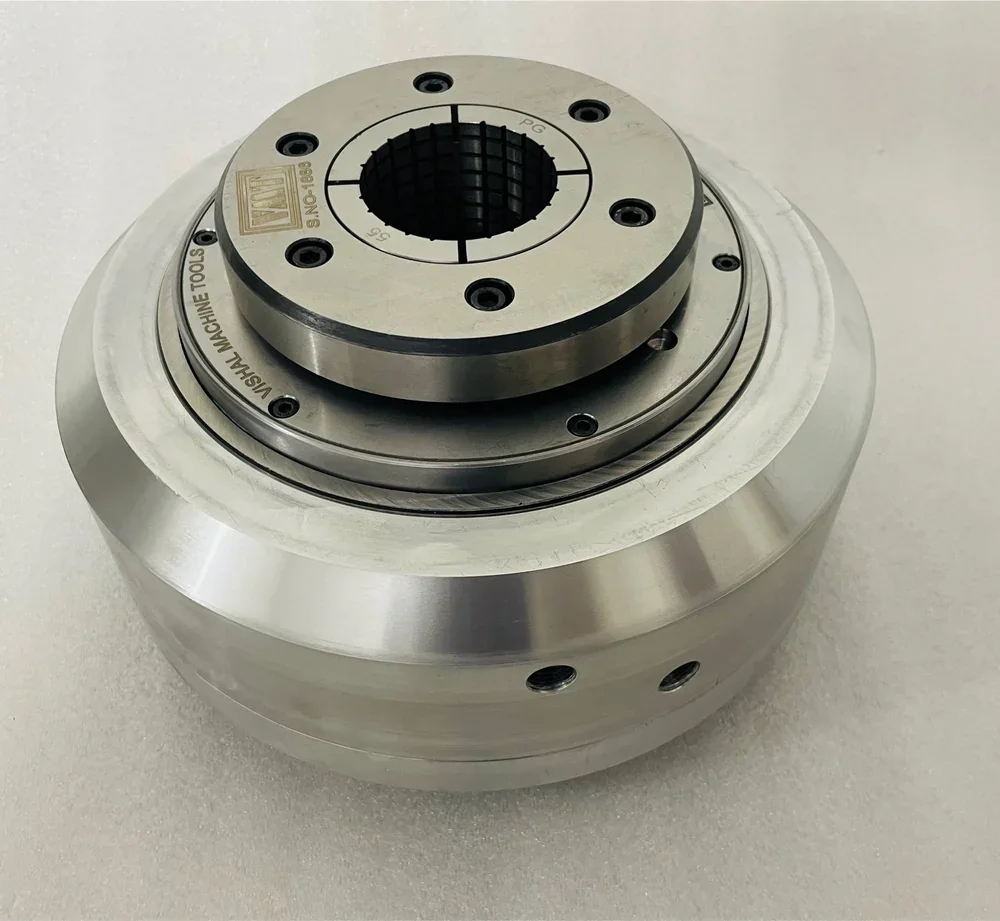
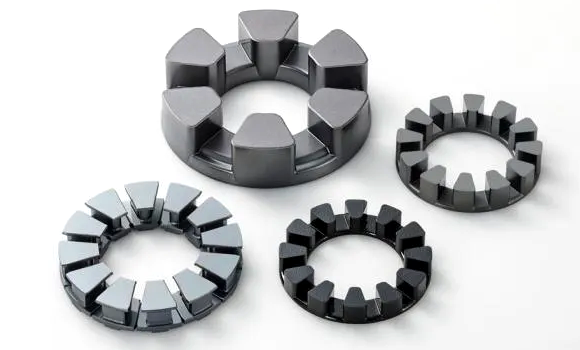
  • Products Processed: Produces stator and rotor segments, toroids, E-cores, pot cores, and custom-shaped magnetic inductors. These components achieve near-net shapes ready for low-temperature curing or sintering treatments.
  • Why 400-Ton Hydraulic Press: Achieving optimum magnetic permeability in SMC materials demands high, uniform density without crushing the particle insulation coating. The 400-ton capacity provides the exact pressure precision needed for medium-to-large magnetic core cross-sections.

02 — Technical Specifications

SM 400 HP – HYDRAULIC PRESS MACHINE COMPLETE TECHNICAL DATA

The SM 400 HP Four-Pillar Hydraulic Press is engineered for high-precision Powder Metallurgy (PM) compaction of magnetic core components used in automotive, electrical, electronics, energy, and general industrial applications. The machine delivers consistent density distribution, excellent dimensional accuracy, and reliable high-volume production performance through advanced hydraulic control and a rigid four-column frame structure.

Capacity & Structural Design

  • Rated Press Capacity: 400 metric tons (≈ 3,920 kN)
  • Press Type: Fourpillar / fourcolumn hydraulic press
  • Frame Construction: Welded steel frame, stressrelieved
  • Design Duty: Continuous PM production
  • Structural Safety Factor: ≥ 1.25
  • Elastic Deflection at Full Load: ≤ 0.06–0.08 mm
  • Load Distribution: Uniform across die area

Hydraulic System

Main Hydraulic Cylinder

  • Type: Doubleacting
  • Bore Diameter: 320–380 mm
  • Stroke: 350–500 mm

Maximum Working Pressure: 25–30 MPa (250–300 bar)

Hydraulic Power Unit

  • Fixed or variabledisplacement pump
  • Proportional pressure control valve

Pressing Modes

  • Constantpressure compaction
  • Strokecontrolled compaction
  • Programmable dwell time for density stabilization

Platen & Working Envelope

Upper / Lower Platen Size

  • Standard: 600 × 600 mm
  • Optional: up to 750 × 750 mm

Guide Columns

  • Quantity: 4
  • Diameter: 90–120 mm
  • Finish: Hardened, hardchromed & precisionground
  • Daylight Opening: 700–900 mm
  • Platen Parallelism Accuracy: ±0.02–0.03 mm per 300 mm

Controls & Safety

  • Control System: PLC with touchscreen HMI

Process Monitoring

  • Press force
  • Stroke position
  • Dwell time
  • Cycle counter

Safety Features

  • Twohand operation (manual mode)
  • Guarding or light curtain
  • Pressure relief & overload protection

SM 400 HP — Model Specifications

  • Nominal Force: 4000 KN
  • Maximum Hydraulic Pressure: 25 MPa
  • Max Opening Height of the Slider: 1250 mm
  • Max Stroke of the Slider: 800 mm
  • Effective Bed Size: 1260 × 1160 mm
  • Slider Down Speed: 100 mm/s
  • Slider Pressing Speed: 5–11 mm/s
  • Slider Return Speed: 100 mm/s
  • Ejector Cylinder Nominal Force: 400 KN
  • Stroke of the Ejection Cylinder: 300 mm
Production Case Study

Powder Metallurgy (PM) Magnetic Core Components Compaction Production Line

SMC and iron powdersRaw Material
50 g to 3,500 gProduct Weight
7.2–7.6 g/cm³Green Density
8–20 SecCycle Time
High precision compaction
Uniform magnetic performance
Multi stage pressing
Automated powder feeding
Near net shape
Minimal core loss
Low particle damage

03 — Die / Mold System

Precision Powder Metallurgy (PM) Magnetic Core Components Compaction Die Mold Engineering

The Precision PM Die Mold System is designed for the compaction of magnetic core components used in automotive motors, EV drive systems, transformers, inductors, generators, and industrial electromagnetic applications. Engineered to work with the SM 400 HP Hydraulic Press, the tooling system ensures uniform density distribution, tight dimensional tolerances, high repeatability, and extended production life for high-volume manufacturing environments

Technical Specifications (Tooling)

Tool Type

  • Precision Powder Metallurgy Compaction Tooling
  • Single-Level and Multi-Level Die Sets
  • Floating Die Design
  • Fixed and Segmented Core Rod Tooling
  • Custom Tool Configurations for Complex Magnetic Core Geometries

Tool Materials

  • High-Speed Tool Steel (HSS)
  • Tungsten Carbide Inserts
  • PM Tool Steels for High Wear Resistance
  • Hardened Alloy Steel Die Holders
  • Surface-Treated Punches and Dies for Extended Service Life

Tool Construction

  • Precision Ground Punches and Dies
  • Modular Tool Assembly Design
  • Heavy-Duty Die Retention System
  • Reinforced Punch Support Structure
  • Interchangeable Wear Components for Reduced Maintenance Costs

Multi-Level Tooling

  • Multi-Level Upper and Lower Punch Arrangement
  • Independent Motion Control for Complex Part Profiles
  • Uniform Pressure Distribution Across Multiple Levels
  • Suitable for Stepped, Recessed, and Intricate Magnetic Core Designs
  • Optimized Density Control Throughout the Component

Alignment Accuracy

  • Precision Guide Pillars and Bushings
  • Tool Alignment Accuracy: ±0.01 mm
  • Reduced Punch Deflection and Die Wear
  • Excellent Concentricity and Component Repeatability
  • Stable Operation During Long Production Runs

Surface Finish

  • Precision Polished Tool Cavities
  • Surface Finish Capability: Ra 0.2 – 0.4 μm
  • Enhanced Powder Flow Characteristics
  • Reduced Friction During Compaction and Ejection
  • Improved Component Surface Quality

Lubrication

  • Internal Powder Lubricant Compatibility
  • Die-Wall Lubrication Systems Available
  • Reduced Ejection Force Requirements
  • Lower Tool Wear and Heat Generation
  • Improved Process Stability and Tool Life

Tool Life

  • Typical Tool Life: 500,000 – 2,000,000+ Strokes (application dependent)
  • Wear-Resistant Carbide Contact Areas
  • Optimized Stress Distribution Design
  • Reduced Maintenance Intervals
  • Long-Term Repeatable Production Performance
Case Study (Die Performance)

Powder Metallurgy (PM) Magnetic Core Components Compaction Die Mold Tooling

Tungsten Carbide / H13 SteelDie Steel
60–63 HRCHardness
Vacuum HardeningHeat Treatment
Precision mold alignment
High wear resistance
Smooth surface finish
Excellent core ejection
High anti-galling performance
Low particle friction
Extended tooling longevity

04 — Product Application

Where Powder Metallurgy (PM) Magnetic Core Components Are Used

Powder Metallurgy (PM) Magnetic Core Components are widely used in electrical and electromagnetic systems where high magnetic efficiency, precision, and reliable performance are essential. Their ability to achieve complex shapes with consistent magnetic properties makes them ideal for automotive, energy, and industrial applications.

Industry Applications

Electric Motors & EV Drive Systems

Electric Motors & EV Drive Systems rely on Powder Metallurgy (PM) Magnetic Core Components for efficient magnetic flux management, high power density, and precise performance. These components are used in stators, rotors, and traction motors, helping improve energy efficiency, torque output, and overall reliability in automotive and electric vehicle applications.

Transformers & Inductors

Transformers & Inductors utilize Powder Metallurgy (PM) Magnetic Core Components to provide efficient magnetic flux control, reduced energy losses, and reliable electrical performance. These magnetic cores are widely used in power conversion systems, energy management equipment, transformers, inductors, and electrical distribution networks, enabling compact designs and improved operational efficiency.

Industrial Automation Equipment

Industrial Automation Equipment utilizes Powder Metallurgy (PM) Magnetic Core Components to ensure precise electromagnetic performance, durability, and operational reliability. These components are widely used in solenoids, actuators, sensors, and electromagnetic control devices, enabling accurate motion control, signal detection, and efficient automation in modern industrial systems.

Generators & Power Electronics

Generators & Power Electronics utilize Powder Metallurgy (PM) Magnetic Core Components to achieve high magnetic efficiency, reduced energy losses, and reliable performance under demanding operating conditions. These components are widely used in generators, inverters, converters, and renewable energy systems, supporting efficient power generation, conversion, and distribution across industrial and energy applications.

Finished Product Gallery

05 — Key Advantages

Why Choose the 400-Ton Sinter Hydraulic Press

The 400-Ton Sinter Hydraulic Press is designed to deliver high-precision, high-density compaction of PM magnetic core components used in automotive, electrical, and industrial applications. Its robust four-pillar construction, advanced hydraulic control, and consistent pressing performance ensure superior product quality, improved productivity, and reliable long-term operation.

01

High Compaction Force

High Compaction Force is a key advantage of the 400-Ton Sinter Hydraulic Press, enabling the production of high-density, high-strength magnetic core components with excellent structural integrity. The powerful and precisely controlled pressing force ensures uniform powder compaction, resulting in superior dimensional accuracy, consistent magnetic properties, and reliable component performance.

02

Exceptional Dimensional Accuracy

Exceptional Dimensional Accuracy enables the 400-Ton Sinter Hydraulic Press to produce PM magnetic core components with tight tolerances and highly consistent part geometry. Precise control of pressure, stroke, and tooling alignment ensures repeatable manufacturing quality, resulting in improved magnetic performance, reduced assembly issues, and enhanced reliability in automotive and industrial applications.

03

Uniform Density Distribution

Uniform Density Distribution ensures that compaction pressure is applied consistently throughout the PM magnetic core component, resulting in uniform material density and structural integrity. This minimizes density variations, reduces defects such as cracking or distortion, and delivers reliable magnetic performance, improved product quality, and greater consistency from part to part.

04

Robust Four-Pillar Structure

Robust Four-Pillar Structure provides exceptional rigidity, precise alignment, and stable force distribution throughout the compaction process. The heavy-duty four-pillar design minimizes deflection and vibration, ensuring consistent part quality, extended tooling life, and reliable high-volume production of PM magnetic core components.

05

Enhanced Productivity

Enhanced Productivity enables the 400-Ton Sinter Hydraulic Press to achieve faster cycle times and highly repeatable compaction performance, making it ideal for medium- and high-volume manufacturing environments. Its automated hydraulic control system helps increase throughput, reduce downtime, and maintain consistent product quality, resulting in improved operational efficiency and lower production costs.

06

Extended Tool Life & Lower Costs

Extended Tool Life & Lower Costs are achieved through precise force control, stable pressing conditions, and accurate tooling alignment provided by the 400-Ton Sinter Hydraulic Press. By minimizing punch and die wear, the system reduces maintenance requirements, extends tooling service life, and lowers overall operating costs while ensuring consistent production quality and long-term manufacturing efficiency.